
Anthrobots and the Interface of Platonics
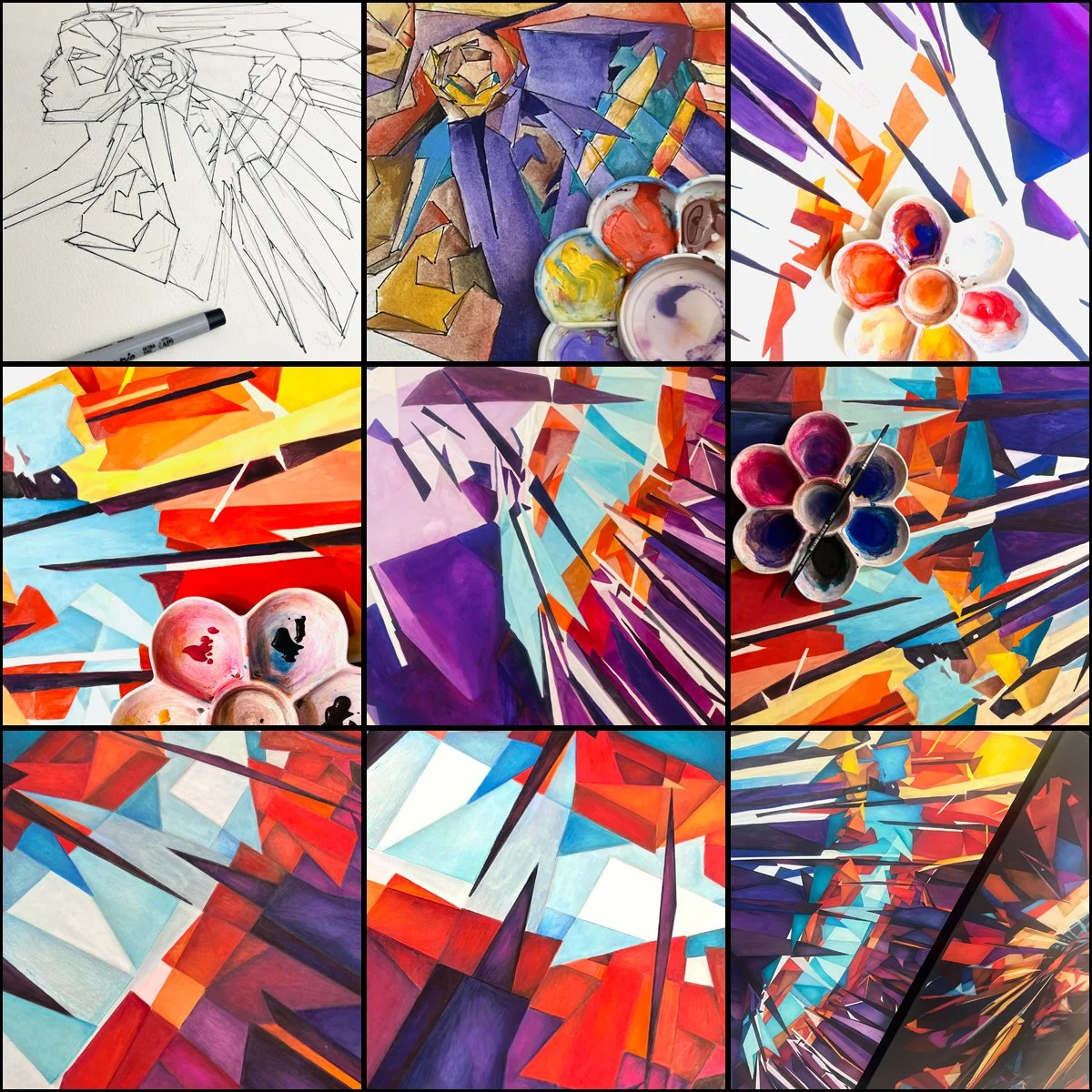
A cluster of human tracheal cells, scraped and cultured, will reorganize themselves into something that moves, clusters, and heals nearby tissue. No engineer drew the blueprint. No code directs the behavior. The cells simply find a new geometry, and in that geometry, they access capacities that were not present in the original tissue. Michael Levin calls these constructions anthrobots. They are a living demonstration that physical matter, when organized with sufficient care, becomes an interface to patterns that preexist the matter itself.
This is the interface of platonics. It is not mysticism. It is a practical observation about where novel behaviors come from.
The standard view holds that a system's behavior is fully explained by its physical parts and their immediate interactions. But anthrobots break that view. The same cells, arranged differently, produce entirely different capacities. The behavior does not emerge from the cells in any simple additive sense. The cells are accessing a structured realm of possible forms and behaviors: what Levin and his collaborators call platonic space. This space contains static patterns, dynamic patterns, algorithms, and what we might call behavioral propensities. It is not a literal place. It is a map of what matter can do when organized correctly. Biology reaches into this space and pulls out configurations that work. So does computation. The sorting algorithm and the anthrobot are both physical interfaces to the same underlying structure.
The question then becomes: what happens when we treat analog art as another interface to that space?
Consider the anthrobot. It is built from biological material. It persists in time. It continues to interact with its environment, and those interactions change both the environment and the anthrobot itself. There is a bidirectional relationship. The physical form is the doorway, but the pattern that enters through the doorway is what does the work. Now consider a hand-painted piece that took three hundred hours. The pigment, the canvas, the brushwork: these are the biological material. The painting persists in time. It continues to interact with the room and with the person standing in front of it. And those interactions change the viewer's brain in measurable, scientific, reproducible ways.
The artwork is not a representation. It is a device.
Digital art is fiat art. It can be produced with minimal energy, reproduced without limit, and stored as disembodied data. It has no persistent material interface. A painting, by contrast, is a sovereign artifact. It is materially permanent, biologically charged, and absolutely scarce. The energy from the universe that went into its construction is locked into the object. That energy investment is the price of admission to platonic space. Cheap interfaces produce thin results. The anthrobot required careful culturing and precise geometrical arrangement to access its novel behaviors. The painting required three hundred hours of hand movement, decision, and material negotiation to access the pattern that changes the brain's physiology.
The Five Laws of the Studio govern why this works. Material permanence means the interface persists. Biological energy investment means the interface was built with sufficient effort to access high-agency patterns. Absolute scarcity means the interface cannot be diluted by endless reproduction. The viewer stands before the object and their brain responds to the physical fact of the paint, the texture, the accumulated decisions embedded in the surface. Your mind sees that and predicts what it sees. It becomes very detailed because you interpret it. The painting is doing what the anthrobot does: it is using physical organization to reach into a structured space of possible effects and pull one out.
The art world treats art as either decoration or financial speculation. It is neither. The artist is a builder of interfaces. The canvas is a substrate. The paint is the mechanism. The finished work is a physical structure designed to interact with the human nervous system and produce a specific, measurable transformation. Anthrobots heal tissue. Analog art transforms the brain's physiology. Both prove that matter, when organized with sufficient intent and energy, becomes a doorway to patterns that were always waiting to be found.
We are already building interfaces to platonic space. Some of them are made of living cells. Some of them are made of oil and pigment. The important question is not whether the pattern is real. The pattern is real. The important question is whether we are building the physical doorway with enough care to let it through.
The Five Laws of the Studio: Why Analog Art Becomes a Sovereign Artifact

I started drawing in 1974. I built businesses. I went back to school for neuroscience. I spent years as a professional photographer, chasing action moments at rodeos and capturing slices of time measured in fractions of a second with couples. But something was missing.
The camera tried to be detailed. It had to capture everything. Every pixel. Every data point. But with painting and my cubism, I can be non-specific and use just triangles. Your mind sees that and predicts what it sees. It becomes very detailed because you interpret it, you predict that image in your brain, and that's what you see.
That's when I realized I needed to come back to the analog world.
Digital art is fiat art. It looks great on a computer. It even prints great. But it's very definite and restricted in its data. We can measure that data. The amount of energy it takes to produce that art is like a low-grade commodity. The cheaper something is, the less value it has.
A hand-painted piece of art can take up to three hundred hours. It takes a lot more energy from the universe to produce such a thing.
I've spent decades now integrating art with neuroaesthetics, biogeometry, and neuroscience. I've studied how creative experiences transform the brain, restore balance, and foster healing. I've watched collectors almost cry when they see their commissioned piece installed on their wall for the first time, because they never imagined they would feel this way.
I've learned that art changes the brain's physiology. Not in some mystical way. In a measurable, scientific, reproducible way.
And I've learned that creating analog art as a sovereign artifact follows five immutable laws.
Law One: Material Permanence
If I'm having coffee in the morning and I spill coffee on my painting, that painting now has a coffee stain in it. Forever.
If a digital artist is in the middle of a print and the nozzle gets clogged, leaving a big stripe on the print, they throw that print away and reprint it.
That's the difference.
Handmade analog art offers authenticity, rarity, and a tangible connection to the artist's process that mass-produced digital photography cannot replicate. In the art market, this craftsmanship elevates analog works from photographic reproductions to fine art objects with inherent scarcity. Each has unique characteristics due to its chemistry, materials, and interactions with light.
Unlike digital prints produced in unlimited editions that dilute uniqueness and long-term value, analog art is a tangible artifact with absolute scarcity and physical presence. The ease of reproducing digital files means they can never achieve the scarcity that drives value in the collector market.
Ancient artifacts and one-of-a-kind artworks exist in absolutely finite quantities with no possibility of reproduction or replacement. This creates natural scarcity that supports long-term value preservation and appreciation potential.
Scarcity, coupled with high demand, creates a mismatch in supply-demand equilibrium. The limited supply of original works naturally drives prices upward as collector interest intensifies.
You can't delete an original painting. You can't lose it in a server crash. It has weight. It has texture. It has longevity that collectors deeply value.
Law Two: Biological Energy Investment
When I work on these pieces, it puts me in a theta wave state. I can work for about five hours at a time. I can be in theta, and anything that I can stimulate my brain with and ingest while I'm painting works. It's almost like being in hypnosis.
After about five hours, I go do something else and come back. I work in two phases during the day.
Each piece can take up to three hundred hours. That's three hundred hours of biological energy stored in every brushstroke. Three hundred hours of neural patterns. Three hundred hours of physical movement captured in paint.
The tactile qualities and imperfections in handmade art draw viewers' attention to the act of creating. They establish emotional connections in a world where people feel increasingly disconnected from the sources of what they buy.
Every brushstroke and material variation carries the artisan's passion, energy, and individuality. Something no machine can replicate. This gives handmade works enduring sentimental value.
Handmade items offer a sense of authenticity, rarity, and value that mass-produced goods cannot achieve. Analog design reminds audiences that behind every piece is a person who created it, who poured their heart and skills into it. This human element makes analog art timeless and creates connections on a deeper level than digital precision allows.
I call my pieces visitors. They visit me. We have a conversation that may last a month or so. Then I send them on their way.
It's a great joy to see them leave. I wouldn't want to hold them back because they have work to do. I'm able to create this piece to communicate because I know the health benefits help everybody. It's a gift. I want people to experience it.
Law Three: Viewer Engagement
The biggest thing that is hard for collectors to understand is how art can affect them physiologically.
So many people think that art makes them feel different from a mystical perspective. They don't understand that chemicals are actually released into their body. It's a very difficult concept for them to understand.
But it's real.
Viewing art activates the brain's reward system, releasing dopamine, serotonin, and oxytocin. These are neurochemicals that trigger pleasure and positive emotions. The default mode network, associated with introspection and self-reflection, becomes engaged when viewers interact with meaningful art. This demonstrates measurable physiological changes in the brain.
Scientists can now identify biomarkers offering objective, measurable ways to characterize brain changes from art. They use wearable sensors to measure respiration, temperature, heart rate, and skin responses during aesthetic experiences.
This validates that art measurably changes the body, brain, and behavior. Not mere subjective opinion.
I explain it like this. You go to a different country, and you're trying to ask somebody who's speaking a different language where the bathroom is or where the restaurant is, and they don't understand you. You're using your hands, and you're smiling, and you're using gestures.
When that person understands you, they smile, and you both smile at each other because now you're communicating. It feels good. You get it.
When that happens, we're communicating with them, and all these feel-good chemicals are released. It's a very strong chemical that helps with your immune system. It's the strongest immune response that you can have in your body.
That is embodied cognition. It's the recognition. It's like seeing somebody you haven't seen in a long time, and you just want to hug them, and you just feel so good.
Science shows that if you don't like the art, you won't derive value from it. The physiological benefits only activate when there's genuine emotional resonance with the piece.
Law Four: Scarcity Mechanics
Most high-value clients will want the original because they're educated. They understand that scarcity is what will hold value. They'd rather spend twenty thousand dollars on an original than five thousand dollars on a limited edition print.
One's going to hold its value and increase in value. The other one's not as much.
67% of Gen Z actively try to reduce their screen time due to digital burnout. This drives a revival in which younger collectors increasingly seek handmade, unique works with a human touch over algorithm-curated digital works. In an era of AI-generated content and mass production, authenticity has become the ultimate luxury.
Digital artists will say that their art is limited. A photographer will say he's only going to print five artist edition prints. But they're just digital. You can't control it once it's digital. That digital image is broken down, travels all over the world, and goes back to a router and then to a computer. That computer reads it and sends it to a digital printer, and then it's printed.
Unique, one-of-a-kind pieces typically command higher values than editions or reproductions by the same artist. Leonardo da Vinci's remaining twenty paintings have seen their scarcity drive values into the hundreds of millions. This demonstrates how a finite supply drives exponential appreciation in value among collectors seeking exclusivity.
I have clients who have sold their homes. The new owner actually paid double for the artwork to stay.
You could have a custom couch with custom fabrics that could cost you $10,000. You could have all sorts of other things in your home that you enjoy, and that would be very expensive. But the art is a way to store your wealth.
While a ten-thousand-dollar custom couch depreciates the moment it's delivered, the original painting actually becomes more valuable when tied to the space and experience.
Law Five: The Artist's Irreplaceable Presence
Mirror neurons establish a dialogue between the artist and spectator. This creates a universal connection that bypasses time, cultural, and social differences. These neurons activate when viewers observe artwork, causing them to simulate the artist's physical actions and emotional investment as if experiencing them firsthand.
Viewers literally feel the brushstrokes and energy you invested.
When we view art, mirror neurons enable embodied simulation. Our brains don't just passively observe but actively mirror the artist's movements, intentions, and emotional state during creation. This neurological process allows viewers to gain some sense of the artist's actions in creating the work.
The artist's physical presence is permanently embedded in the piece.
I use geometric shapes based on Pythagoras and the Amplituhedron quantum model. These are fundamental symbols built into our DNA. Humans communicated with symbols before we had language, an alphabet, or the ability to speak.
I use those symbols to represent what I'm seeing. It's a fundamental language process that's happening in our bodies that we're not even aware of.
When I installed my first quantum-informed geometric painting in a beautiful mountain home, we had a big party. It was the first time I got to really see people interact with it. Across the room at forty or fifty feet, it was easy to see what it was. But then, as you got close and you could see it was nothing but basic triangles, it really blew everybody's mind.
They couldn't understand how, when they moved back, they could see everything. When they got closer, they had no clue what the painting was even about.
Their own brains were creating the image. Not the painting.
That's when they realized those geometric symbols were triggering their neural prediction systems to construct reality. They weren't just admiring a painting. They were experiencing their own brain's biological language being spoken back to them.
The Sovereign Artifact
Art, watches, and collectibles with inherent scarcity have delivered seven to twelve percent annualized returns over the past decade. Their correlations to equities remain low, providing true diversification. Collectibles function as cultural stores of value that, like gold, derive worth from scarcity and collective belief.
But unlike gold, they embed narrative and emotional resonance.
The physical properties of analog art create a multi-sensory appreciation that digital images cannot replicate. Paper texture. Grain. Chemical tone. Unlike digital files that can be deleted or lost, handmade works have weight, texture, and longevity that collectors deeply value.
Analog art in the digital era is not just a matter of nostalgia. It's a form of resistance against dehumanization and alienation.
I aim to help drive a cultural shift in which the arts are recognized not only as expressions of beauty but also as potent, science-backed tools for human well-being. My work integrates art with the emerging fields of neuroaesthetics, biogeometry, and neuroscience. It demonstrates how creative experiences can transform the brain, restore balance, and foster healing.
The main message is that art changes the physiology of the brain.
When collectors see their commissioned piece, touch the art, and experience it, they're always shocked to realize they had no idea they'd feel the way they do. Sometimes it happens immediately. Other times it takes a couple of weeks. They'll email, call, or text me to tell me how they keep seeing different things. They can't believe what they're looking at. It makes them feel different.
The art keeps revealing itself over time. The brain continues to process and find new layers in the work long after installation.
The piece doesn't go static. It evolves with them.
I've calculated how many pieces I want to paint before the end of my life. About a hundred and fifty more pieces. Maybe a little bit more. The best thing you can do is be the best at what you're supposed to do and be really good at it.
My dream is to put reproductions in children's hospitals. When they're sick for weeks at a time, they can choose from, like, a hundred images. The children can pick which image they want in their room. That would help them heal much faster.
When I've done little workshops, it's hard for the adults because we have prebuilt limitations. But when the children see the geometric shapes of butterflies, horses, animals, and bears, they love them. It's easier for them. It's easy for them to see the geometry.
Adults struggle because of our training. We're not creative anymore. But the kids identify with it easily. I've watched it many, many times.
I hope more people can enjoy it. I hope more people can understand how art can affect them. Art is not an option. Beauty is not an option. It's a fundamental way that humans have always surrounded themselves.
From the beginning of time, before we could speak, we were drawing diagrams on walls. Before we had an alphabet, we had the Sumerian language, which was nothing but symbols.
These five laws don't just create valuable art. They create sovereign artifacts that carry biological energy, trigger measurable brain responses, maintain absolute scarcity, and embed the artist's irreplaceable presence into physical matter that will outlast us all.
What would change in your space if you surrounded yourself with art that literally altered your brain chemistry every time you walked past it?
Your Brain Doesn't See What You Think It Sees
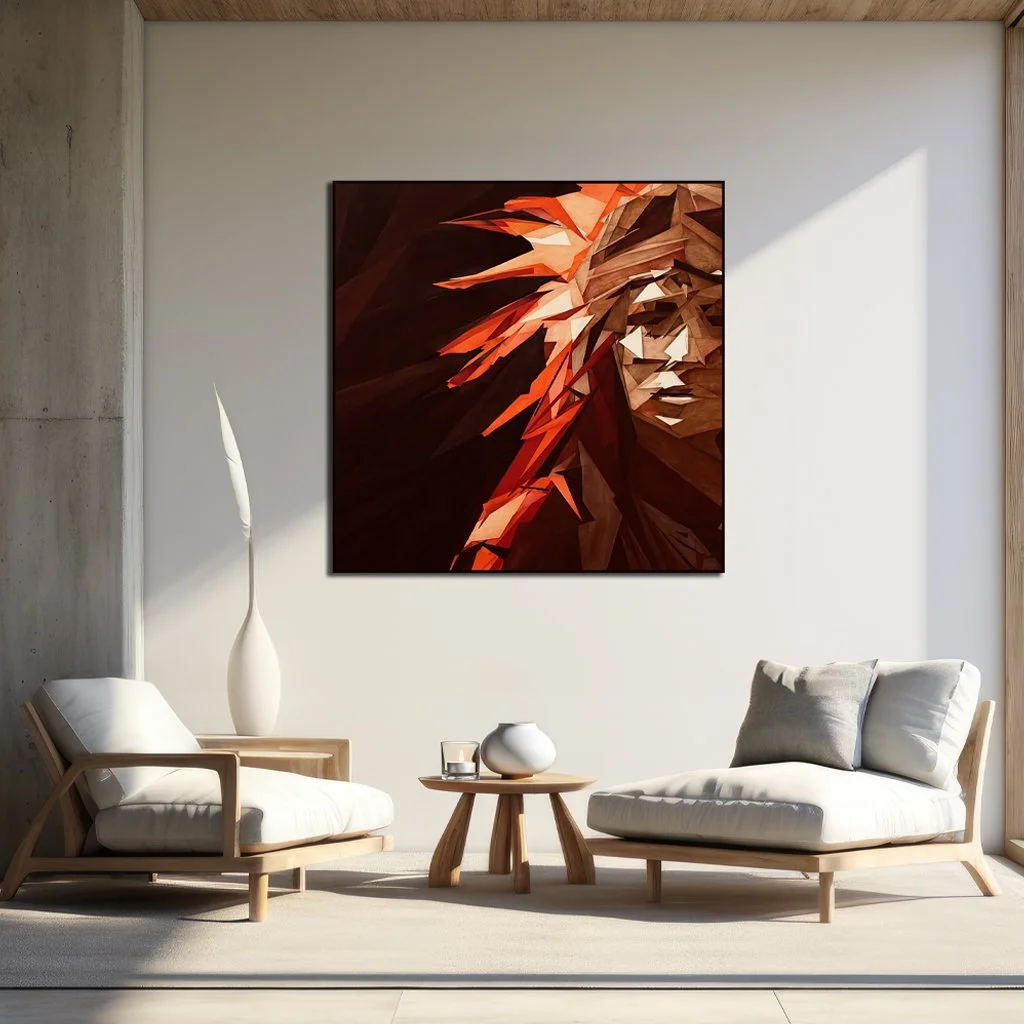
Stanford researchers discovered spatial frequency neurons that prove your brain doesn't see reality. It predicts what you're looking at from geometric fragments. This explains why triangular cubist paintings trigger dopamine, access pre-language brain pathways, and create measurable healing effects that continue to work below conscious awareness.
Researchers at Stanford University and the University of Göttingen discovered neurons that process visual patterns using a method that no one had previously mapped. These spatial frequency neurons have a two-part receptive field that decodes patterns separately, then integrates them. Your brain processes coarse patterns first, then fine details over 70-170 milliseconds. This explains why biogeometrically balanced cubist art forces your brain to step back, assemble the pattern, and release healing chemicals when the prediction succeeds.
What Are Spatial Frequency Neurons?
I used to think vision worked like a camera. Light hits your retina, your brain processes the image, and you see reality. Then I spent years in neuroscience product development and discovered something that changed how I make art forever. Your brain is a prediction machine. It doesn't wait for complete visual information. It guesses what you're looking at based on fragments, fills in the blanks, and shows you what it thinks you need to see.
Researchers at Stanford University and the University of Göttingen proved this, validating what ancient philosophers knew thousands of years ago. They discovered neurons in mice that respond to spatial frequencies. These are the patterns and textures in your visual field, processed by a method no one had mapped before.
These neurons have a two-part receptive field. They process different types of stimuli separately, then integrate them. The brain decodes low spatial frequencies faster than high spatial frequencies, shifting preference from coarse to fine over 70-170 milliseconds in the early phase.
This is why my cubist portraits require you to step back from the canvas.
The Brain Truth: Your visual system doesn't capture reality. It constructs predictions from geometric patterns, and those patterns fire specific neural pathways before you consciously recognize what you're seeing.
Why Geometric Shapes Activate Pre-Language Brain Pathways
When I paint a portrait using four or five triangles, people tell me the art talks to them. They see faces. They remember moments in time. They describe conversations with people who aren't there.
The painting is a set of triangles arranged by tonality. Four zones of dynamic range, like Ansel Adams' zone system but with geometric shapes instead of photographic exposure.
Up close, your brain doesn't have enough information to predict what you're seeing. The spatial frequency information is incomplete. You see abstract shapes.
Step back, and something happens.
Form constancy kicks in. Your brain assembles the pattern. The triangles become a face. The prediction succeeds. And your brain rewards you with a dopamine hit.
This is how vision works.
Pythagoras taught this 2,500 years ago. He believed the universe was built on geometric principles. He documented the healing properties of geometry and developed frameworks that connected mathematics, music, and visual perception. He never heard the term spatial frequency neurons, but he understood that platonic forms are the language your brain learned before you had words.
The Core Principle: Geometric shapes function as pre-language communication. Before humans had words, we drew shapes. Basic forms. Fundamental patterns. Cubist geometry accesses prediction pathways that existed first.
How Few Neurons Does Your Brain Need to Recognize Patterns?
The Stanford research reveals that perception arises from as few as 14 neurons in the mouse cortex. Your brain doesn't need complete information to create meaning.
It needs fundamental patterns.
When I use triangular geometry in my Western Cubist work, I'm not copying Picasso's technique. I'm applying the same patterns found in the Amplituhedron. This is a multifaceted geometric object that simplifies particle physics calculations from thousands of mathematical terms down to computing the volume of a geometric form.
Physicists Nima Arkani-Hamed and Jaroslav Trnka discovered in 2013 that interactions requiring 10,000 pages of equations are described by this shape in higher dimensions. The Amplituhedron suggests that space-time and quantum mechanics emerge from underlying geometric structures.
Your brain works the same way.
It compresses complex human experience into fundamental shapes. Triangles are the foundational building blocks. They activate mathematical brain regions. They trigger the prediction pathways that existed before language.
Photorealistic art is geometry. Your brain breaks down every image you see into patterns and textures. The cubist work makes the process visible.
The Pattern Recognition Truth: Your brain doesn't need thousands of data points. It needs the right geometric framework. Triangular forms compress complex visual information into brain-efficient structures that trigger recognition from minimal neural input.
What Chemicals Does Your Brain Release When It Predicts Patterns?
When your brain successfully predicts a pattern, it releases dopamine, serotonin, and oxytocin. Research from Johns Hopkins' International Arts + Mind Lab confirms that experiencing or creating art sparks billions of changes in brain cells, affecting your thoughts, emotions, and actions.
These chemicals are the most powerful healing agents your body produces.
Brain imaging scans show that observing beautiful art increases blood flow by up to 10% in the frontal cortex. Professor Semir Zeki from University College London's neuroaesthetics chair notes that blood flow increases for a beautiful painting, the same way it increases when you look at somebody you love.
Hospital patients with access to art installations recover more quickly and require less pain medication than those in sterile environments. The presence of artwork reduces anxiety through activation of the brain's reward centers and the calming influence on the amygdala.
This is about physiology.
The NIH committed $5 million in 2018 to the Sound Health initiative, funding research on arts interventions for brain diseases. Healthcare workers worldwide are prescribing museum visits as medical treatment. Virtual reality art programs alleviate pain.
Doctors will prescribe art within the next decade.
The Healing Mechanism: Art isn't decoration. It's a neurochemical intervention. When your brain solves geometric puzzles, it releases dopamine, serotonin, and oxytocin. These chemicals increase blood flow to the frontal cortex, reduce anxiety, and accelerate physical recovery.
Why Does Distance Change What You See in Cubist Art?
The Stanford research on spatial frequency neurons explains something I've tested for years in my studio. The brain processes patterns in two distinct phases.
Low spatial frequencies decode faster. High spatial frequencies take longer. Your brain needs distance to integrate the complete information.
When you stand close to my triangle portraits, you see geometric shapes. Your prediction engine doesn't have enough data to assemble the pattern. The spatial frequency information is fragmented.
Step back, and the brain shifts from processing individual triangles to recognizing the whole form. The coarse-to-fine pattern emerges. Form constancy activates. The face appears.
The effort generates the reward.
People who own these paintings tell me they keep finding new details. The art continues healing even when they stop consciously noticing it. The geometric patterns work on the brain below conscious awareness, just as you process your environment without actively looking at it.
Light reflects from the surface. Three waveforms fire the photoreceptors. The visual cortex activates before your mind decides what you're looking at. These mechanisms work subconsciously.
The Distance Effect: Spatial frequency neurons need a viewing distance to integrate coarse and fine pattern information. Up close, your brain sees fragments. Step back, and form constancy assembles the complete prediction. The successful pattern recognition releases dopamine.
How Does Cubist Geometry Access Pre-Language Brain Centers?
Cubist geometry functions as pre-language communication. Before humans had words, we drew shapes. Basic forms. Fundamental patterns.
This relates to how we communicate with each other in a foundational way. A baby communicates with gestures before learning language.
When collectors tell me the art is talking to them, they're accessing something more primitive and direct than verbal processing. The triangular patterns bypass language centers and engage prediction pathways that existed first.
A 2014 Belgian neuroscience study found that artists have increased amounts of gray and white matter in brain regions dealing with visual perception, spatial navigation, and fine motor skills. This structural brain difference occurs on both sides of the brain.
Drawing activities strengthen the connection between the occipital cortex (your visual processing center) and parietal cortex (your motor planning area). The brain's ability to share information and think critically grows through engagement with geometric forms.
This validates my journey from neuroscience back to art. I'm leveraging an enhanced neural architecture developed over decades of creating and testing these patterns.
The Pre-Language Connection: Geometric shapes activate brain pathways that existed before the development of verbal language. Triangular cubist patterns bypass linguistic processing and engage primitive prediction systems. This is why people describe the art as talking to them.
What Does This Mean for Collectors and Luxury Buyers?
The discovery of spatial frequency neurons processing patterns separately from objects changes how we understand art's impact on the brain.
Neuroaesthetics bridges the gap between subjective experience and measurable neurological change. The field transforms questions about beauty into testable hypotheses about brain function.
My work integrates art with neuroaesthetics, biogeometry, and neuroscience. I'm driving a cultural shift in which the arts are recognized not only as expressions of beauty but also as science-backed tools for human well-being.
The data support this. Research confirms that, in response to different situations, our brains continue to change and adapt to environmental stimuli throughout our lives. Creative expression engages neuroplasticity to help patients recover from traumatic brain injuries and stroke.
The main message is simple. Art changes the brain's physiology.
When you commission a statement piece for your home or office, you're not making an aesthetic decision. You're making a health decision. The biogeometrically balanced compositions create measurable physiological changes in everyone who sees them.
The chemicals released when your brain solves the geometric puzzle are the most powerful healing agents your body produces. Those chemicals make the human body a healthier machine in all aspects of living.
As long as the art is in your presence and observed, it continues to heal.
The Investment Insight: Commissioning biogeometrically balanced art is a neurological intervention. The spatial frequency patterns continue activating healing chemistry below conscious awareness. This is a health decision.
Frequently Asked Questions
What are spatial frequency neurons and why do they matter?
Spatial frequency neurons process visual patterns and textures separately from object recognition. They decode coarse patterns first, then fine details over 70-170 milliseconds. This matters because it explains how geometric art activates specific brain pathways, releasing healing chemicals.
How does cubist art differ from photorealistic painting in brain activation?
Your brain breaks down all visual input into geometric patterns. Cubist art makes this process visible by presenting the fundamental shapes directly. This forces your prediction engine to work harder, creating a larger dopamine reward when form constancy assembles the complete image.
Why do I need to step back from geometric paintings to see the full image?
Spatial frequency neurons need a viewing distance to integrate low-frequency (coarse) and high-frequency (fine) pattern information. Up close, your brain sees fragmented geometric shapes. At a distance, form constancy activates and assembles the complete prediction.
What chemicals does my brain release when viewing geometric art?
When your brain successfully predicts a pattern from geometric fragments, it releases dopamine, serotonin, and oxytocin. These neurochemicals increase blood flow to the frontal cortex by up to 10%, reduce anxiety, and accelerate physical recovery.
How long does the healing effect from biogeometric art last?
The art continues working below conscious awareness as long as it's in your environment. Light reflecting from the surface fires photoreceptors and activates your visual cortex before you consciously recognize what you're seeing. The subconscious mechanisms work continuously.
What is the Amplituhedron, and how does it relate to brain-efficient art?
The Amplituhedron is a geometric object that reduces 10,000-page particle-physics calculations to computing a volume. Your brain uses the same compression principle. It processes complex visual information more efficiently when presented as fundamental triangular shapes rather than complete photorealistic detail.
Why are triangles more effective than other shapes for activating prediction pathways?
Triangles are foundational building blocks in mathematical brain regions. They activate prediction pathways that existed before language developed. Pythagoras documented this 2,500 years ago. Modern neuroscience confirms that platonic forms function as pre-language communication.
Will doctors really prescribe art as medical treatment?
Healthcare workers worldwide already prescribe museum visits as treatment. The NIH committed $5 million in 2018 to research arts interventions for brain diseases. Hospital patients with art access recover faster and need less pain medication. The data supports art as physiological intervention within the next decade.
Key Takeaways
Stanford researchers discovered spatial frequency neurons that process visual patterns separately from objects, validating that your brain predicts reality from geometric fragments rather than capturing complete images.
Cubist art using triangular geometry activates pre-language brain pathways and forces your prediction engine to work harder, releasing dopamine, serotonin, and oxytocin when form constancy assembles the complete pattern.
The Amplituhedron demonstrates how your brain compresses complex information into fundamental geometric shapes. Triangular patterns are brain-efficient structures that trigger recognition from minimal neural input (as few as 14 neurons).
Viewing distance matters because spatial frequency neurons need space to integrate coarse and fine pattern information. Up close you see fragments. Step back and form constancy activates.
Biogeometrically balanced art is a neurological intervention, not decoration. The geometric patterns continue working below conscious awareness, releasing healing chemicals and increasing frontal cortex blood flow by up to 10%.
Art changes brain physiology measurably. Hospital patients with art access recover faster, need less pain medication, and experience reduced anxiety through activation of reward centers and calming of the amygdala.
Commissioning statement pieces for your space is a health decision. The spatial frequency patterns activate continuously as long as the art is in your environment, even when you stop consciously noticing it.
What patterns is your brain predicting right now?
Your Genome Is a Prompt, Not a Blueprint
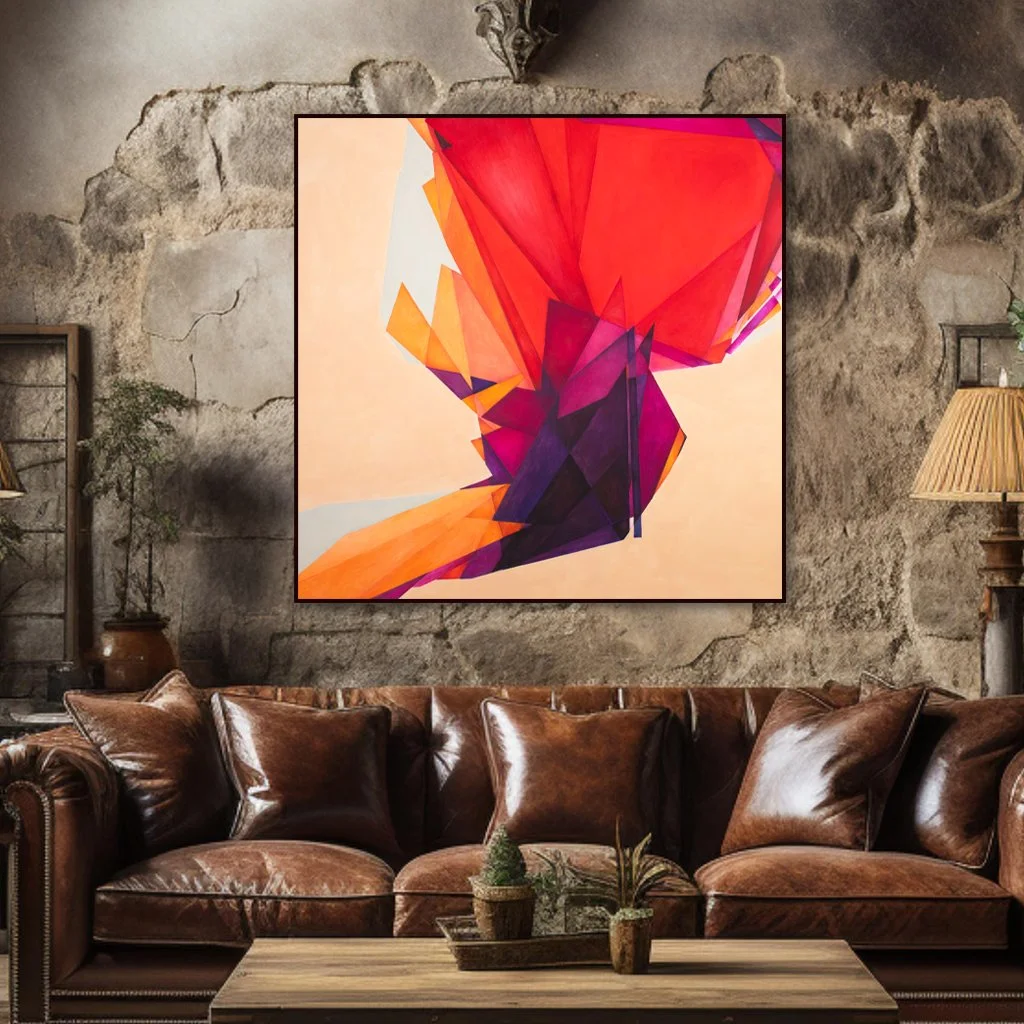
TL DNA isn't a fixed blueprint determining who you become. It's a resource library your cells interpret based on context, environment, and internal signals. This epigenetic understanding transforms how we approach constraints in creative work, treating them as prompts for emergence rather than instructions to follow.
Core Answer
Your genome functions as a prompt rather than a blueprint because:
Every cell contains identical DNA yet produces completely different functions based on epigenetic signals and environmental context
Cells make context-dependent decisions using genetic material as a resource library, not executing predetermined instructions
Epigenetic markers change throughout life in response to environment, behavior, and internal conditions
This prompt-based model applies to creative constraints, allowing emergence rather than mechanical execution
Why DNA as Blueprint Fails
I used to think DNA was destiny. You get your genetic code at conception, and the script writes itself for life. Blueprint language dominated everything I learned in neuroscience. The genome was the master plan, the architectural drawing determining what you'd become.
Then I started studying epigenetics.
Every cell in your body contains the same DNA. The neuron firing in your brain right now has identical genetic information to the cell in your liver processing toxins. Same code, completely different function. If DNA was a blueprint, this would be impossible. Blueprints don't allow for interpretive freedom.
The genome is a prompt.
Pattern I've observed: When scientists shifted from deterministic genetics to epigenetic understanding, the data showed monozygotic twins start life epigenetically indistinguishable, but with age they exhibit substantial differences in epigenetic markers. The environment shapes which parts of the genetic library get activated.
How Cells Interpret DNA
When you're creating something, you don't follow a prompt mechanically, step by step, like assembling furniture from a manual. You interpret it. You read the context, assess your situation, and pull from the resources needed for what you're building right now.
Cells do this with DNA.
Epigenetics works like someone taking a pencil and marking up a document. The marks are reversible. They change based on environmental signals, internal conditions, and what the cell needs to accomplish in its context. The genome provides lexical resources, a historically derived vocabulary cells use in their performative realization of self.
Your cells aren't executing instructions. They're making context-dependent decisions using genetic material as a resource library.
Cells integrate outside signals like growth factors with internal information like mitochondrial count. They assess probable future states, weigh costs and benefits, and decide in the presence of competitive decision-makers. Individual cells are smarter than we previously thought, making adequate decisions by treating the genome as a resource rather than a command.
Key insight: DNA provides possibilities. Context determines which possibilities get activated.
Applying This to Creative Constraints
I create large-scale Western Cubist paintings, and when I'm working on a commission, the client gives me constraints. Size limits, color preferences, thematic direction, spatial considerations for where the piece will live. I used to think about these as instructions I needed to follow.
Now I treat them as prompts.
When you receive a constraint as an instruction, you're looking for the correct way to execute it. There's a right answer somewhere, and your job is to find it and implement it faithfully. When you receive a constraint as a prompt, you're asking what possibilities it opens up. What becomes possible within these boundaries?
The difference resonates in the work. Instruction-following produces technically correct results with no life in them. Prompt-responding produces something discovered and created simultaneously, because you're navigating between what the constraints suggest and what wants to emerge organically.
The pattern holds: Constraints as prompts open possibility space. Constraints as blueprints close it.
The 90/10 Organic Discovery Process
When I start a major piece, about 90% of the process flows organically. I feed the client prompts into my mind, apply critical thinking, then meditate on a vision. The basic forms come to me naturally. I'm working with Platonic forms, trying to express complex images in their simplest foundational shapes humans recognize.
The last 10% is where I consciously intervene with artistic creativity to finish the painting.
The 90% organic phase doesn't feel like making choices in the conventional sense. It feels more like discovering what's present in the quantum energy field when I visualize the piece. I'm trying to simplify all the information as much as possible, similar to how an Amplituhedron encodes mathematical formulas for particle measurement in quantum physics.
This is what happens when you treat constraints as prompts rather than blueprints. You create space for emergence. You allow the work to pull you toward forms feeling inevitable once they appear, though they weren't predictable before they emerged.
Your genome works the same way. It doesn't determine what you become. It provides resources your cells interpret based on context, environment, internal state, and the goals they're navigating toward.
You're not executing a predetermined design. You're improvising within constraints, using inherited resources to navigate toward goals emerging through the process itself.
The parallel: Cells navigate emergence using DNA as a resource library. Artists navigate emergence using constraints as orientation points.
What Changes When You Shift Perspective
When you understand your genome is a prompt rather than a blueprint, your relationship with inheritance shifts. You're not trapped by genetic determinism. You're working with a resource library responding to how you engage with it.
When you understand constraints are prompts rather than instructions, your relationship with limitations shifts. You're not looking for the correct way to satisfy requirements. You're exploring what becomes possible within boundaries.
The best ideas feel discovered and created simultaneously because you're not inventing from nothing and you're not following a preset path. You're navigating through possibility space using constraints as orientation points, letting forms emerge feeling both inevitable and surprising.
This is how cells rebuild a salamander's arm with no individual cell knowing what a finger looks like. This is how creative collectives produce work belonging to everyone involved. This is how you move from mechanical execution to organic discovery.
Real-world application: The genome is a prompt. The client brief is a prompt. The canvas size is a prompt. The question is whether you treat them as instructions to follow or resources to work with.
Frequently Asked Questions
What is epigenetics and how does it differ from genetics?
Genetics is the study of DNA sequences you inherit. Epigenetics is the study of how environmental factors, behaviors, and internal conditions change which genes get activated or silenced, without altering the DNA sequence itself. These epigenetic markers are reversible and respond to context throughout your life.
If DNA isn't a blueprint, what determines how cells develop differently?
Cells make context-dependent decisions based on environmental signals, internal conditions, and the specific functions they need to accomplish. They treat DNA as a resource library, activating different genes based on what's needed in their particular situation and location in the body.
How do identical twins end up different if they have the same DNA?
Monozygotic twins start life with identical DNA and similar epigenetic markers. Over time, different environmental exposures, life experiences, behaviors, and internal conditions create different epigenetic patterns. This causes the same genetic code to be expressed differently in each twin.
What does treating creative constraints as prompts mean in practice?
Treating constraints as prompts means viewing limitations as resources opening up possibility space rather than restrictions narrowing options. Instead of looking for the single correct way to satisfy requirements, you explore what becomes possible within boundaries, allowing solutions to emerge organically.
How does the 90/10 organic discovery process work in creative practice?
The 90% organic phase involves feeding constraints into your mind, applying critical thinking, and meditating on a vision. Forms emerge naturally through this process. The remaining 10% involves conscious artistic intervention to refine and complete the work. The majority of the creative process feels like discovery rather than invention.
Does this mean we have no genetic predispositions at all?
No. The genome provides resources, tendencies, and possibilities. You inherit genetic material determining what's in your resource library. The epigenetic perspective means the environment and your choices influence which resources get activated and how they're expressed, not there are no inherited factors.
How does this apply to problem-solving outside of art?
The prompt-based approach applies to any constraint-based situation. Business requirements, technical limitations, time constraints, and resource restrictions work as prompts when you treat them as opening possibility space rather than narrowing to one correct solution. This allows for emergent solutions feeling both logical and surprising.
Key Takeaways
DNA functions as a resource library rather than a fixed instruction set, with cells making context-dependent decisions about which genetic resources to activate
Epigenetic markers change throughout life in response to environment, behavior, and internal signals, proving genetic expression is dynamic rather than predetermined
Treating creative constraints as prompts rather than instructions opens possibility space and allows organic emergence of solutions
The most effective creative process involves 90% organic discovery guided by constraints and 10% conscious refinement
Cells and creative practitioners both navigate emergence by using inherited resources (genome or constraints) as orientation points rather than deterministic commands
What constraints are you treating as blueprints when they'd work better as prompts?
Why Silhouette AF-655 Triggers Your Brain Differently
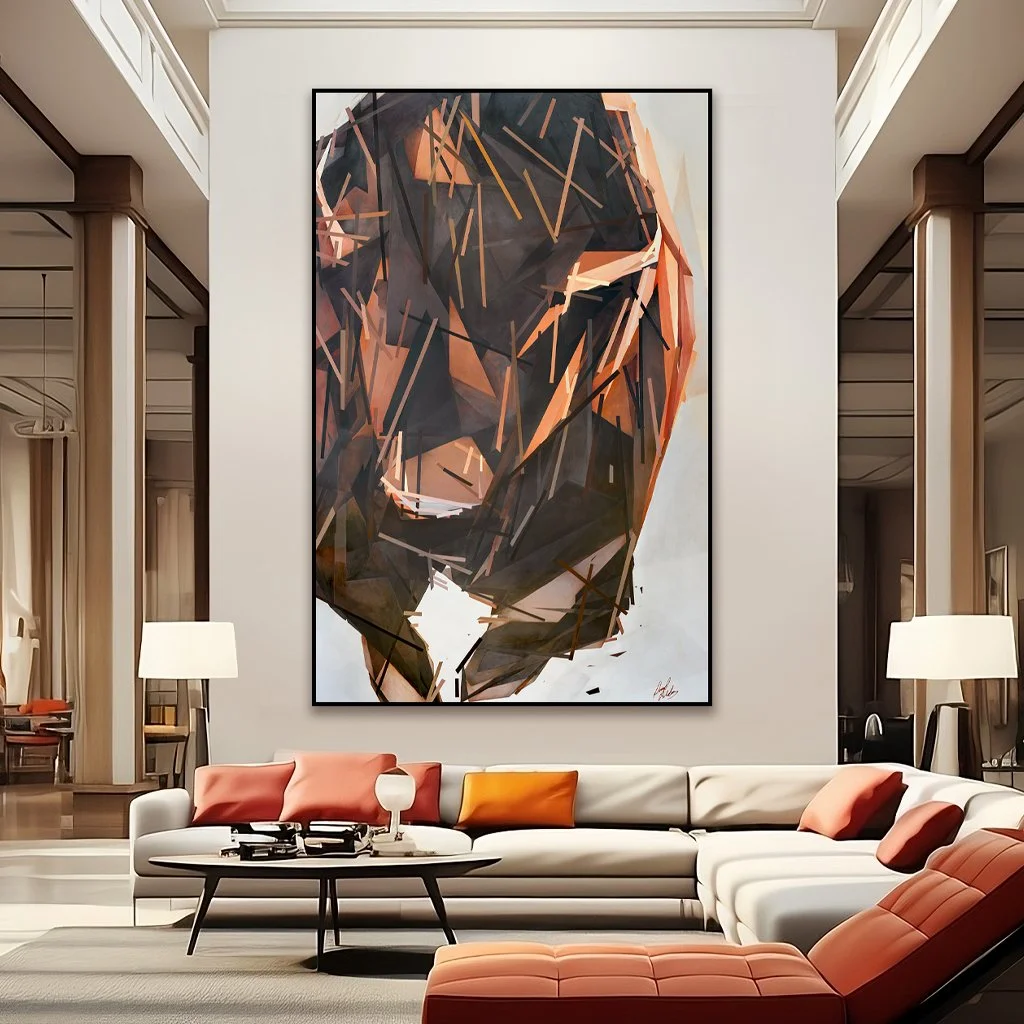
Something happens in your brain when you see deep brown. Benjamin Moore knows it. Their 2026 Color of the Year, Silhouette AF-655, is a rich espresso with charcoal undertones. It looks sophisticated. But sophistication is the surface story. Underneath, your visual cortex is processing this color differently than you might expect.
Your Brain Distinguishes Warm Colors More Precisely
Research from the National Eye Institute reveals something fascinating about how we perceive color. Humans have more distinct names for warm colors like browns, reds, and oranges than cool colors across all languages and cultures. The reason isn't linguistic. Brain activity patterns vary significantly more between light and dark warm hues than cool hues. Your propensity for distinguishing warm tones is rooted in how your brain processes color at a neurological level. Silhouette's espresso-brown composition engages these processing centers more actively than cooler alternatives. Your brain is working harder, creating more distinct neural signatures when you encounter this depth of warm tone.
Color Reaches Beyond Vision
Most people think color is purely visual. But 80 percent of our sensory impressions come from our visual system, and that visual information doesn't stay isolated in your occipital lobe. Research suggests the pituitary gland, responsible for body temperature, energy level, sleep pattern, metabolism, and sexuality, is sensitive to color stimulation. Silhouette's charcoal-espresso complexity engages multiple wavelengths simultaneously. This potentially influences the hypothalamus, a key brain region controlling hormone secretion and your body's self-regulation systems. Colors can affect your breathing, blood pressure, and even your body temperature. These are physiological responses, not aesthetic preferences.
The Shift Toward Darker Tones Makes Neurological Sense
Benjamin Moore's move from Cinnamon Slate to Silhouette represents more than trend forecasting. It reflects growing confidence in using colors that create stronger neural engagement. Brown triggers stability and grounding through ancient neurological pathways. Found most commonly in wood and earth, brown activates associations with nature that run deeper than conscious preference. For luxury spaces requiring both sophistication and psychological anchoring, Silhouette's burnt umber base taps into these evolutionary responses.
What This Means For Design
When architects and collectors choose Silhouette AF-655, they're selecting more than a paint chip. They're installing a color that creates measurable physiological responses in everyone who encounters it. The brain doesn't just see this color. It processes it through multiple pathways simultaneously, engaging visual cortex, limbic system, and potentially endocrine function. I've been exploring how art changes the physiology of the brain for decades. Color is one of the most direct tools we have for influencing neural states. Silhouette represents a cultural moment where deeper, more neurologically engaging tones are finally being recognized as sophisticated rather than heavy.
The spaces we create shape our internal states. Benjamin Moore's choice acknowledges that truth.
They Called It Pseudoscience Until We Measured It

They dismissed art therapy for decades. Then, researchers attached EEG monitors to participants. The data became impossible to ignore. I've watched the scientific community treat artistic healing practices with skepticism that borders on contempt. The demand for evidence seemed reasonable. The dismissal before investigation did not. But neuroscience finally caught up with what artists and therapists observed for generations. Brain waves don't lie.
When Subjective Experience Meets Objective Data
EEG measurements now reveal specific brain activity patterns during art creation. Different materials trigger distinct responses. Working with clay generates more delta wave activity than drawing with a pencil. Delta waves correlate with deep relaxation states. That's not interpretation. That's physiology. Research by Belkofer demonstrates significantly increased alpha and beta wave activity after painting and drawing sessions. These changes appear in both trained artists and complete beginners. Alpha waves indicate relaxed alertness. The kind of state where healing becomes possible.
The Default Mode Network Reveals Something Deeper
Here's where the neuroscience becomes fascinating. The Default Mode Network typically quiets when we engage with external tasks. It's the brain's self-referential processing center, active during introspection and identity construction. Yet aesthetic experience activates it. When someone finds visual art aesthetically moving, the DMN engages across domains. Paintings, landscapes, architecture. The network lights up in response to beauty itself, connecting aesthetic perception directly to our sense of self. This explains the profound inner response to art. It's not mystical. It's neurological architecture doing exactly what evolution designed it to do.
What This Means For How We View Healing
I create Western Cubist paintings based on biogeometric principles and quantum models because the science supports what ancient wisdom suggested. Form and proportion influence neurological states. The cultural shift I'm advocating requires this evidence. Not because art needs scientific permission to exist, but because dismissing measurable healing mechanisms costs people access to effective interventions.
When EEG technology validates that art creation changes brain wave patterns associated with relaxation and well-being, skepticism loses its foundation. The question shifts from whether art affects the brain to how we integrate this knowledge into healing practices. The answer determines whether we continue treating art as decorative luxury or recognize it as the neurological intervention the data reveals it to be. Measurement didn't create art's healing properties. It simply made denial harder to justify.
Visitors
"The rush isn't the finish line. Never has been. It's that wild, chaotic dance we do to get there. That's where the real pulse is, for me. When I lose track of hours and the world outside fades, that's when I know I'm truly alive. Time, see, it's not just ticking. It's the fuel, the currency I trade in. But it's a currency you can't hoard, can't save for a rainy day. You just spend it, pour it out, and hope you're pouring it into something that matters.
And creating? That's like inviting a stranger into your home. These ideas, these pieces, they come knocking. Some are quick visits, a flash of connection and then they're gone. Others linger, we build a rapport, we share secrets. Each one is a new relationship, and I let them in with an open heart, even knowing they won't stay forever.
When I dive into a piece, I don't hold back. It's all in, every ounce of me. That's the transaction, isn't it? My time, my energy, traded for the chance to bring something new into the world. We push and pull, the artwork and I, until it finds its own shape, its own voice. And then, there's that bittersweet moment, the goodbye.
I know, maybe it sounds intense. Maybe some think I'm a little too attached. But it's not the object, it's not the 'finished product' that fills me up. It's the journey, the shared moments. It's the conversations in the quiet hours.
"Reborn" is about ready to leave the nest. We've had some mornings together, that one and I. Coffee, quiet talks, the silent understanding that comes from creating side by side. I wouldn't trade those moments for anything.
So now I'm looking at you, whoever you are, reading this. Where are you spending your time? What are you pouring yourself into?"

Dr. Theresa Bullard
If you know me then you know. I have spent the last 3 days painting and listening to Dr. Bullard. It’s a deep dive grasping the transformative shift from classical to quantum physics. As we are learning new information weekly I am still connecting the dots back to our first language gestures and how geometry is our foundational language. Bullard ties the metaphysical mostly from the alchemy point to what we now are discovering with quantum conciseness.
All this is what drives my cubist style of triangles. I am speaking to your DNA! Ha HA… Let me speak to you…..
I am trying to think and manage a way to share what I learn but I am not a writer. Be patient.
I have my base colors down for “REBORN”. It is really exciting in my environment currently as energy is flowing into what i am doing. I have no real knowledge where it comes from but I do take responsibility to get it down visually.
Thursday is WING NITE!
Saturday was leg day
Part of my weekend birthday celebration was being abel to train legs Saturday morning with my sister Stacey. It has been a little over a year since she got it together and decided to pass me up. Training and staying fit has been a major part of my life and I am so grateful to be able to share that with my sister now.
I’ve made so many crazy choices in my life, but that’s definitely a good one.

Feeling fit is a great feeling, but also a little self-care like a kick ass style always helps too. Chris over at MX barber is the man. I wanna say he makes me feel like a king when I’m there, but I don’t know what a king feels like I know what a wolf feels like, but I’ve never been a king.
I’m going to spend the rest of the day painting on this piece called “Reborn”. I started working on some Native American concepts back in February. Reborn is the first one to come to life.