Curveball
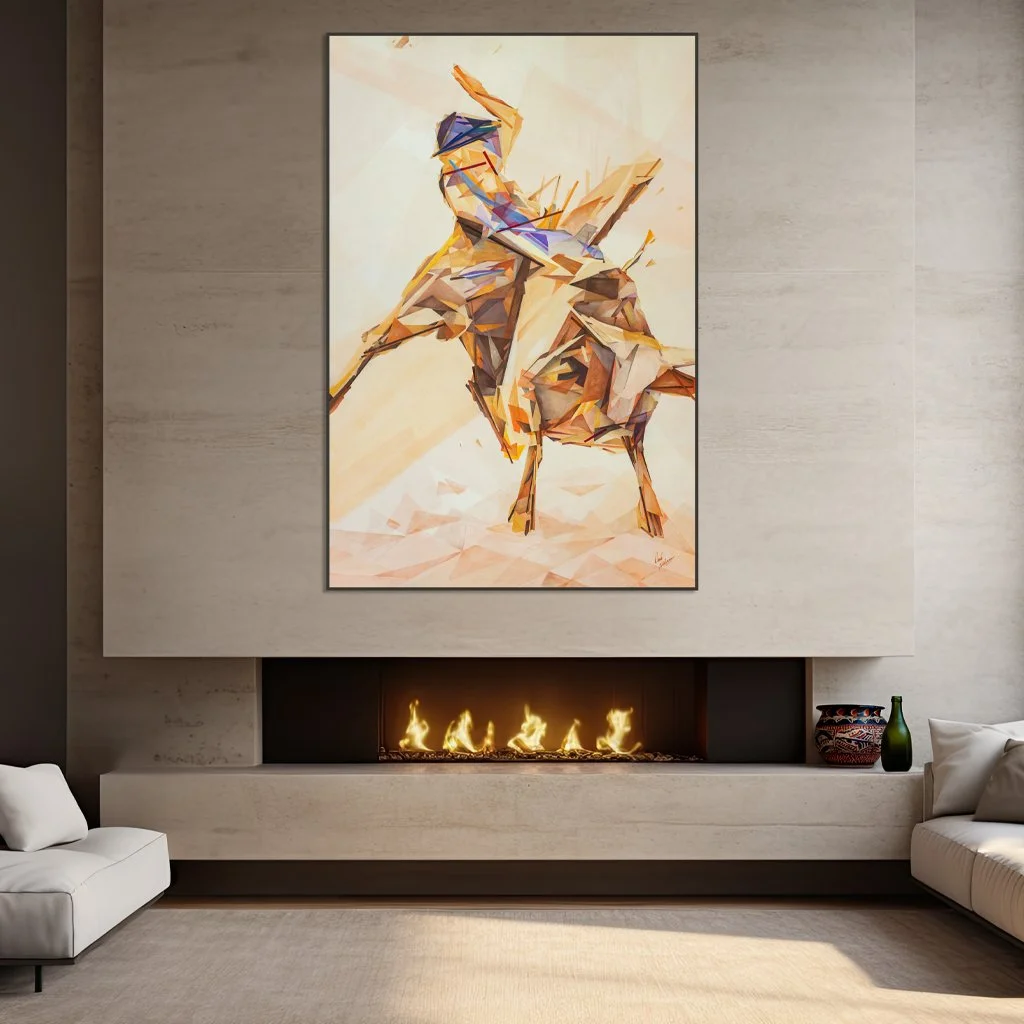
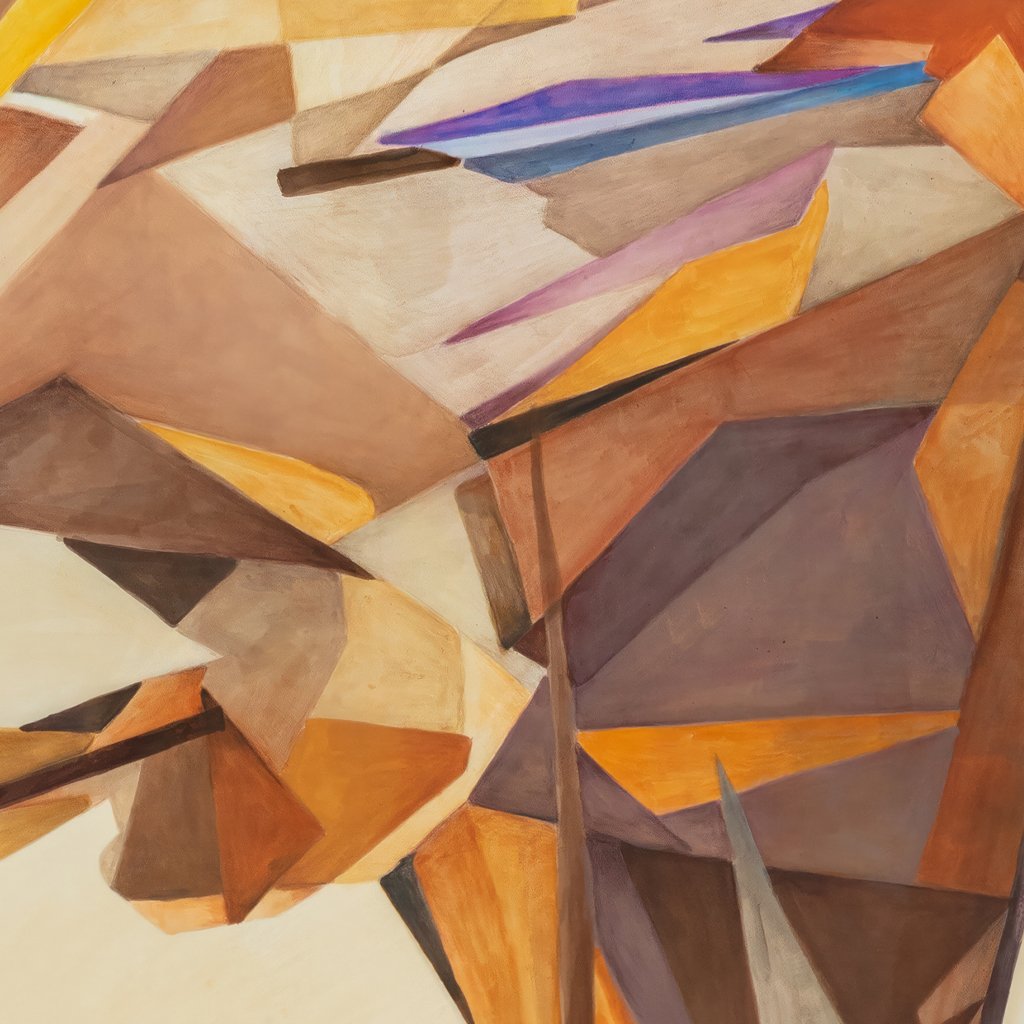
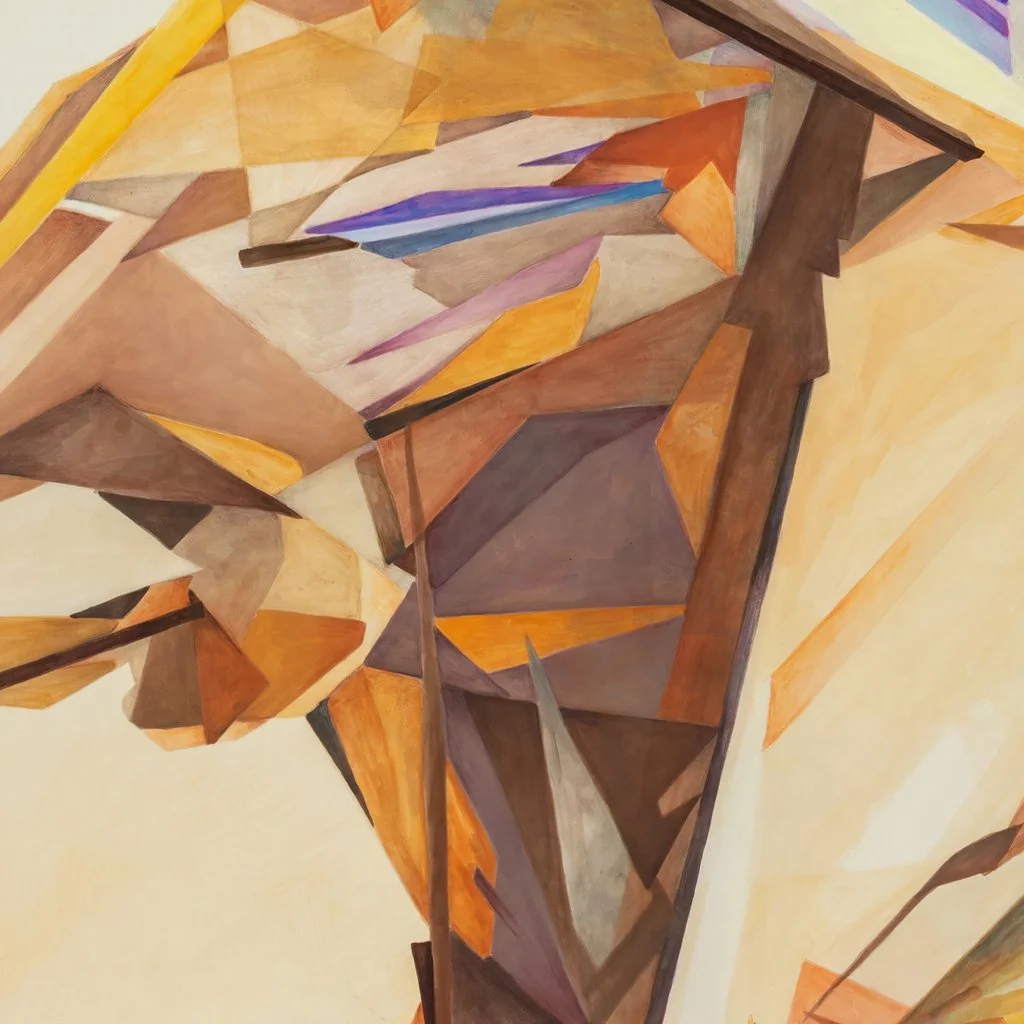
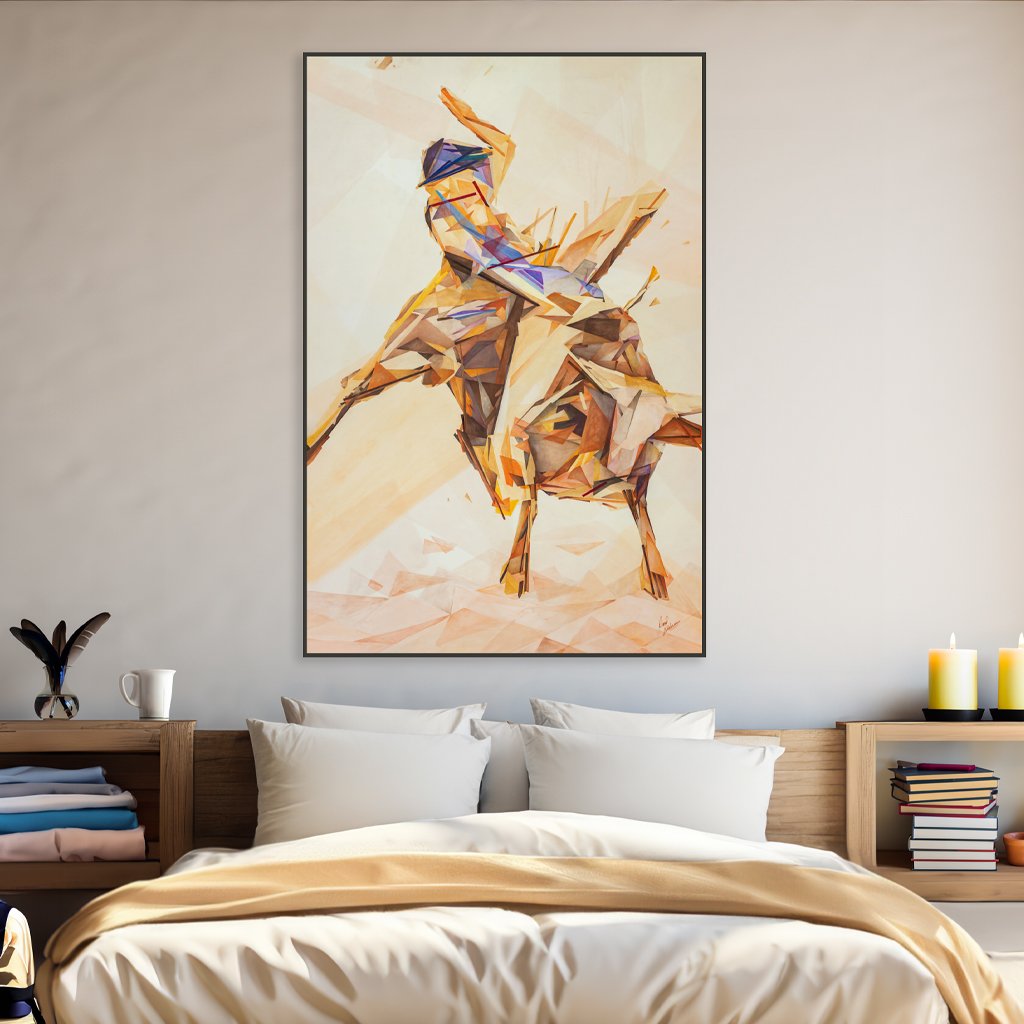
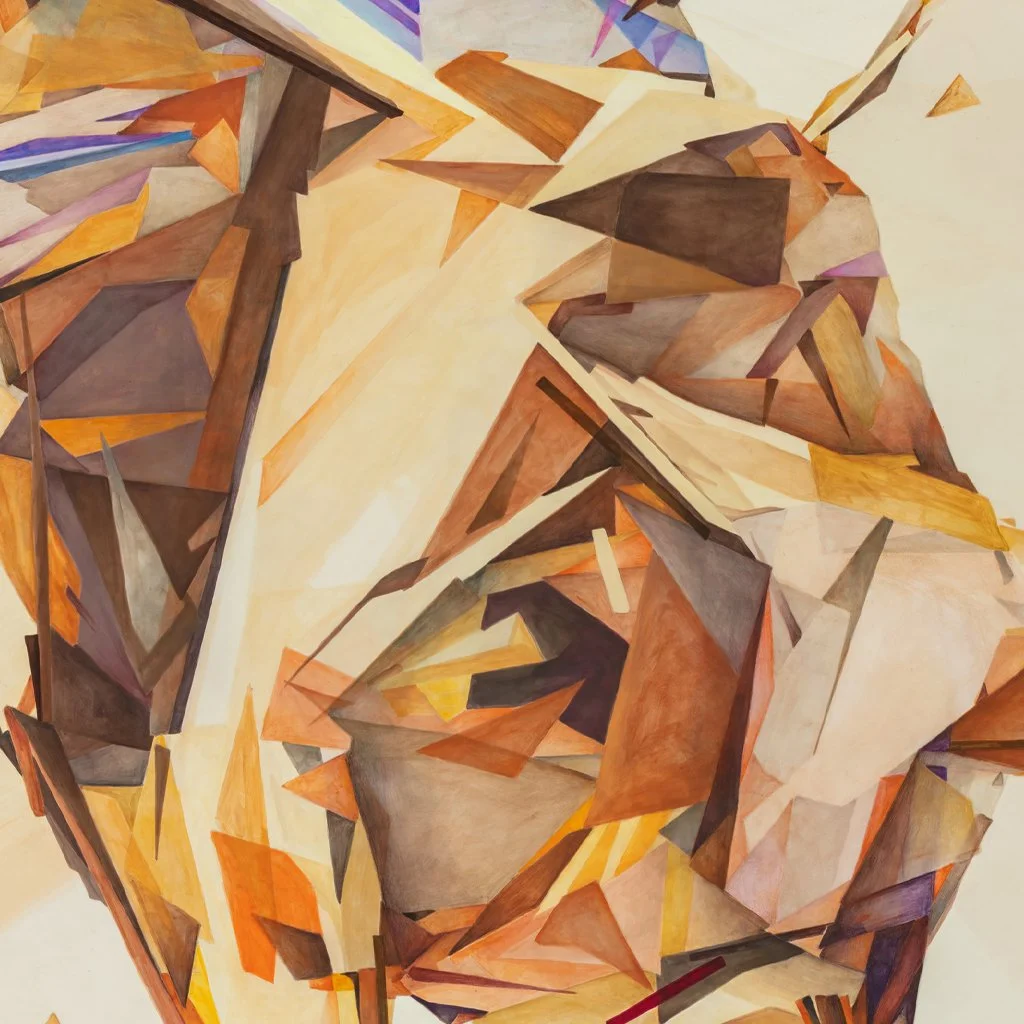
You walk into the room and something doesn't quite resolve. At 40"x60", the piece fills your field of vision, but your brain can't immediately parse what it's seeing. There's geometry here - triangles, angles, forms colliding - but the story isn't clear yet. You might feel slightly unsettled, like you've walked in mid-sentence.
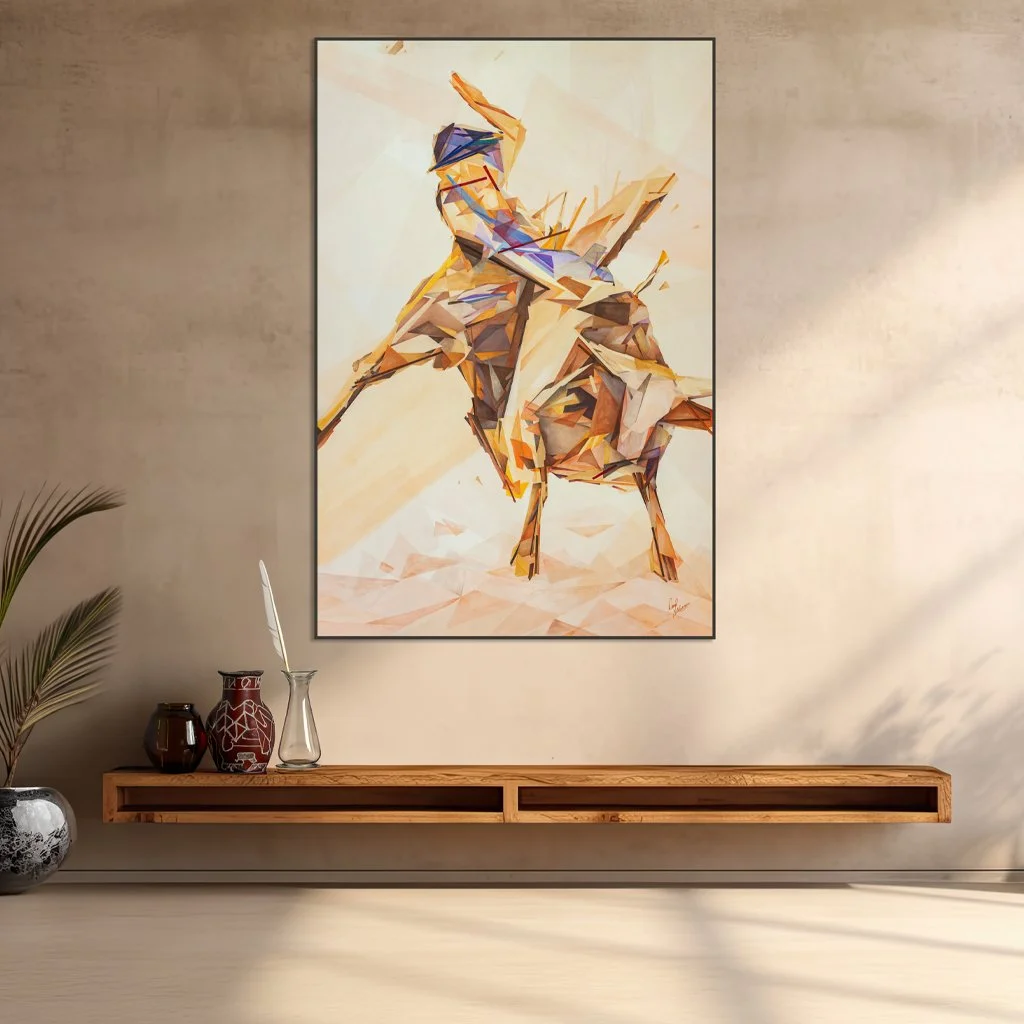
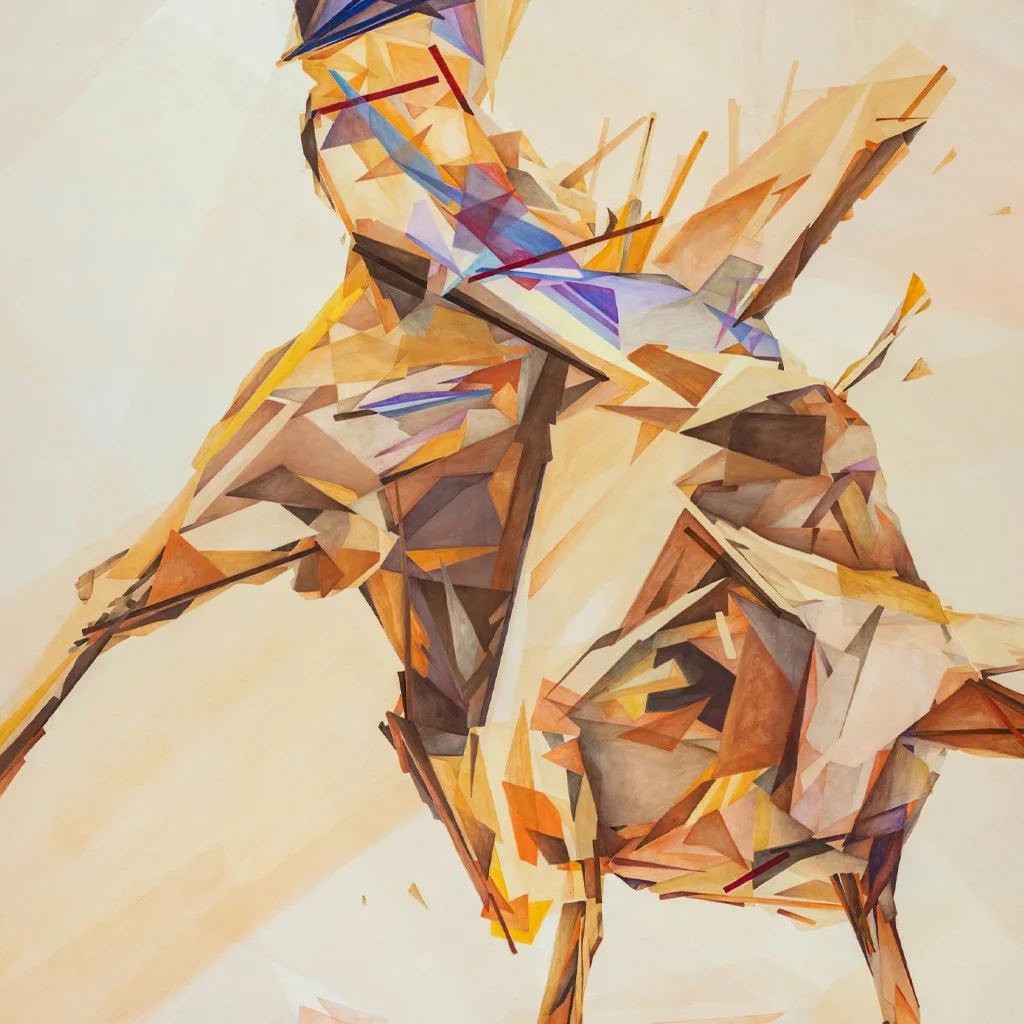
Then you step back. And suddenly, it clicks. The triangles aren't random - they're telling the story of that eight-second ride, the moment when control gives way to physics. Your brain has been working the whole time, assembling the geometric pieces, and now the recognition floods in. Some viewers report a physical response when this happens - a slight intake of breath, a shift in posture. That's not metaphor. That's your neurophysiology changing in real time.
What's Actually Happening
This piece works through what Professor Semir Zeki calls the brain's search for constancy. Your visual system is constantly trying to extract stable forms from changing input. When you first approach "Curveball," the geometry is too close, too fragmented. Your brain registers the triangular forms - and triangles are Platonic Forms, archetypal shapes your nervous system recognizes as vectors of force and direction - but it can't yet assemble them into coherent meaning.
The stepping back is crucial. Distance allows your brain to integrate the geometric relationships. This is form constancy at work - your ability to recognize that these angular collisions, these intersecting planes, these triangular vectors all describe a single moment: the instant when the bull's power overwhelms the rider's plan.
The triangles do the heavy lifting here. Each one is a directional force, a moment of impact, a change in trajectory. When they collide and overlap in the composition, your brain reads instability, dynamic motion, the geometry of disruption. This isn't something you think about - it happens in your visual cortex before conscious awareness. The triangle is the geometry of the point, the apex, the moment when everything comes together and breaks apart simultaneously.
This is embodied cognition. Your brain doesn't just see these forms - it simulates the physical experience they represent. The angular geometry triggers motor planning regions, the same neural networks that would activate if you were actually trying to maintain balance on an unpredictable surface. You're not just looking at the ride. Your nervous system is running a simulation of what that moment feels like.
At 40"x60", the scale matters. The piece is large enough that you can't take it all in from up close. You have to move, adjust your position, let your brain work across time and space to assemble the complete picture. This physical engagement - the stepping back, the moment of recognition - is part of the artwork itself.
The Artist's Vision
This piece captures what every bull rider knows: there's a moment when you can't see the whole picture, when you're too close to the chaos to understand what's happening. And then, if you survive it, you step back and suddenly the geometry of what just happened becomes clear. The curveball isn't just the bull's movement - it's the moment when your brain reorganizes reality, when the pieces snap into place and you understand what you just lived through.
The geometry changes your neurophysiology. Professor Zeki's research shows that when your brain successfully resolves geometric forms, when it achieves that moment of recognition, measurable changes occur in your neural activity. You're not just appreciating art. You're experiencing a documented shift in how your brain is processing reality.
This is why "Curveball" doesn't just depict a moment - it recreates the neurological experience of living through it.