
Gold Dust
Gold Dust
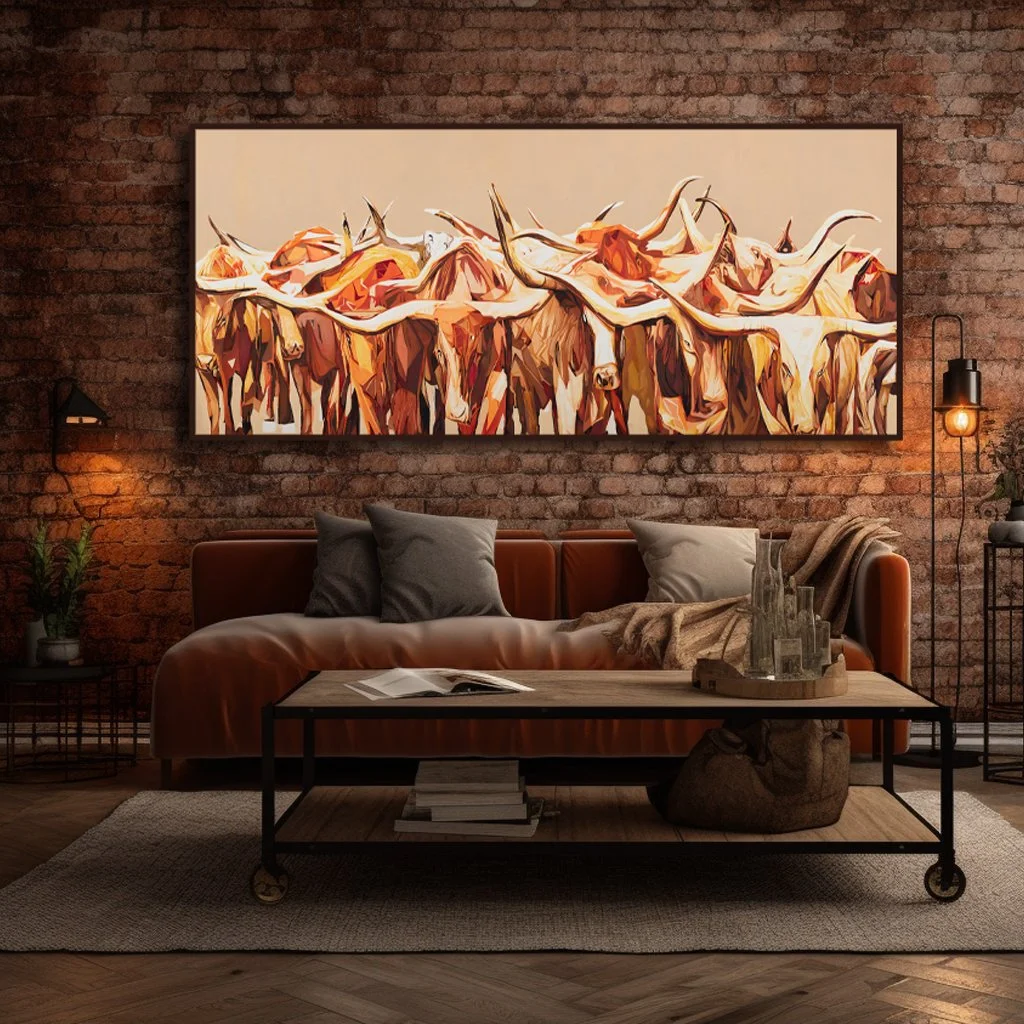
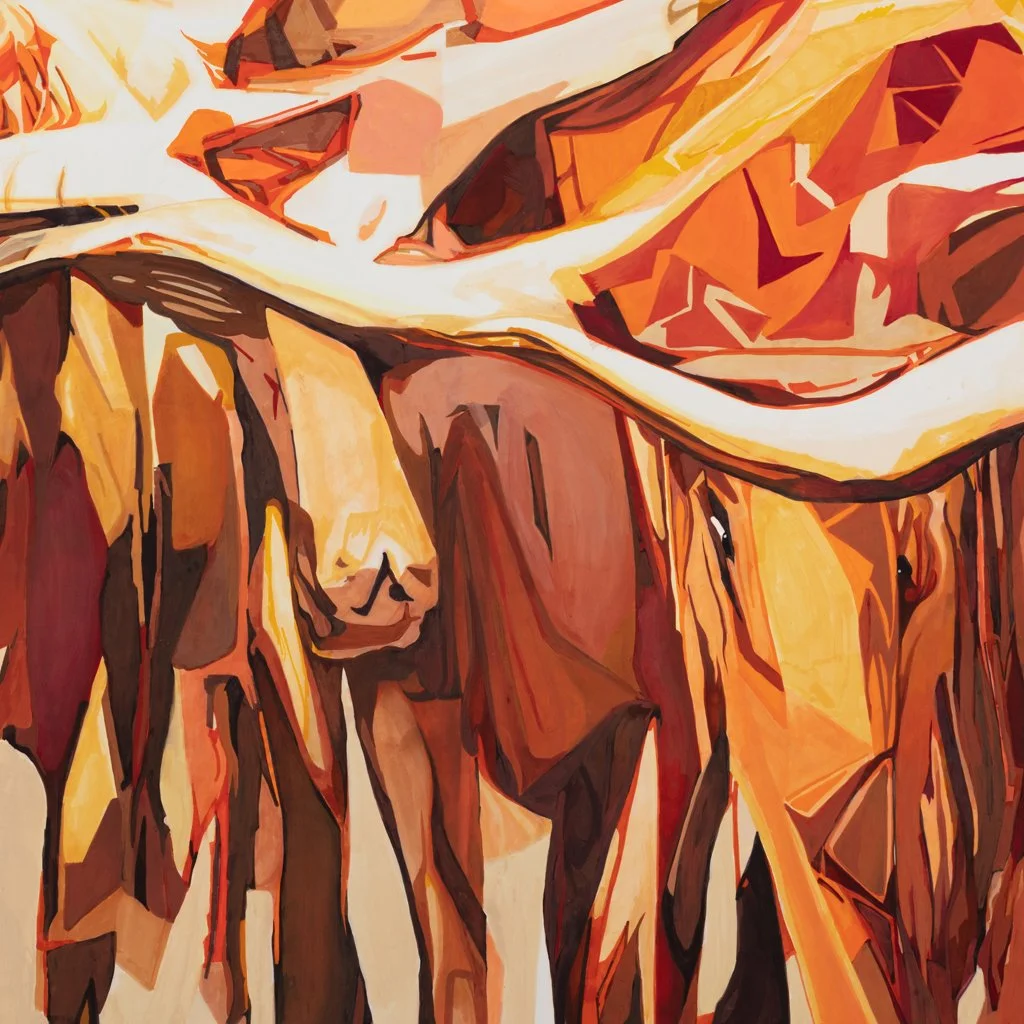
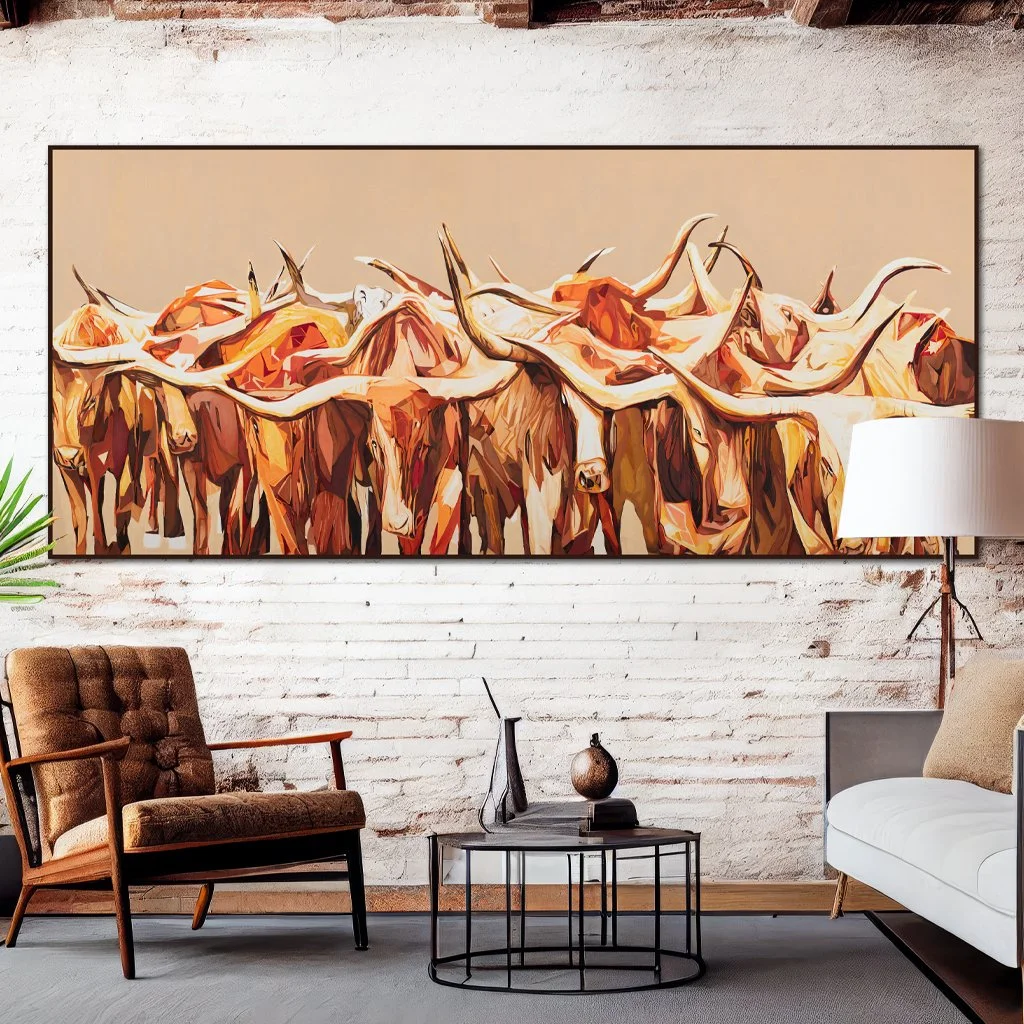
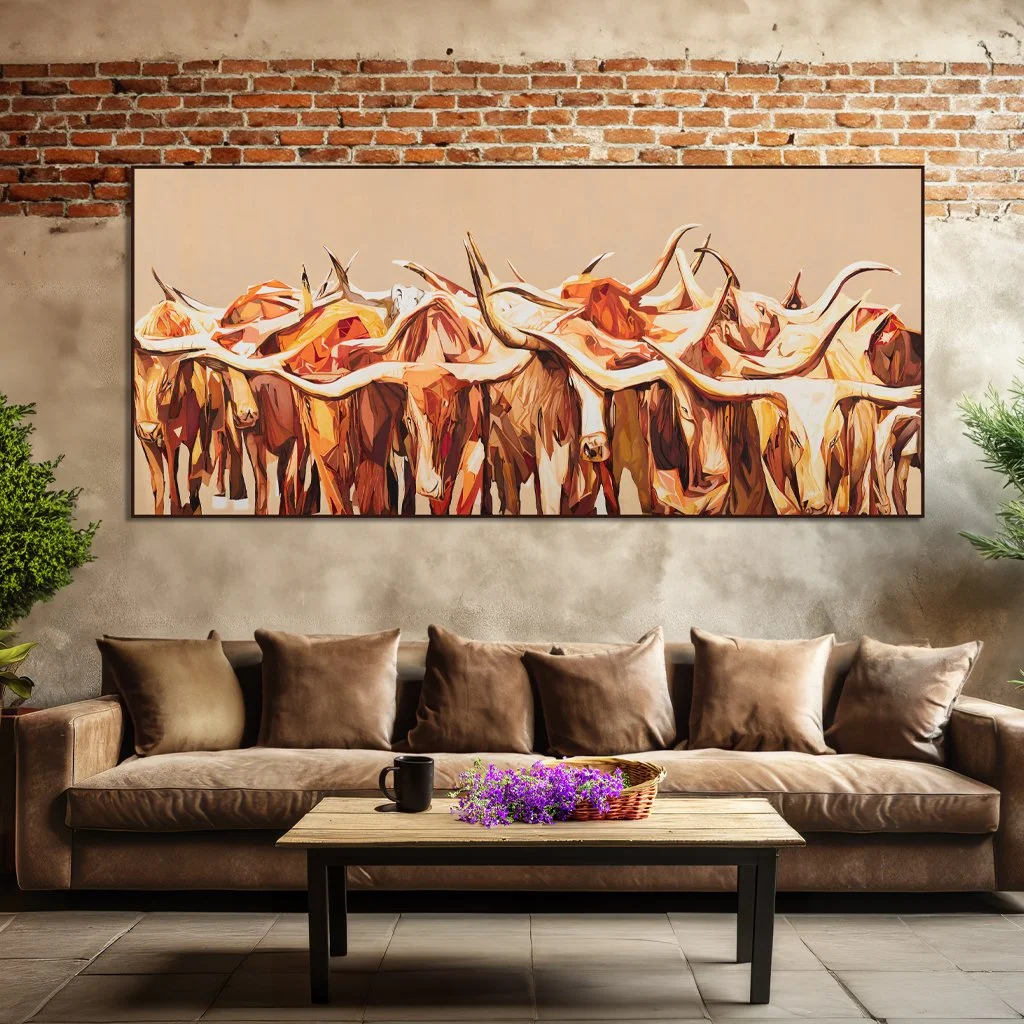
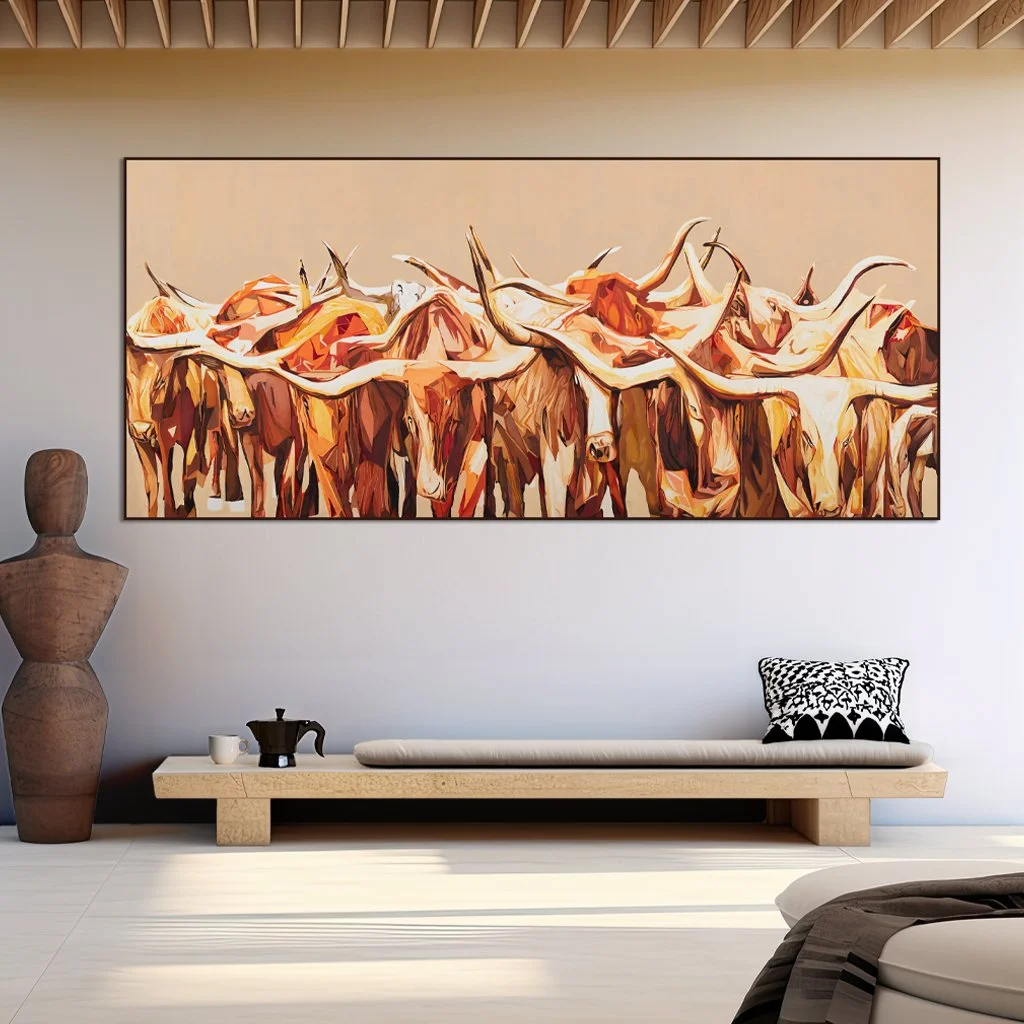
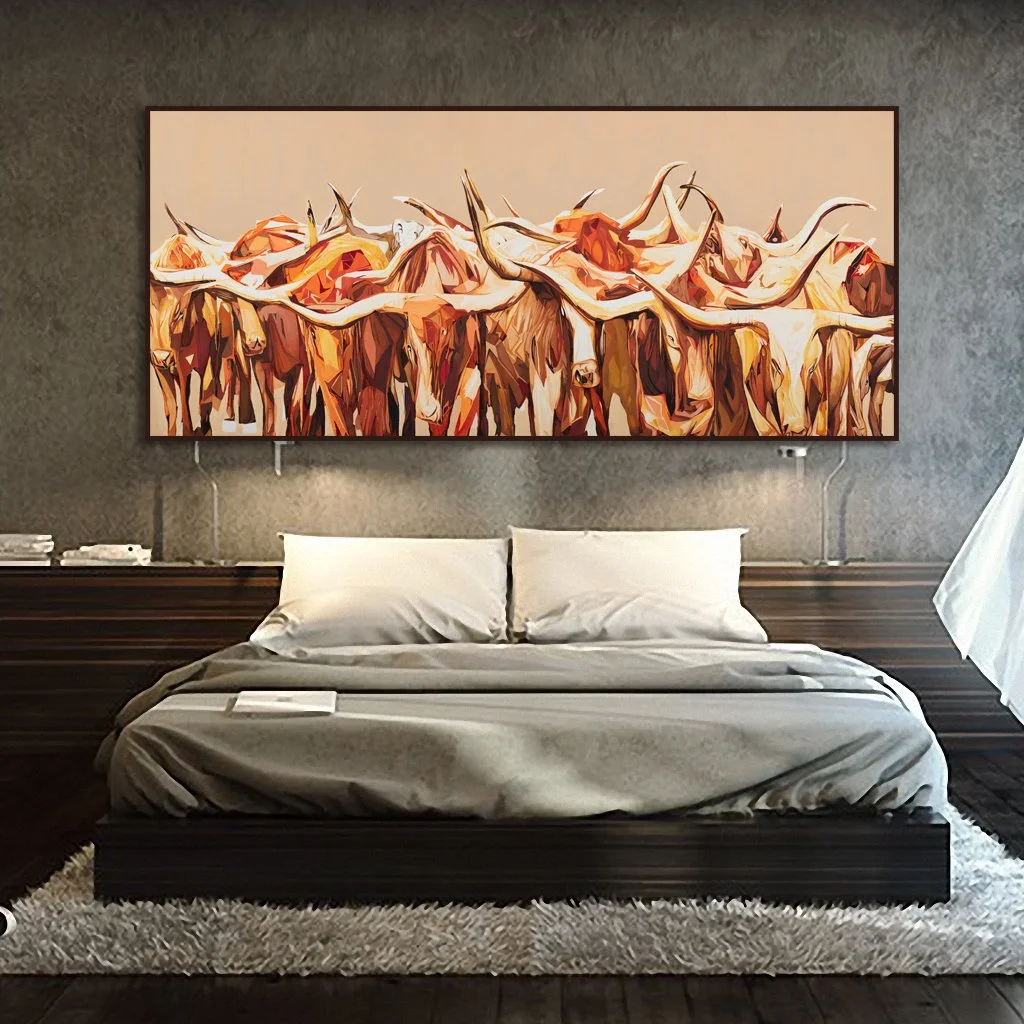
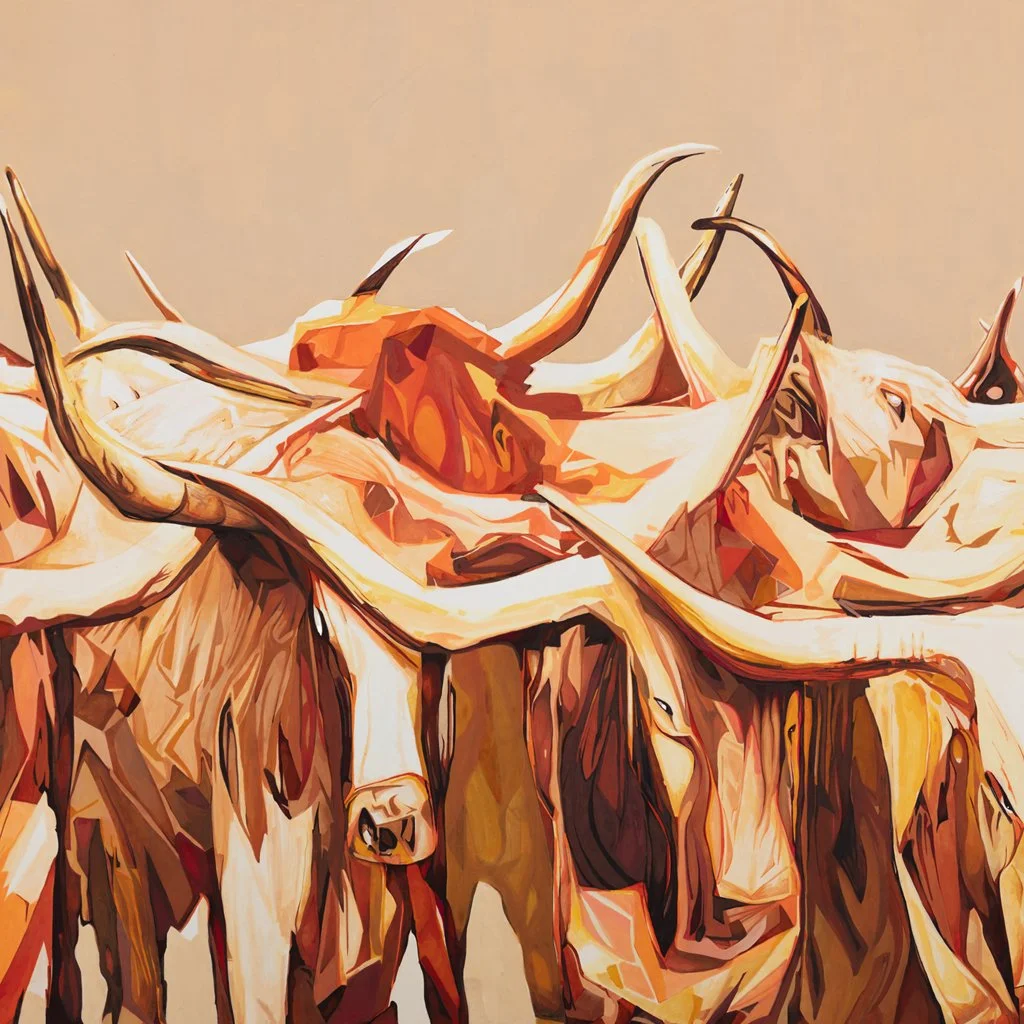
You approach it and there's warmth here - golds, ambers, earth tones mixing with geometric forms. Your brain starts scanning, piecing together the triangular planes. Then it clicks. Cattle. Not just one, but a herd, bodies close together, that late afternoon light catching on their forms. When the recognition happens, something settles in you. There's a calm that comes with understanding what you're seeing - the quiet energy of animals gathered together, the golden hour glow, the stillness of that moment. Your physiology shifts because your brain just constructed the scene from geometric information.
What's Actually Happening
This piece demonstrates form constancy working across multiple subjects simultaneously. Your visual system isn't just recognizing one form - it's assembling an entire herd from geometric data. Each triangular plane gives your brain information about spatial relationships, about where one animal ends and another begins, about the collective mass of bodies in proximity.
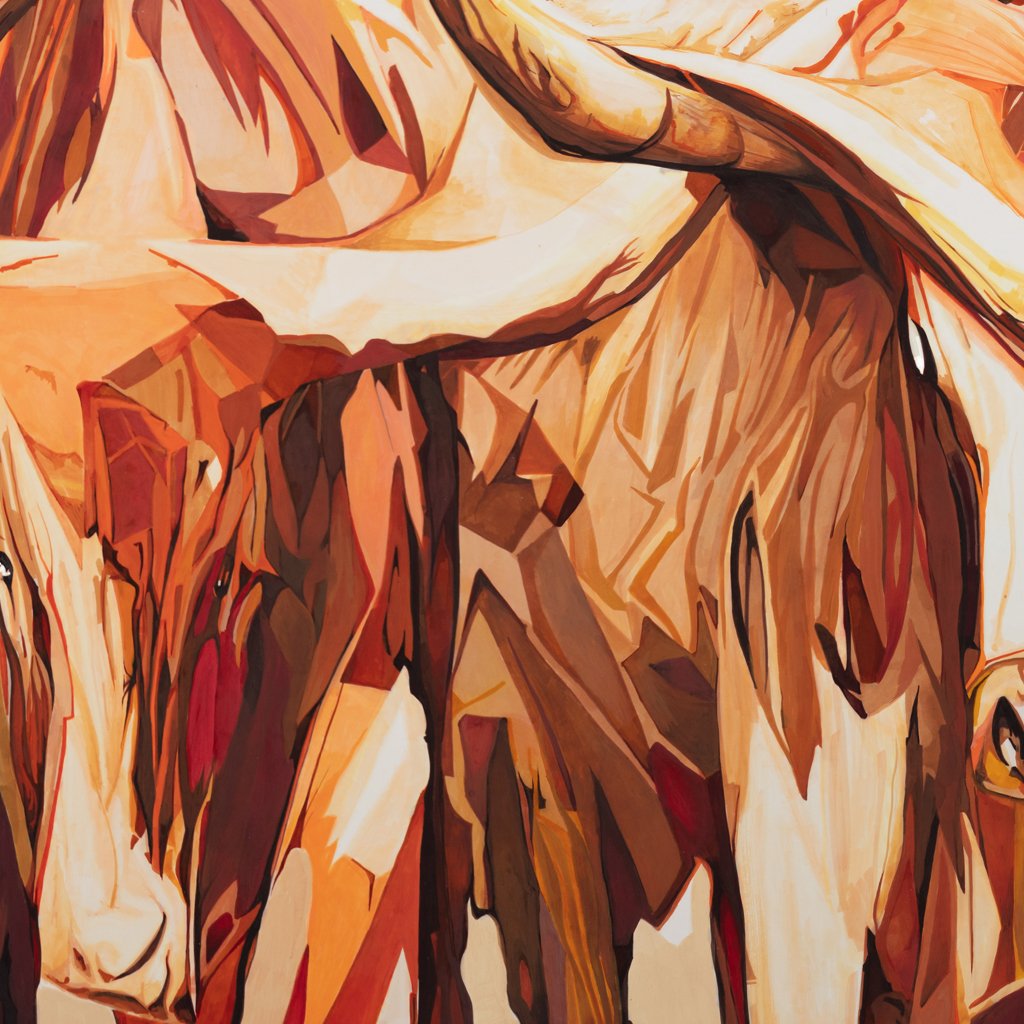
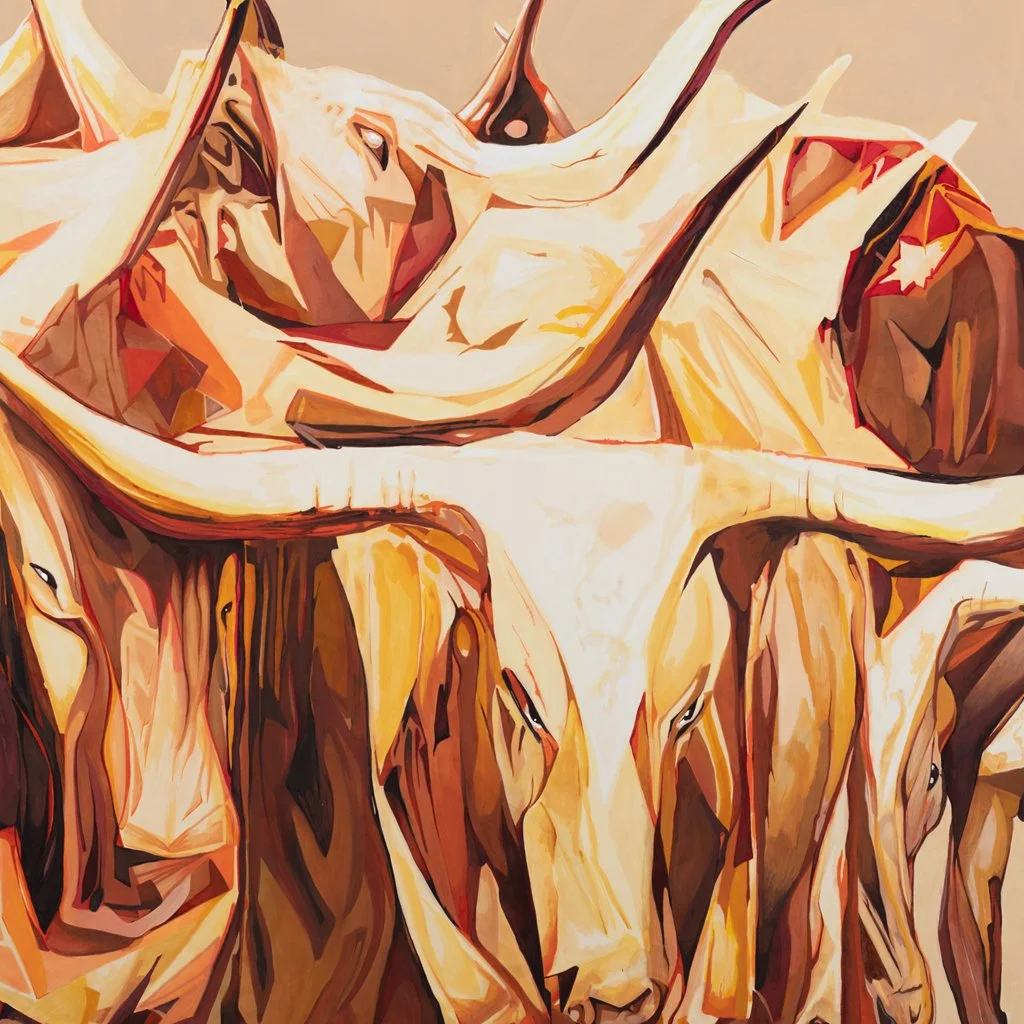
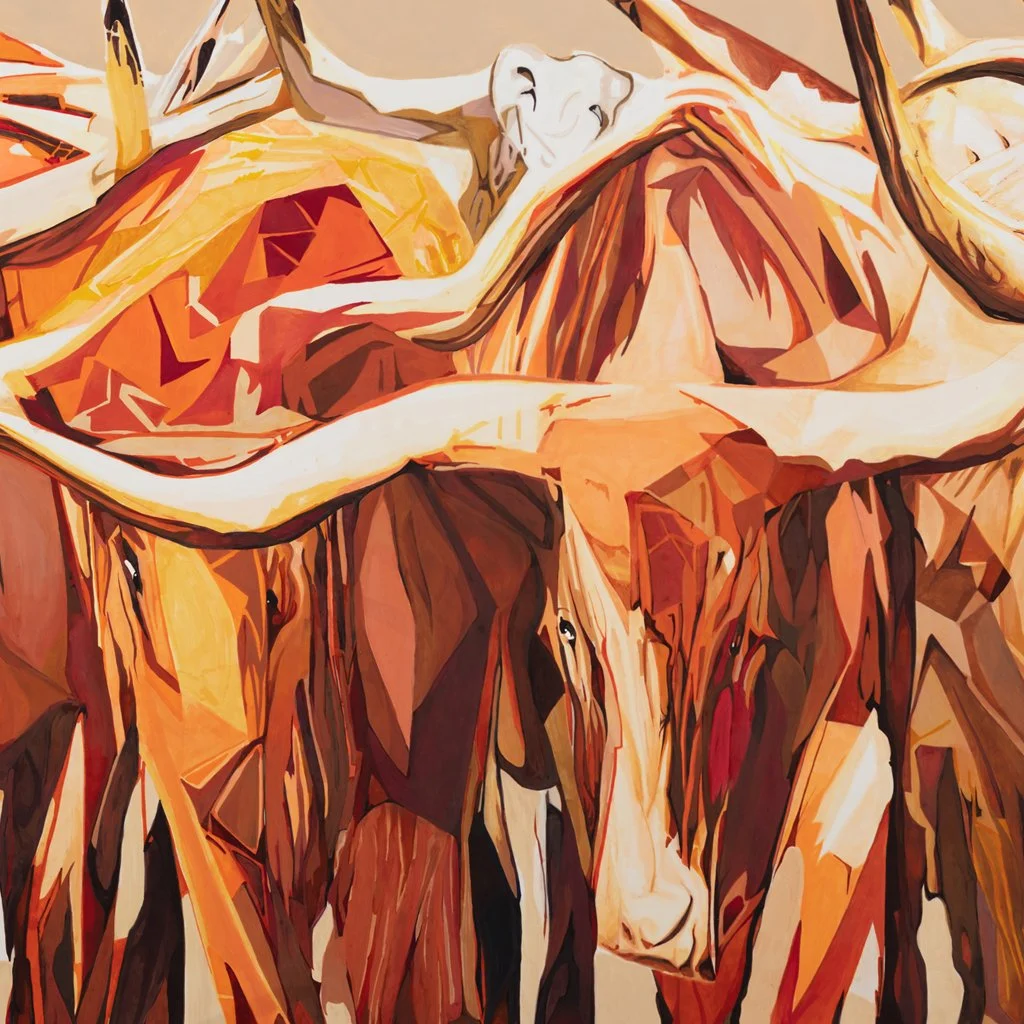
The geometry does the heavy lifting. Those triangular forms aren't decorative - they're the precise information your visual cortex needs to construct "herd of cattle in late afternoon light." Your brain takes the angular planes and builds understanding: multiple animals, grouped together, the way light falls across their forms, the spatial depth of bodies at different distances.
When your brain successfully resolves these forms - when it recognizes the herd from the geometric information - that's when your neurophysiology changes. Professor Semir Zeki's research shows that this moment of recognition, when your visual system achieves constancy and understands what it's looking at, creates measurable shifts in neural activity.
The color palette works through color constancy - your brain's ability to recognize colors as stable information. Those golds and ambers register as "late afternoon light" because your visual system has been calibrated by experience to understand what that specific quality of light means. But it's the geometric forms that let your brain construct the subject. The color supports the recognition, but the geometry makes it possible.
The Artist's Vision
The inspiration came from a specific moment on a ranch in Crested Butte, Colorado. Late afternoon, when the light turns everything golden, and a herd of cattle had gathered together. There's something about that scene - the collective presence of the animals, the quality of light, the stillness of the moment - that captures something essential about ranch life, about the rhythm of the day, about the relationship between animals and land.
The geometry translates that moment into form your brain can recognize. Not photographic detail, but the essential geometric relationships that let your visual system construct "herd in late afternoon." The triangular planes give your brain the information it needs to understand multiple bodies in space, the way they relate to each other, the collective mass of the group.
When your brain recognizes what it's seeing - when it assembles those geometric pieces into the complete scene - that's when you feel it. The calm, the warmth, the sense of that specific time of day. You're not reacting to the shapes themselves. You're reacting to what you've recognized, to the moment your brain just reconstructed from geometric information.
This is form constancy at work. The geometric data is sufficient for recognition. The recognition triggers the response. "Gold Dust" captures not just what that moment looked like, but the essential forms that let your brain understand what it was - and in understanding, experience the shift that comes with recognition itself.
Gold Dust
You approach it and there's warmth here - golds, ambers, earth tones mixing with geometric forms. Your brain starts scanning, piecing together the triangular planes. Then it clicks. Cattle. Not just one, but a herd, bodies close together, that late afternoon light catching on their forms. When the recognition happens, something settles in you. There's a calm that comes with understanding what you're seeing - the quiet energy of animals gathered together, the golden hour glow, the stillness of that moment. Your physiology shifts because your brain just constructed the scene from geometric information.
What's Actually Happening
This piece demonstrates form constancy working across multiple subjects simultaneously. Your visual system isn't just recognizing one form - it's assembling an entire herd from geometric data. Each triangular plane gives your brain information about spatial relationships, about where one animal ends and another begins, about the collective mass of bodies in proximity.
The geometry does the heavy lifting. Those triangular forms aren't decorative - they're the precise information your visual cortex needs to construct "herd of cattle in late afternoon light." Your brain takes the angular planes and builds understanding: multiple animals, grouped together, the way light falls across their forms, the spatial depth of bodies at different distances.
When your brain successfully resolves these forms - when it recognizes the herd from the geometric information - that's when your neurophysiology changes. Professor Semir Zeki's research shows that this moment of recognition, when your visual system achieves constancy and understands what it's looking at, creates measurable shifts in neural activity.
The color palette works through color constancy - your brain's ability to recognize colors as stable information. Those golds and ambers register as "late afternoon light" because your visual system has been calibrated by experience to understand what that specific quality of light means. But it's the geometric forms that let your brain construct the subject. The color supports the recognition, but the geometry makes it possible.
The Artist's Vision
The inspiration came from a specific moment on a ranch in Crested Butte, Colorado. Late afternoon, when the light turns everything golden, and a herd of cattle had gathered together. There's something about that scene - the collective presence of the animals, the quality of light, the stillness of the moment - that captures something essential about ranch life, about the rhythm of the day, about the relationship between animals and land.
The geometry translates that moment into form your brain can recognize. Not photographic detail, but the essential geometric relationships that let your visual system construct "herd in late afternoon." The triangular planes give your brain the information it needs to understand multiple bodies in space, the way they relate to each other, the collective mass of the group.
When your brain recognizes what it's seeing - when it assembles those geometric pieces into the complete scene - that's when you feel it. The calm, the warmth, the sense of that specific time of day. You're not reacting to the shapes themselves. You're reacting to what you've recognized, to the moment your brain just reconstructed from geometric information.
This is form constancy at work. The geometric data is sufficient for recognition. The recognition triggers the response. "Gold Dust" captures not just what that moment looked like, but the essential forms that let your brain understand what it was - and in understanding, experience the shift that comes with recognition itself.