

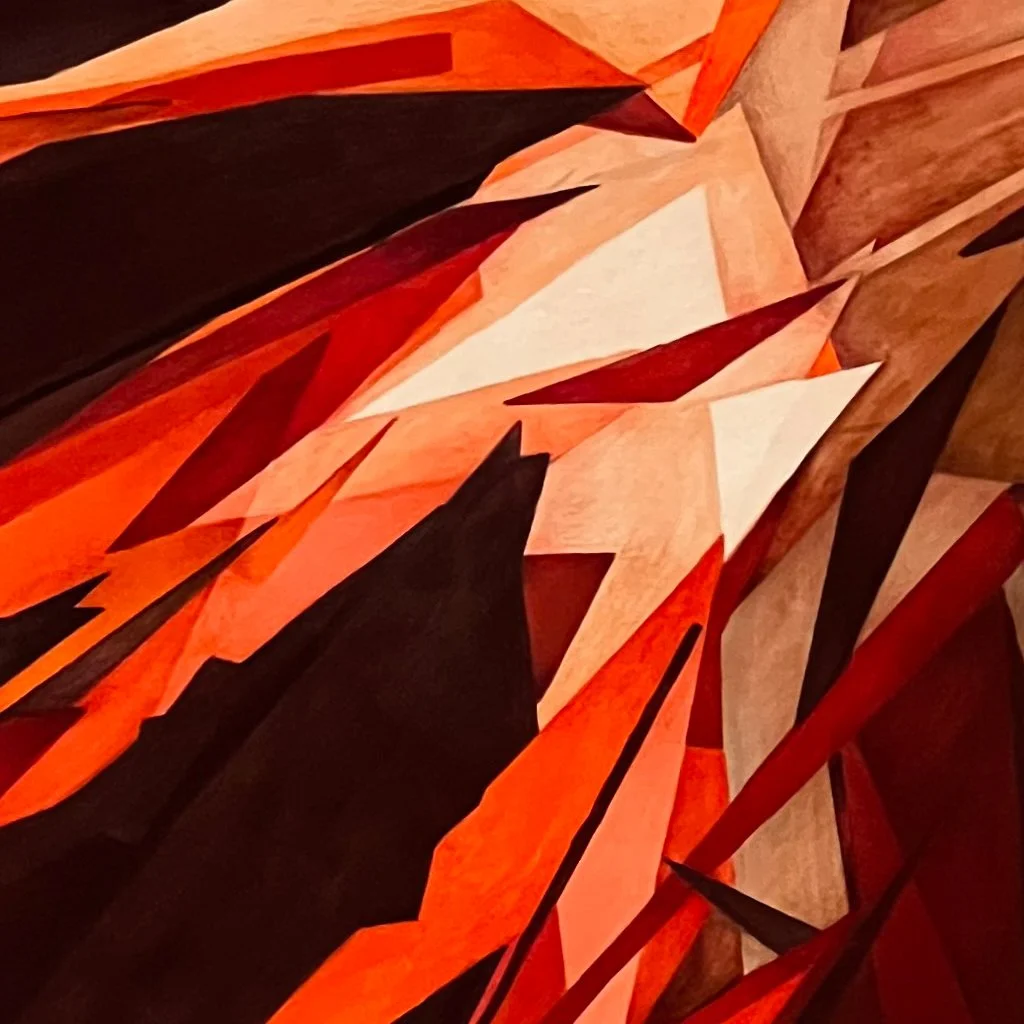
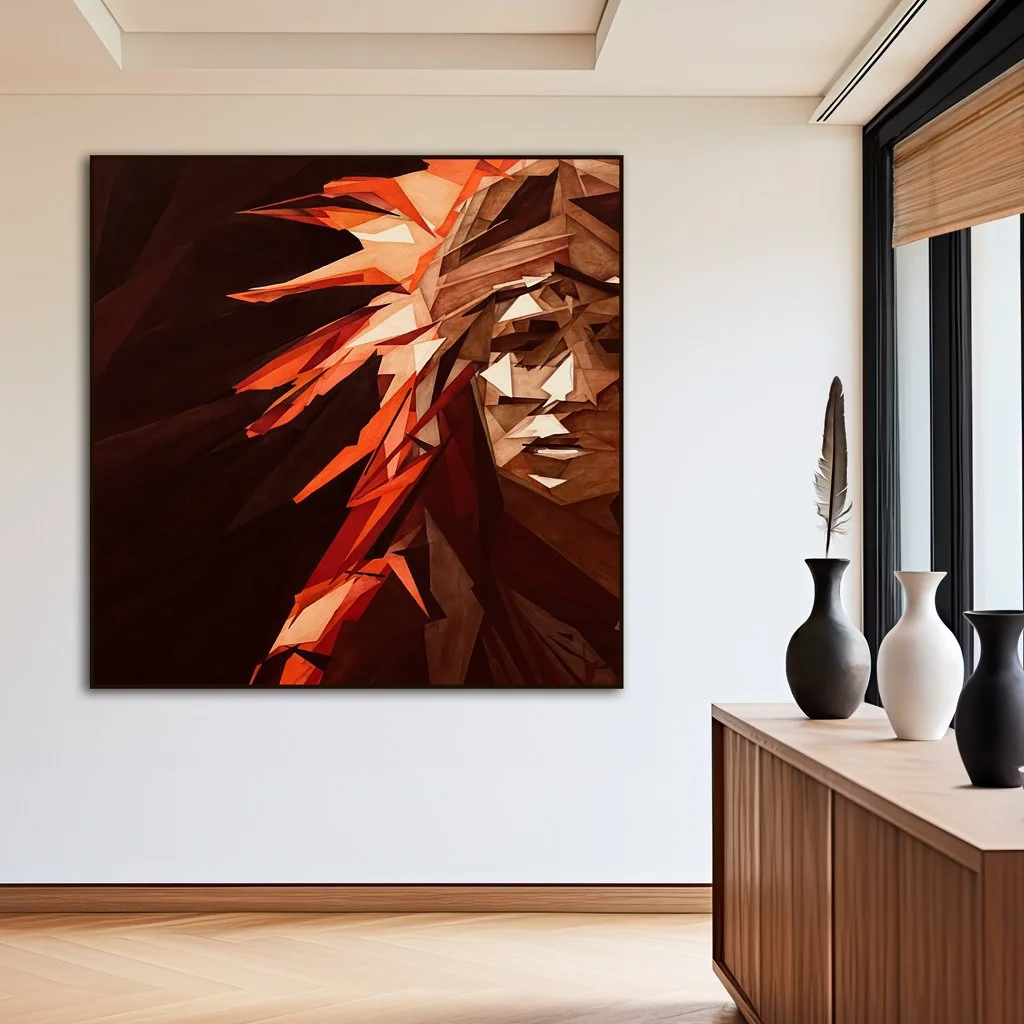
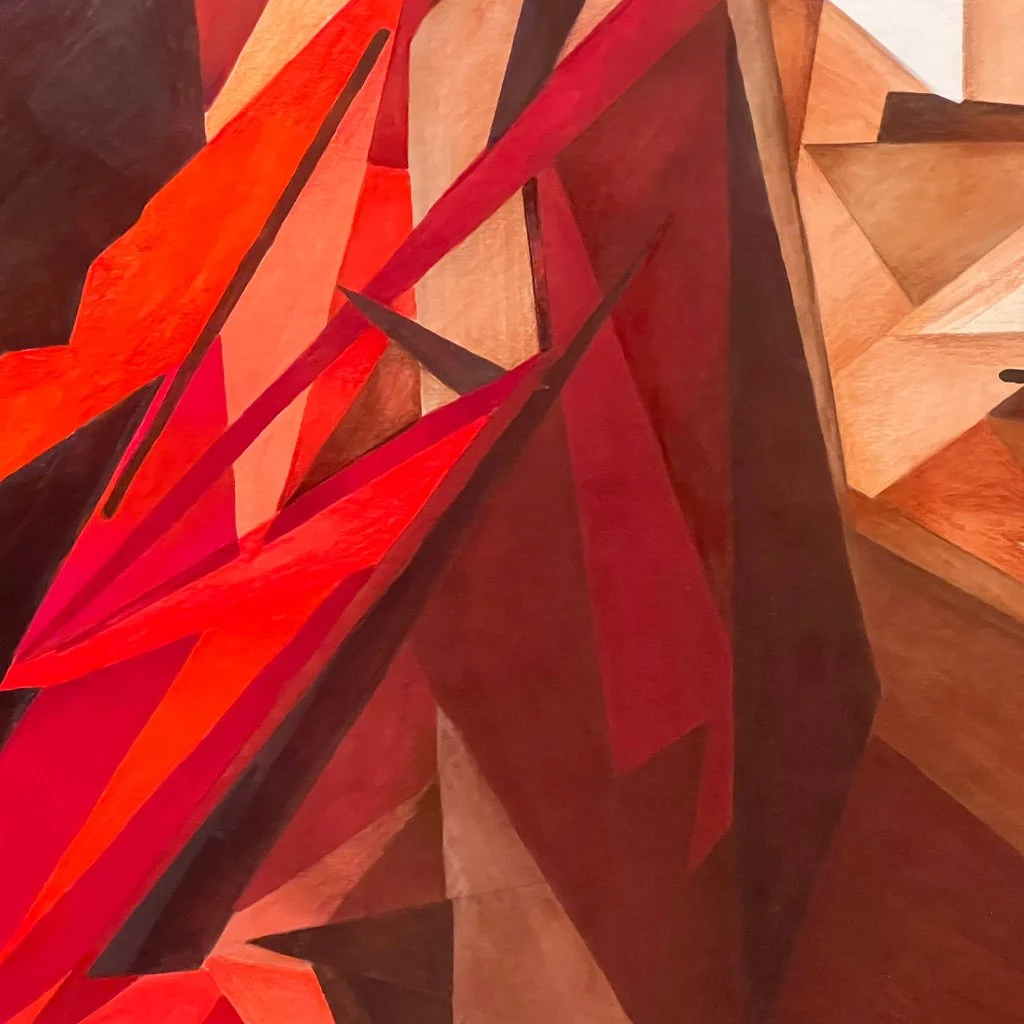
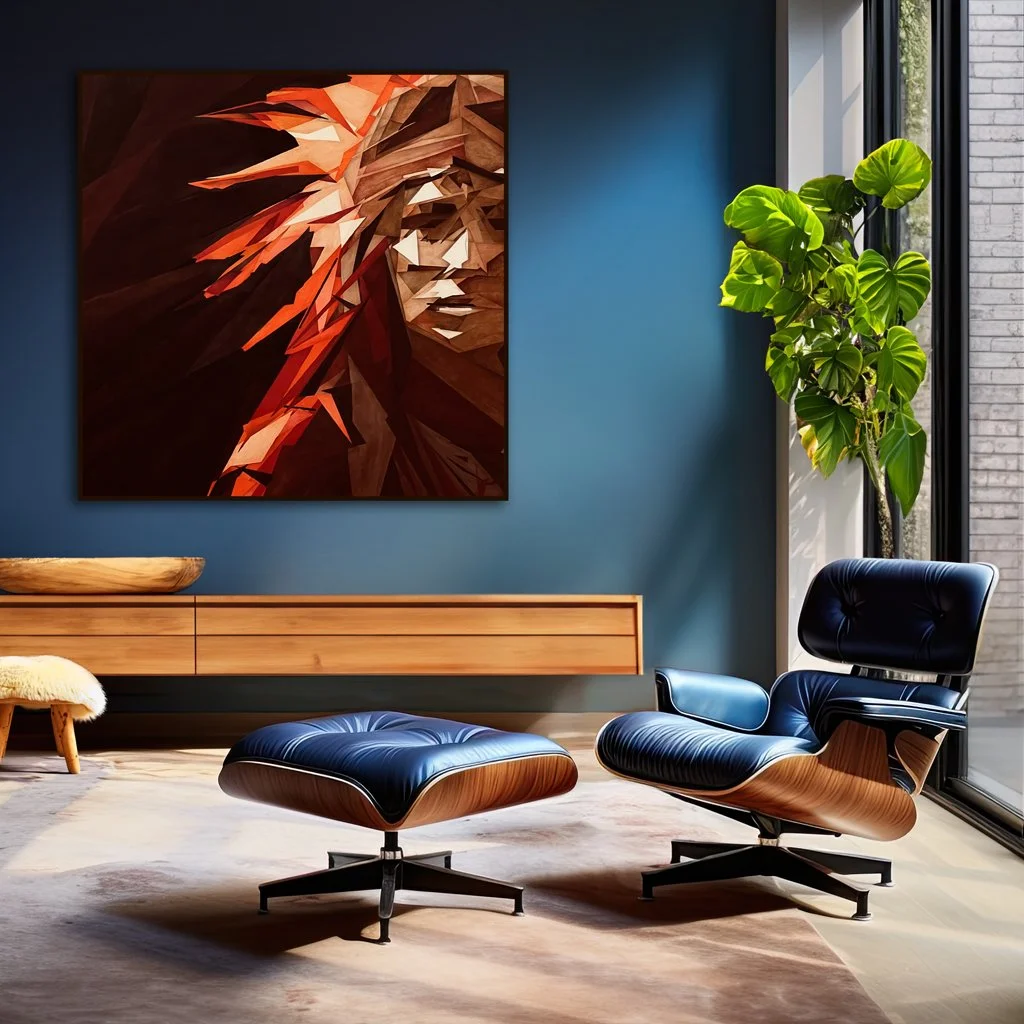
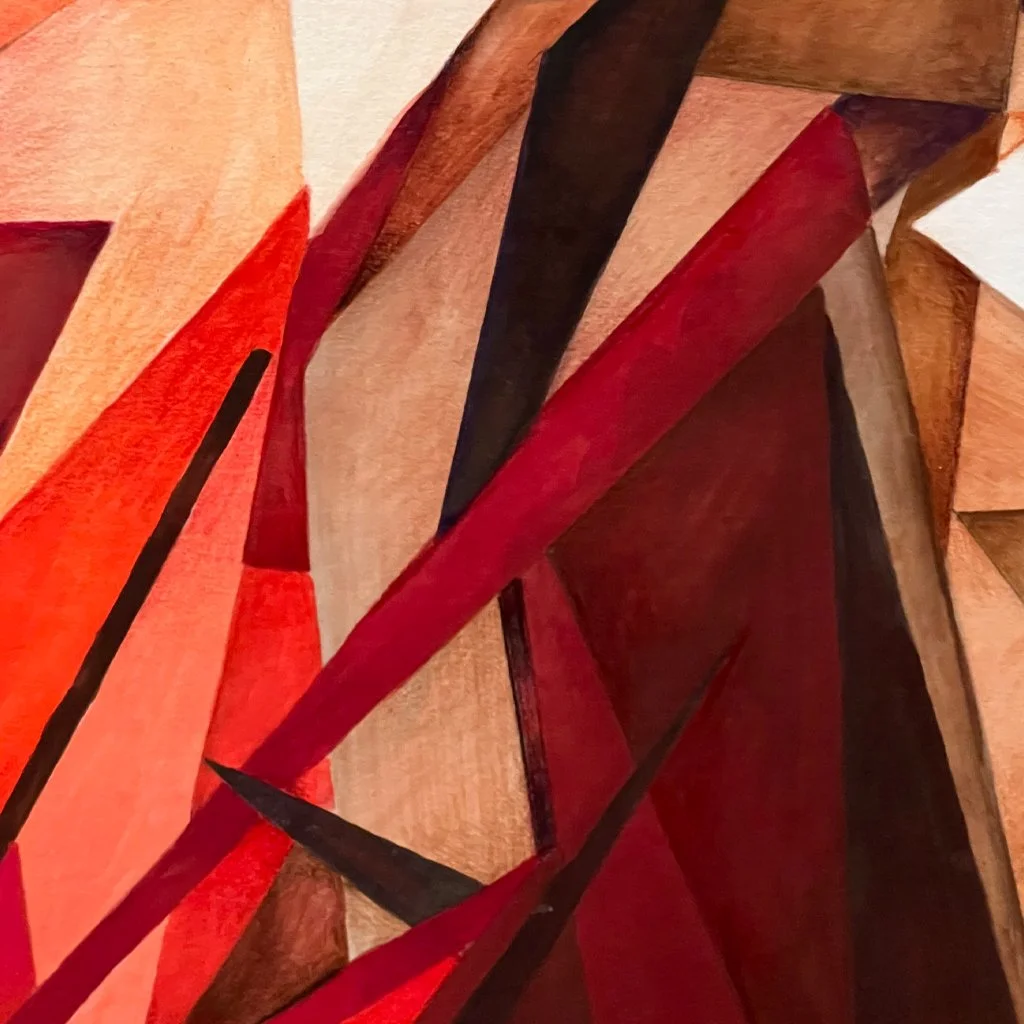
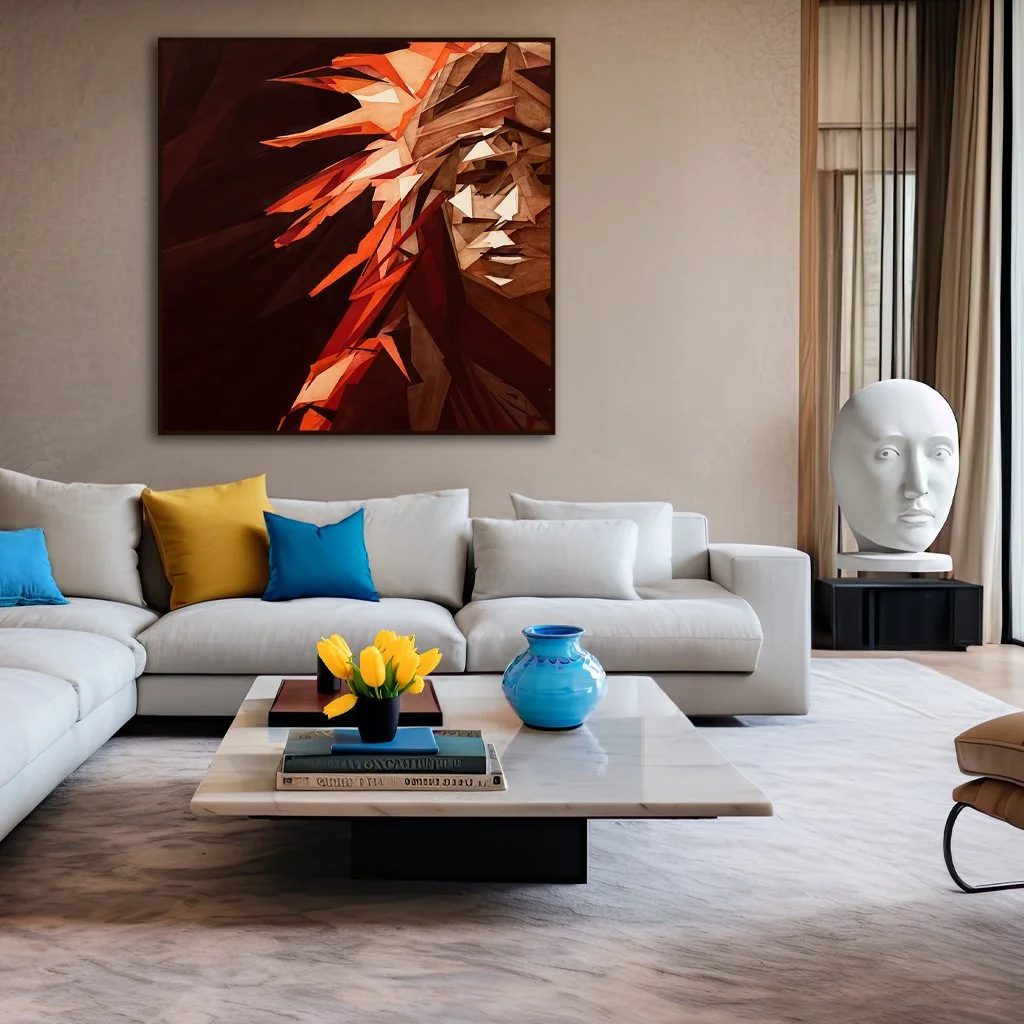
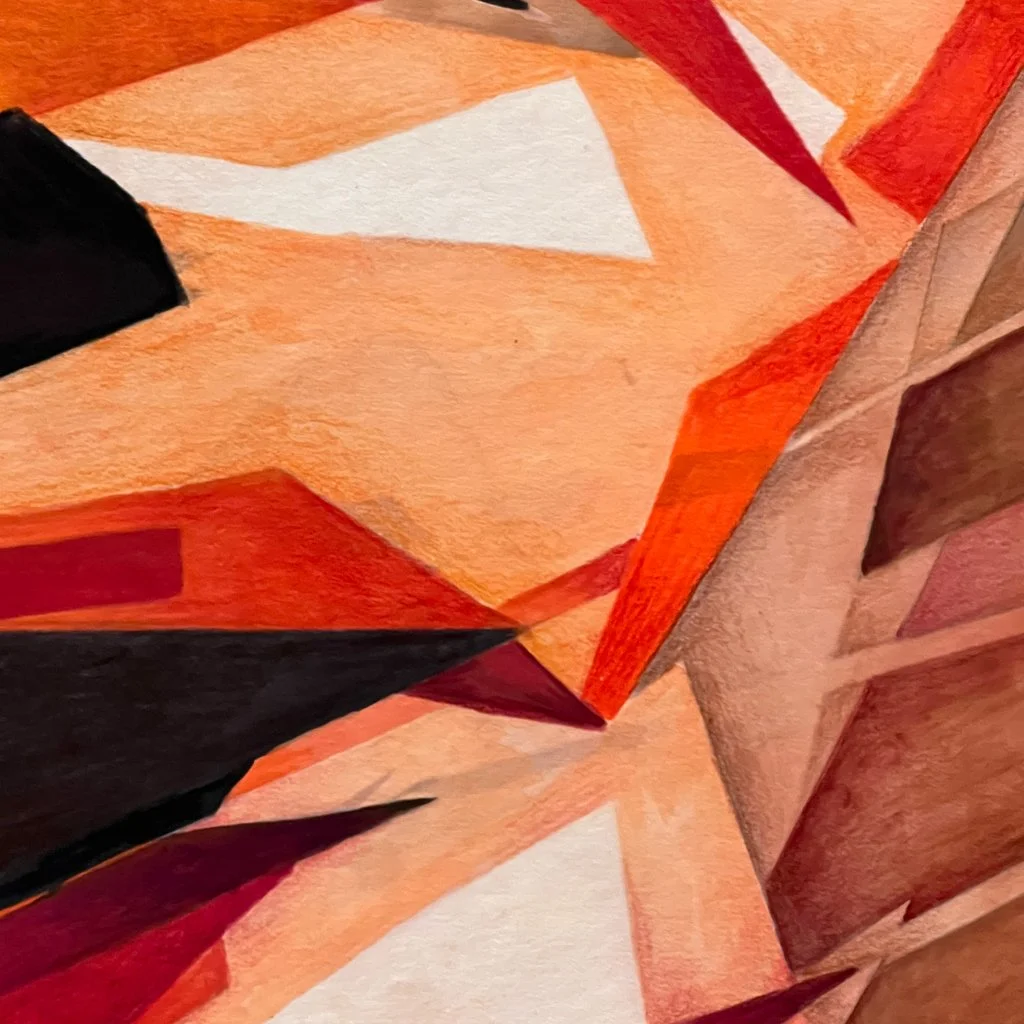

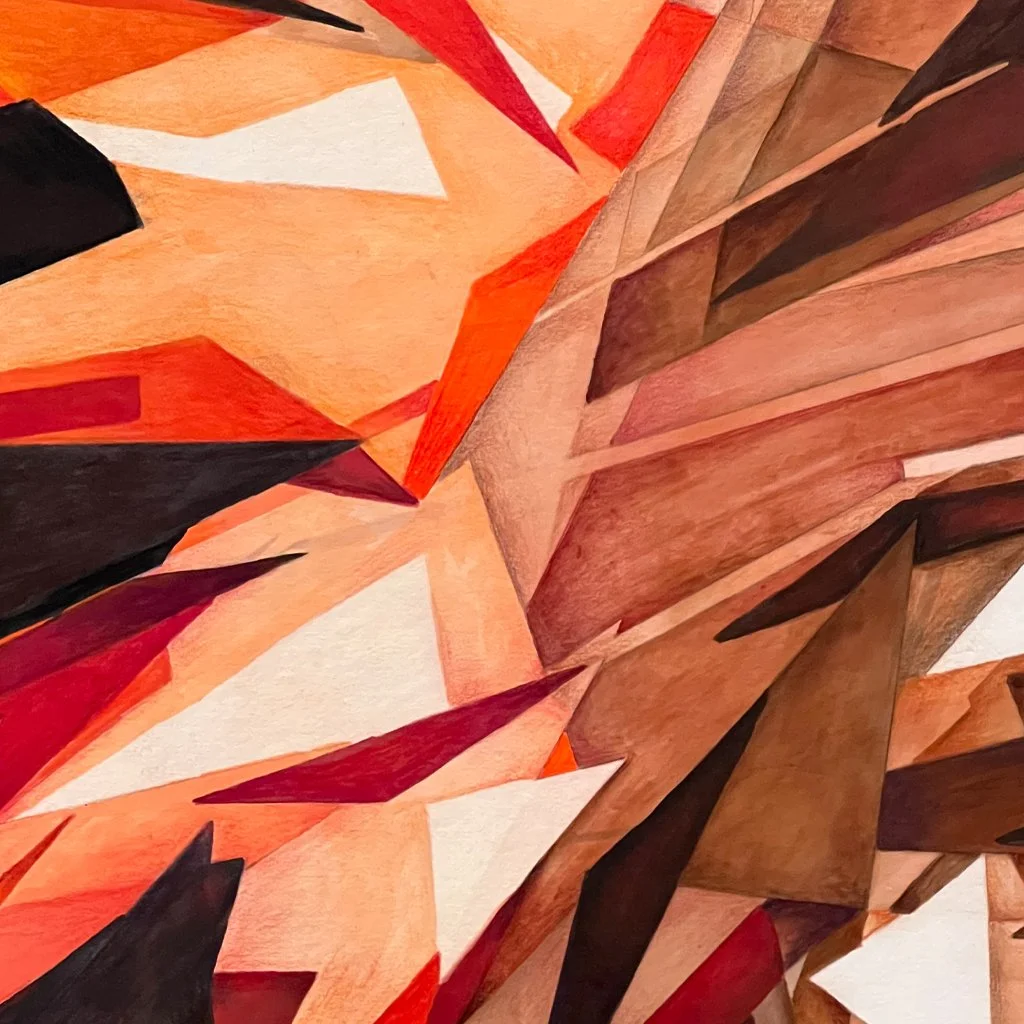
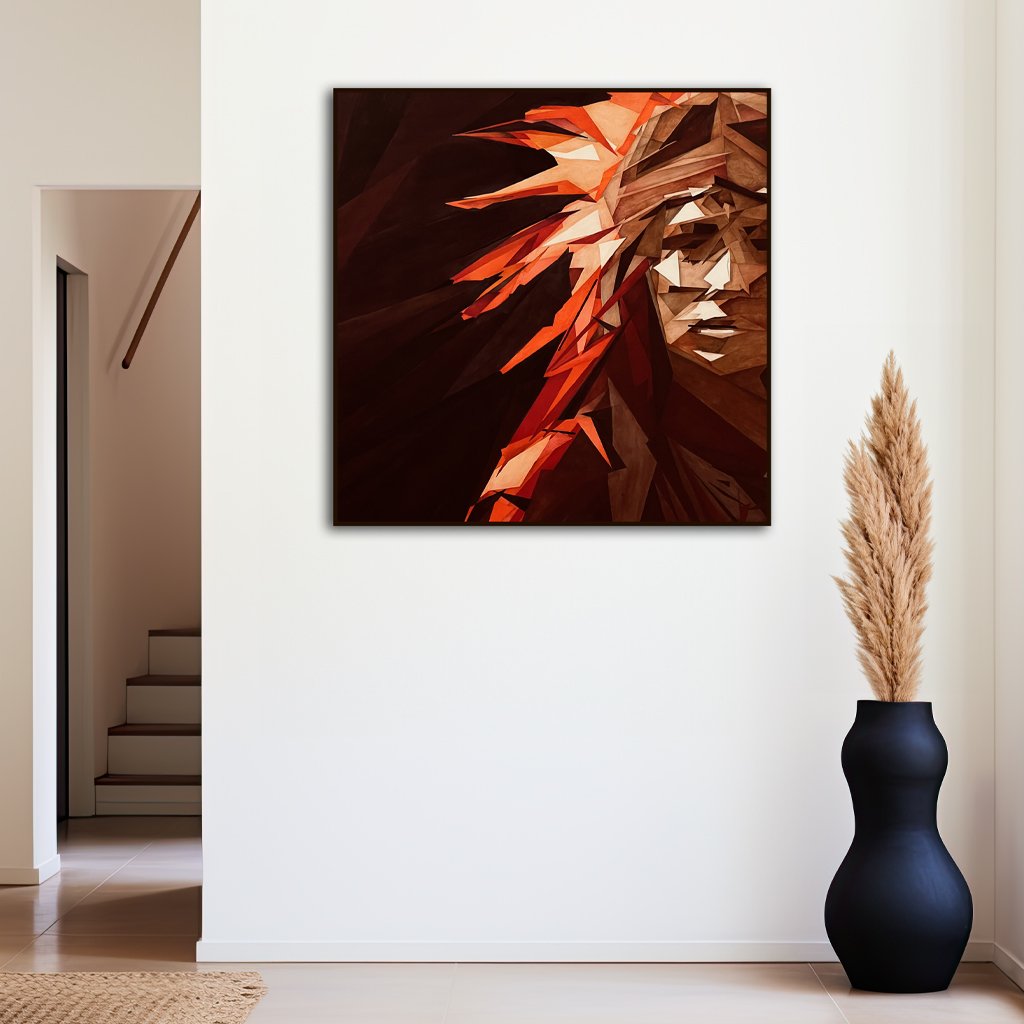
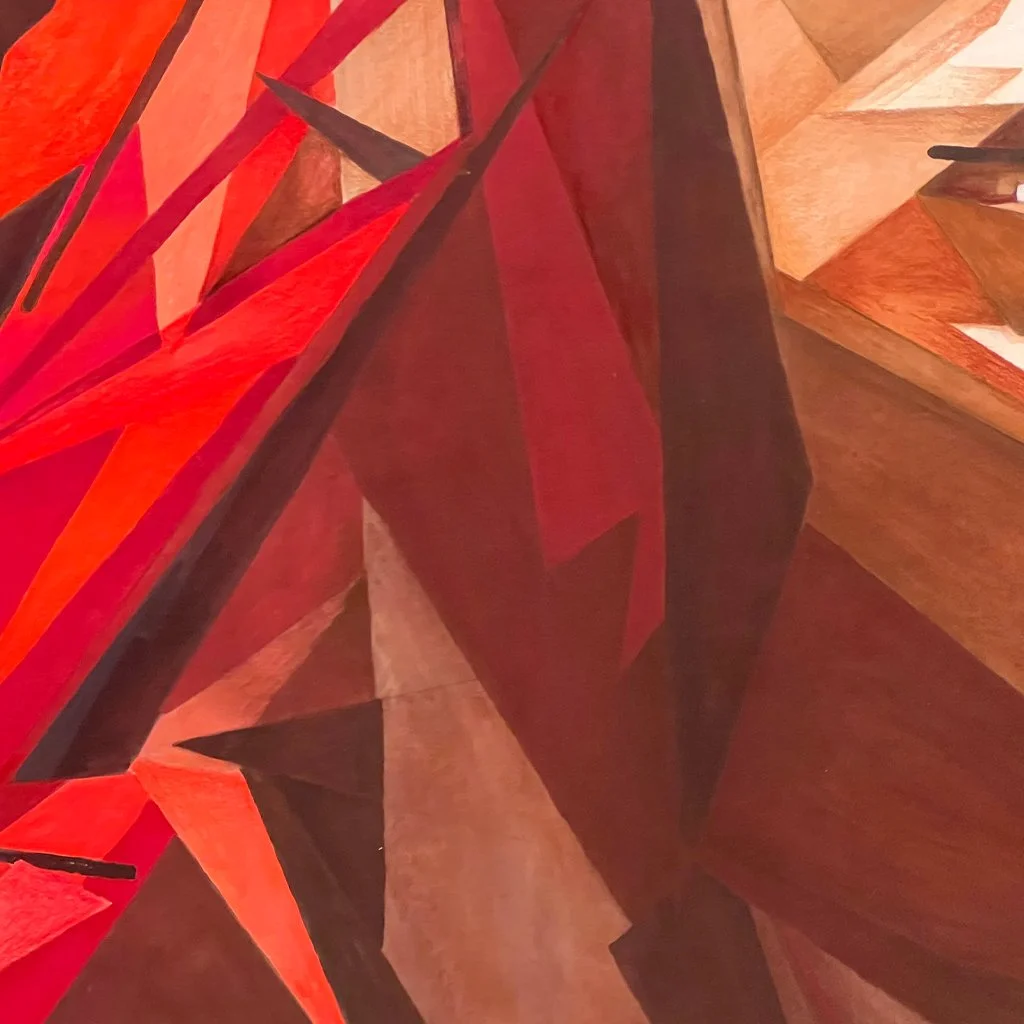
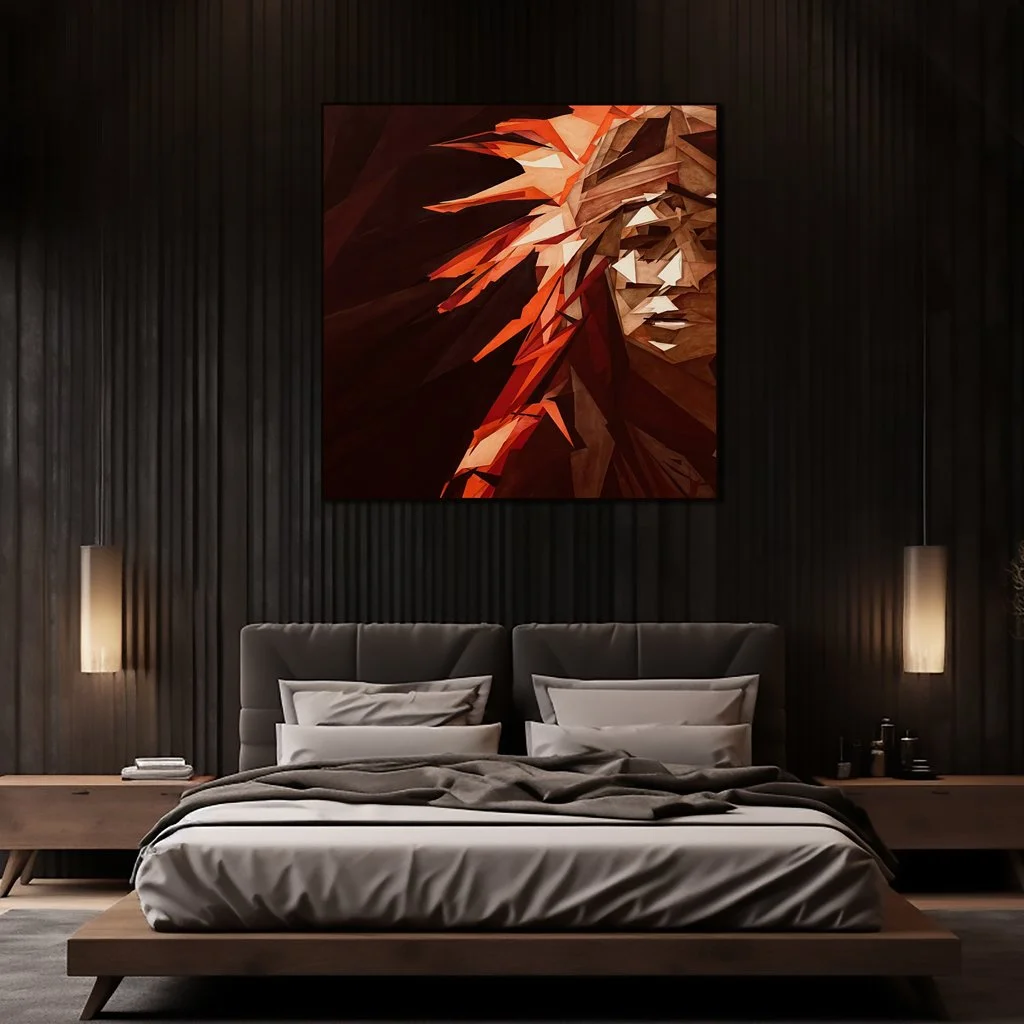
30”x30” Original is SOLD / 25 Limited Numbered Editions are 1000.00 ea./ Colorado Editions are 700.00ea. / Print 250 ea.
“HIDDEN”
You walk into the room and something shifts. Before you even consciously register the piece, there's a pull - a subtle gravitational draw toward the wall. Your breathing might slow. There's a feeling of recognition, though you can't quite place it. It's like glimpsing something familiar in a dream, or remembering a place you've never been.
As you move closer, the emotions layer. Curiosity, yes - but underneath that, something quieter. Calm. Maybe a touch of awe. The golden geometry at the center seems to pulse without moving, and you find yourself staring longer than you planned. There's comfort in those proportions, in the way the forms nest within each other. Your mind wants to trace the patterns, follow the lines inward. Some viewers report feeling more centered just standing in front of it. Others describe a gentle opening sensation, like their perception is expanding to accommodate something they weren't quite seeing before.
What's Actually Happening
This isn't mystical - it's neuroscience. The geometric patterns in "Hidden" are built on ratios that appear throughout nature and biology. Your visual cortex recognizes these proportions at a pre-conscious level because they're encoded in everything from the spiral of your cochlea to the branching of your neurons. When you encounter them in art, your brain doesn't have to work to process them - they're already the language your nervous system speaks.
The experience engages what neuroscientists call embodied cognition - the understanding that your body and brain aren't separate processors. When your eyes trace those inward-spiraling forms, your body subtly mimics the movement. The centering geometry creates an actual centering response in your physical system. You're not just looking at depth and dimension; your proprioceptive system is responding as if you're moving through that space. This is why you might notice your posture shift, your breath deepen, or a sense of physical settling as you stand with the piece.
The layered deep reds and atmospheric depth engage your visual association cortex differently than flat images. Your brain is constantly trying to resolve the spatial relationships, creating a gentle, meditative state of sustained attention. Meanwhile, the warm golden center against cool cosmic blues creates a natural focal point that guides your eye in a pattern similar to how you'd scan a face - another deeply hardwired response.
The longer you observe, the more your perception shifts. This is your brain moving from quick pattern recognition into deeper processing - the sustained looking that actually changes your neural state. Art observation activates healing responses in the body. It's not decoration. It's an intervention in consciousness itself.
30”x30” Original is SOLD / 25 Limited Numbered Editions are 1000.00 ea./ Colorado Editions are 700.00ea. / Print 250 ea.
“HIDDEN”
You walk into the room and something shifts. Before you even consciously register the piece, there's a pull - a subtle gravitational draw toward the wall. Your breathing might slow. There's a feeling of recognition, though you can't quite place it. It's like glimpsing something familiar in a dream, or remembering a place you've never been.
As you move closer, the emotions layer. Curiosity, yes - but underneath that, something quieter. Calm. Maybe a touch of awe. The golden geometry at the center seems to pulse without moving, and you find yourself staring longer than you planned. There's comfort in those proportions, in the way the forms nest within each other. Your mind wants to trace the patterns, follow the lines inward. Some viewers report feeling more centered just standing in front of it. Others describe a gentle opening sensation, like their perception is expanding to accommodate something they weren't quite seeing before.
What's Actually Happening
This isn't mystical - it's neuroscience. The geometric patterns in "Hidden" are built on ratios that appear throughout nature and biology. Your visual cortex recognizes these proportions at a pre-conscious level because they're encoded in everything from the spiral of your cochlea to the branching of your neurons. When you encounter them in art, your brain doesn't have to work to process them - they're already the language your nervous system speaks.
The experience engages what neuroscientists call embodied cognition - the understanding that your body and brain aren't separate processors. When your eyes trace those inward-spiraling forms, your body subtly mimics the movement. The centering geometry creates an actual centering response in your physical system. You're not just looking at depth and dimension; your proprioceptive system is responding as if you're moving through that space. This is why you might notice your posture shift, your breath deepen, or a sense of physical settling as you stand with the piece.
The layered deep reds and atmospheric depth engage your visual association cortex differently than flat images. Your brain is constantly trying to resolve the spatial relationships, creating a gentle, meditative state of sustained attention. Meanwhile, the warm golden center against cool cosmic blues creates a natural focal point that guides your eye in a pattern similar to how you'd scan a face - another deeply hardwired response.
The longer you observe, the more your perception shifts. This is your brain moving from quick pattern recognition into deeper processing - the sustained looking that actually changes your neural state. Art observation activates healing responses in the body. It's not decoration. It's an intervention in consciousness itself.