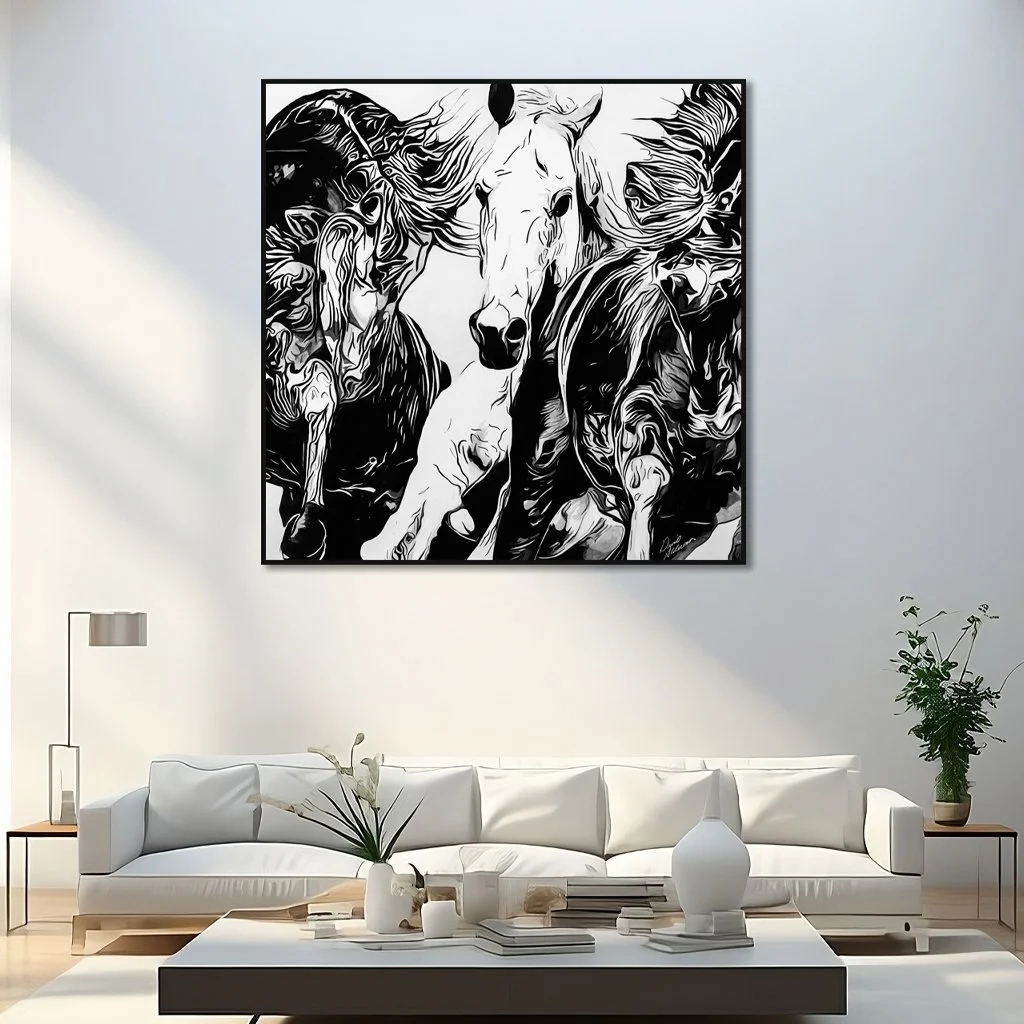
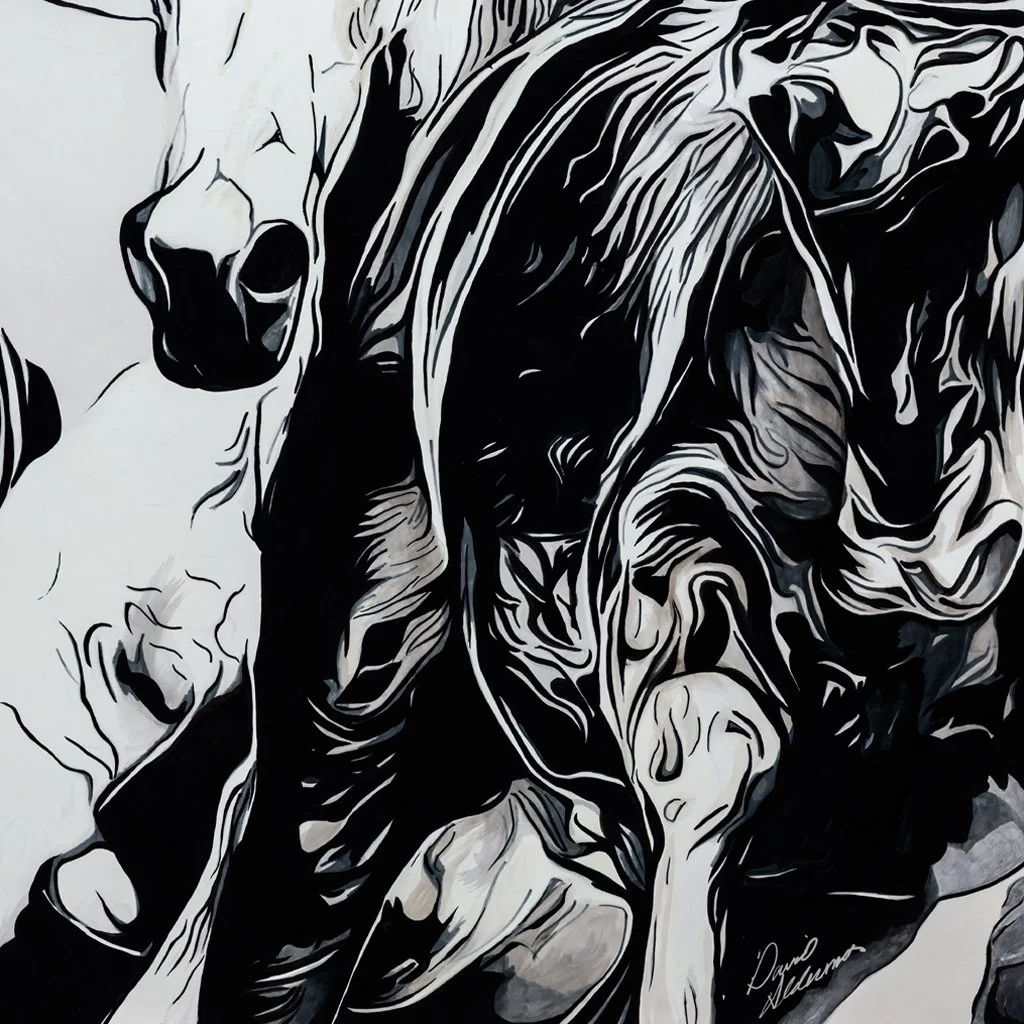
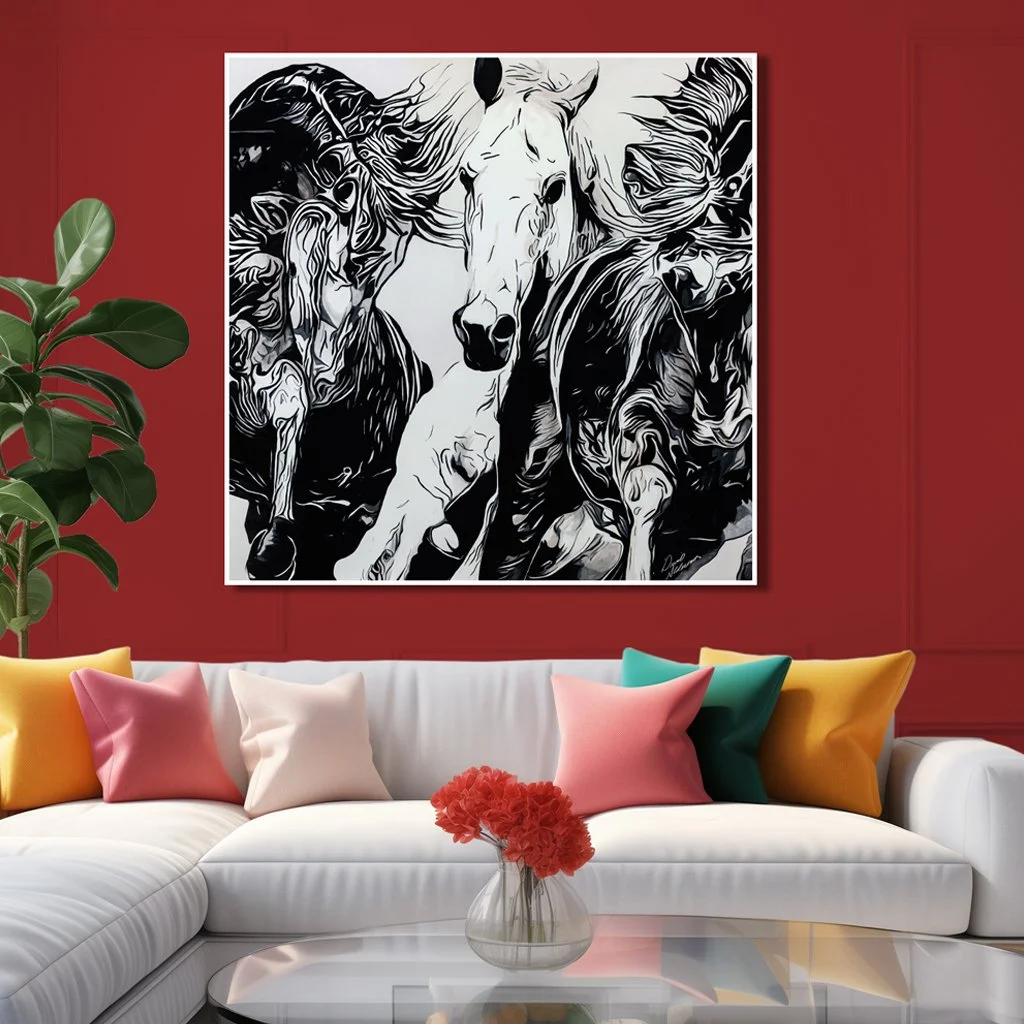
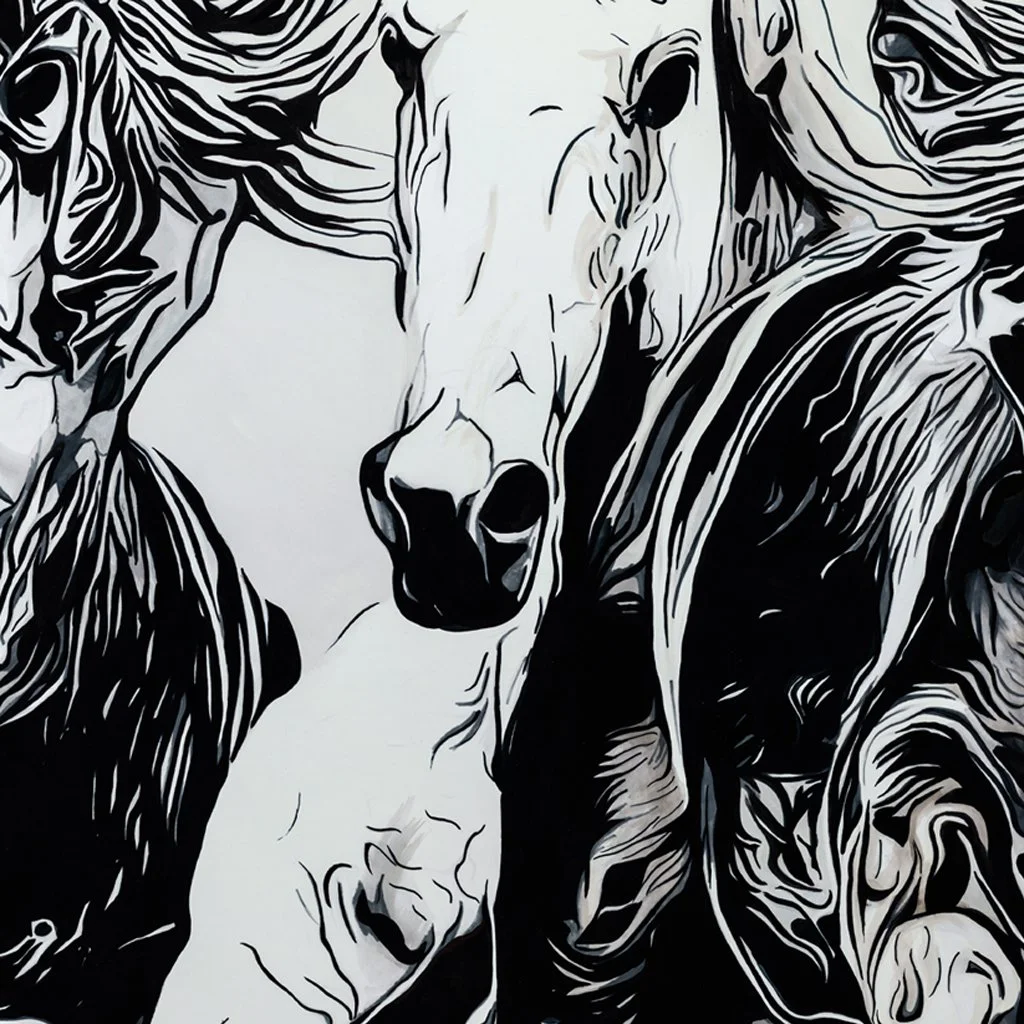
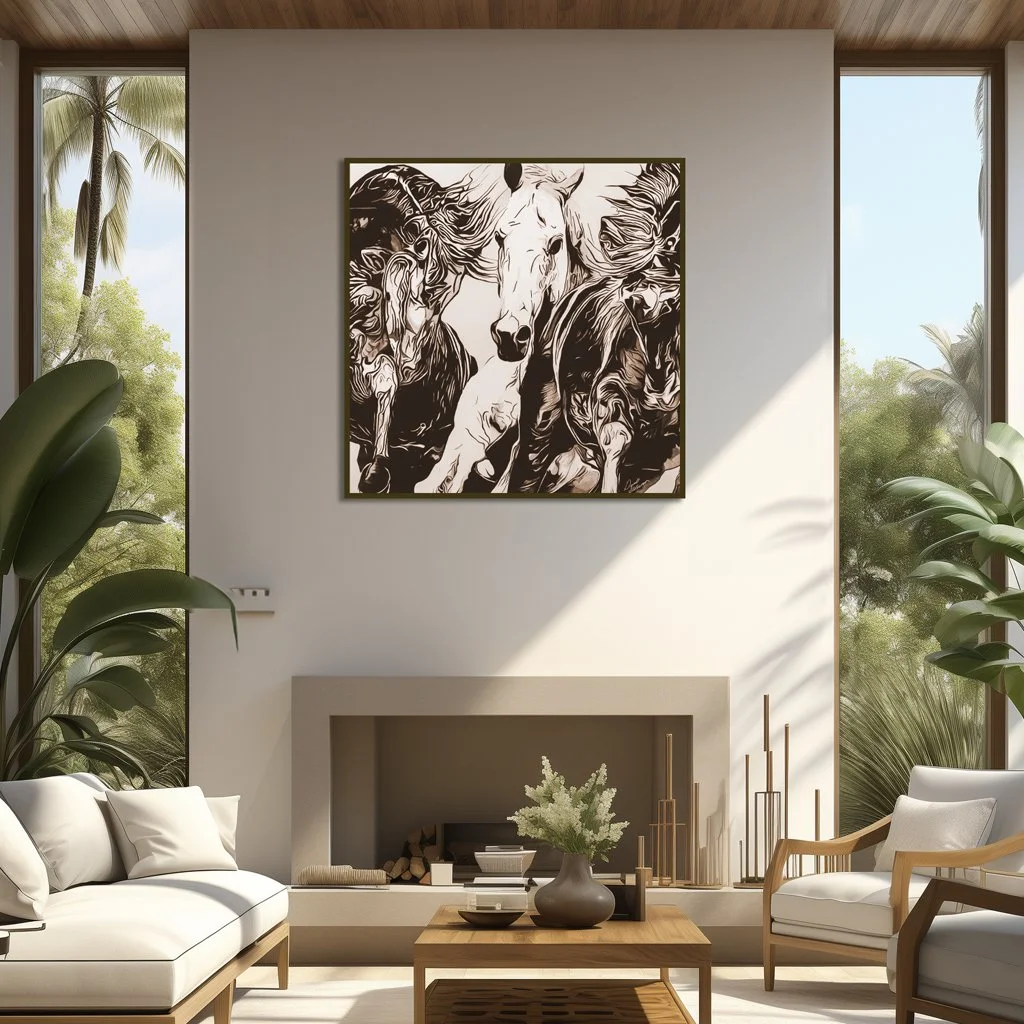
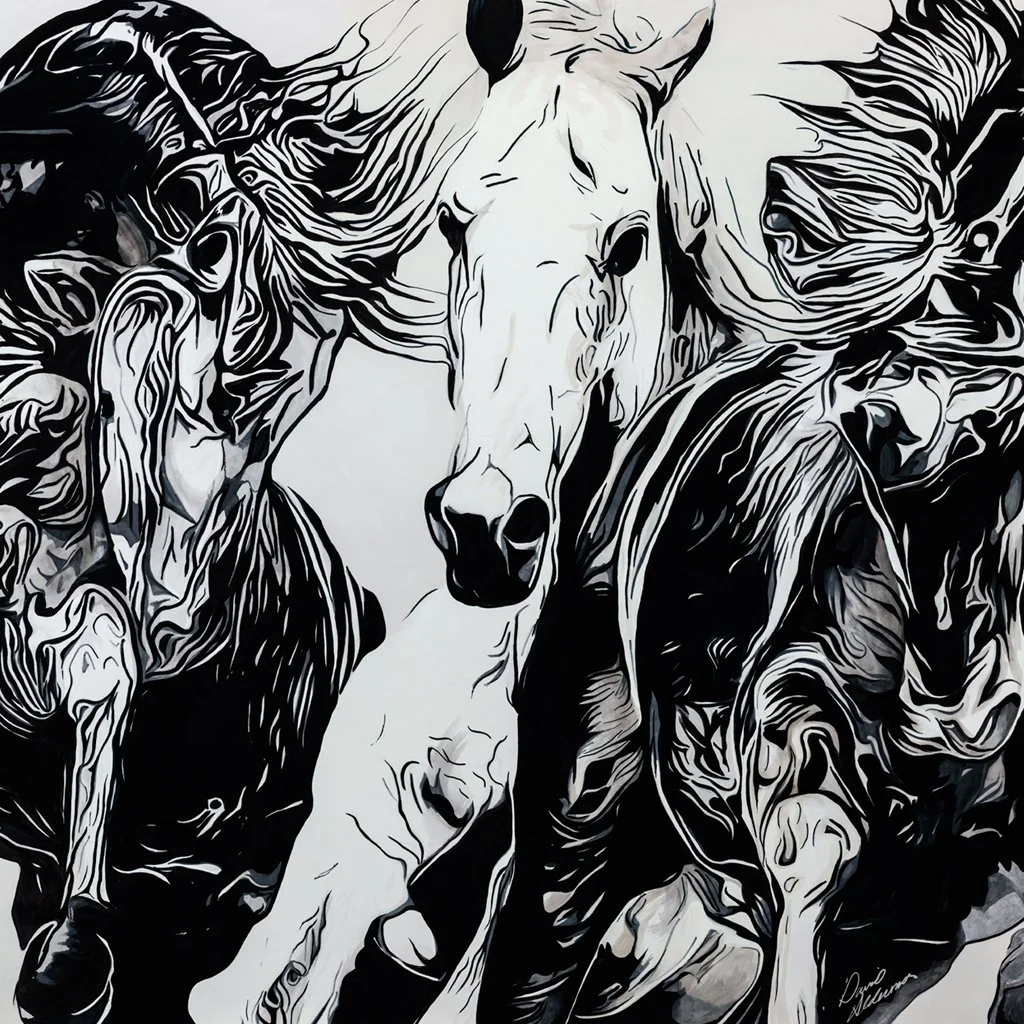
RUSH
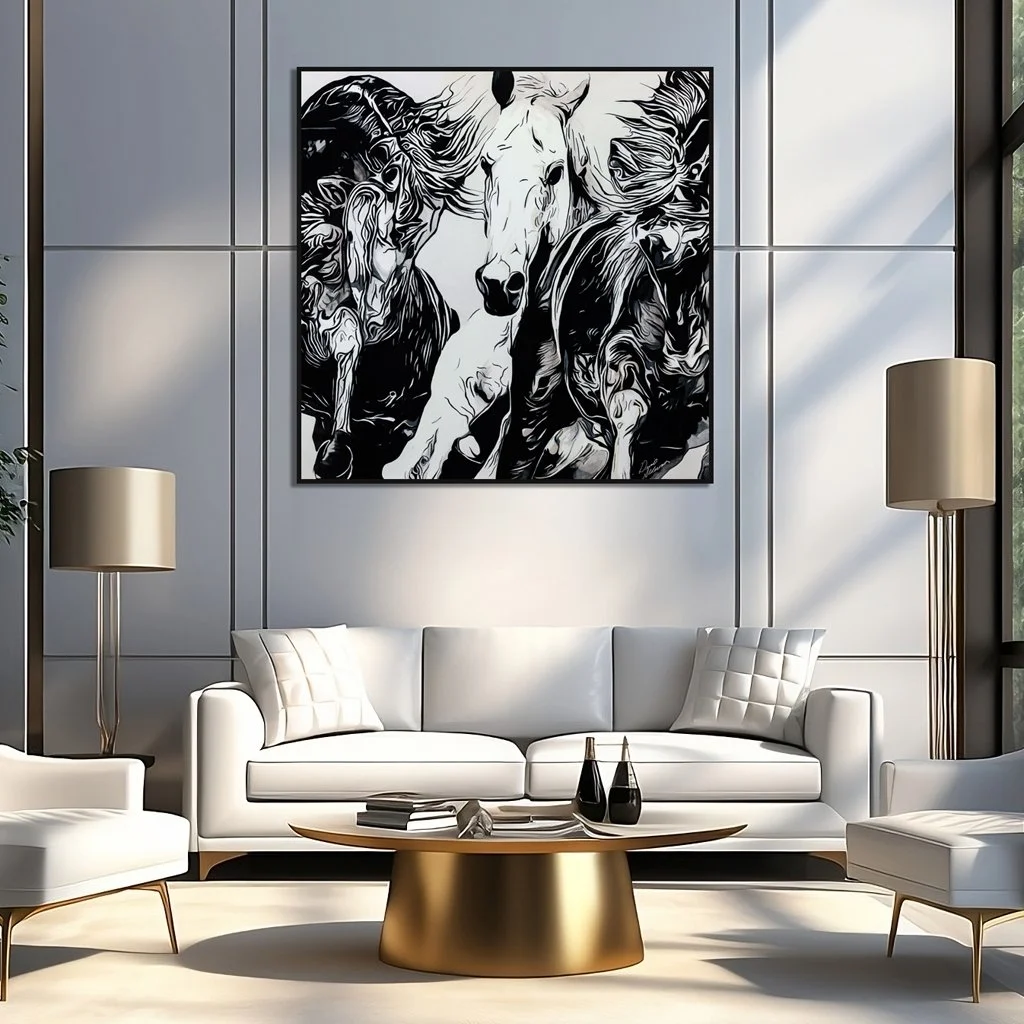
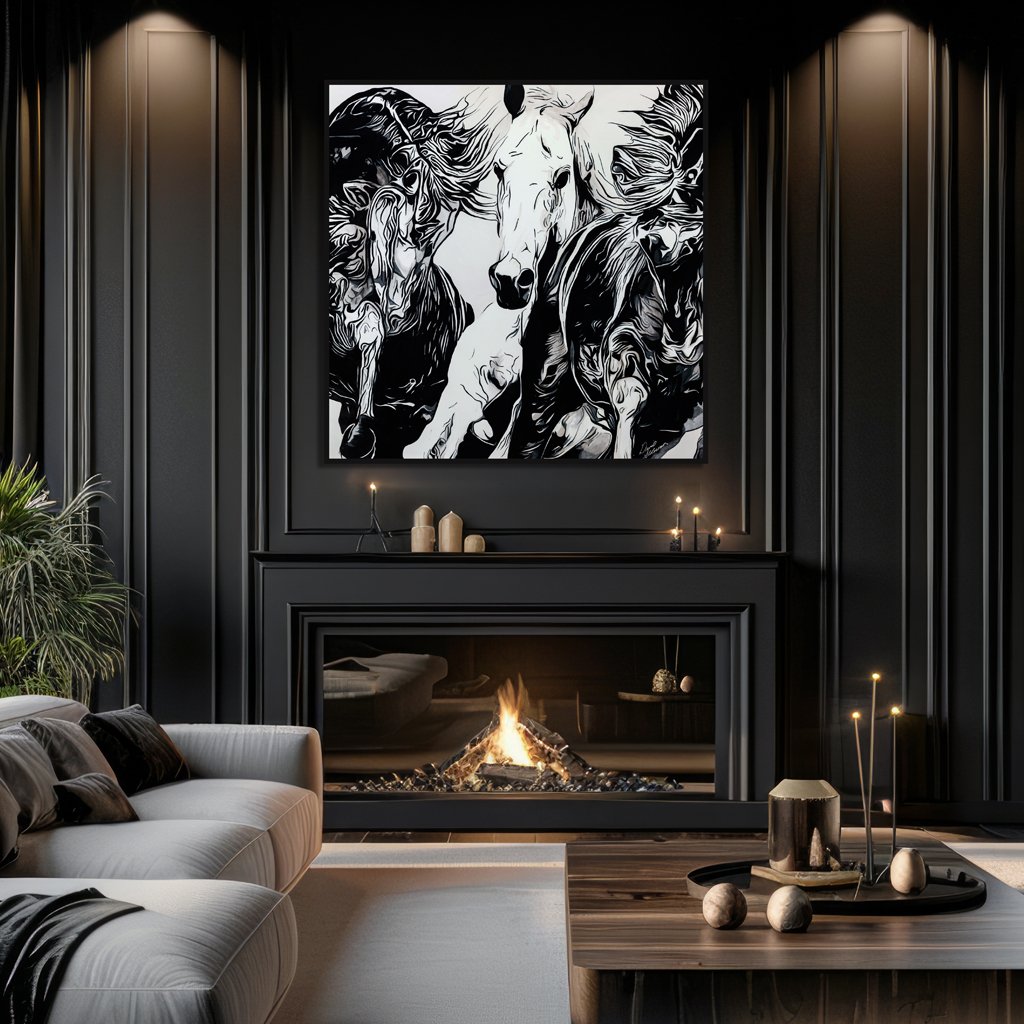
You look at it and your brain immediately starts working - forms moving, bodies in motion, something flowing across the canvas. Then it resolves. Horses. Wild horses running together, that collective energy of a herd in full motion. When the recognition clicks, something shifts in you. Maybe your breath quickens slightly, your posture changes. Your physiology responds because your brain just recognized movement, freedom, the power of wild horses running. You're reacting to what you recognized, not to the forms themselves.
What's Actually Happening
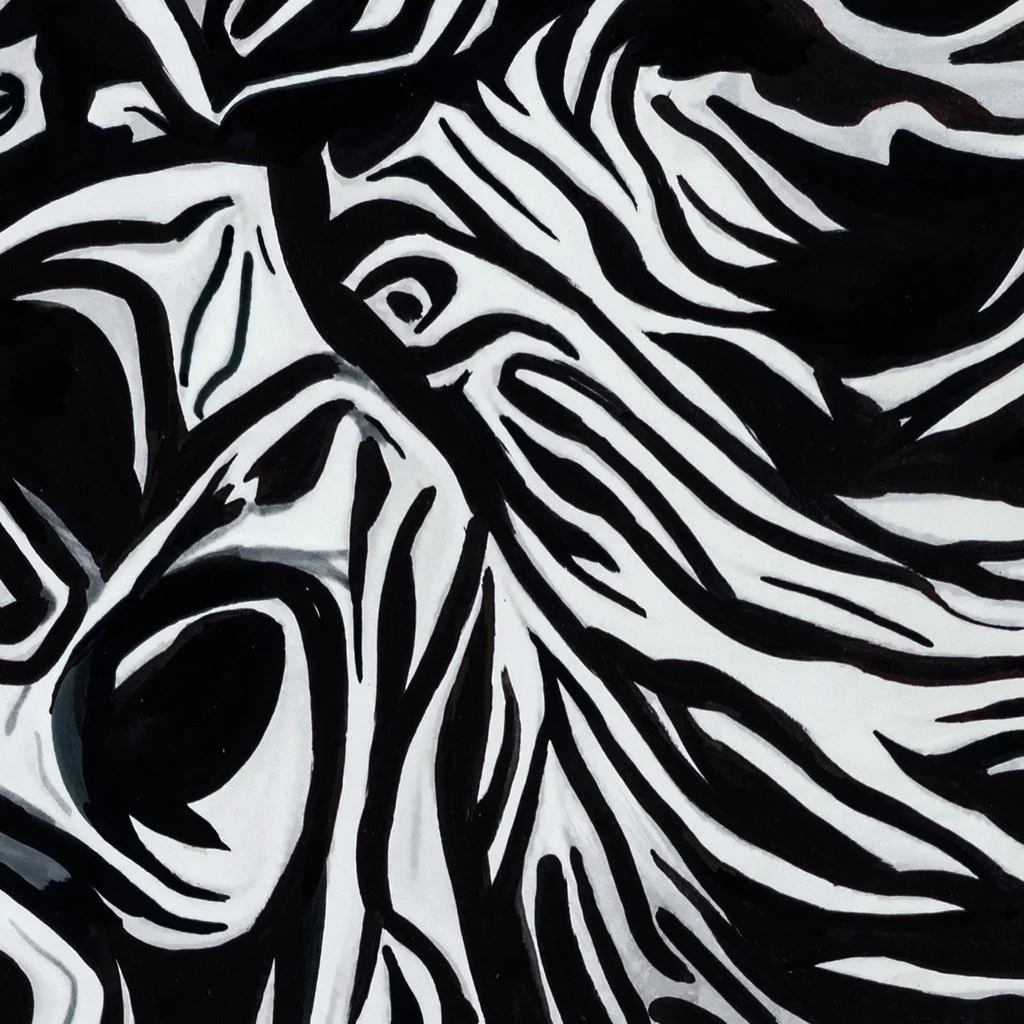
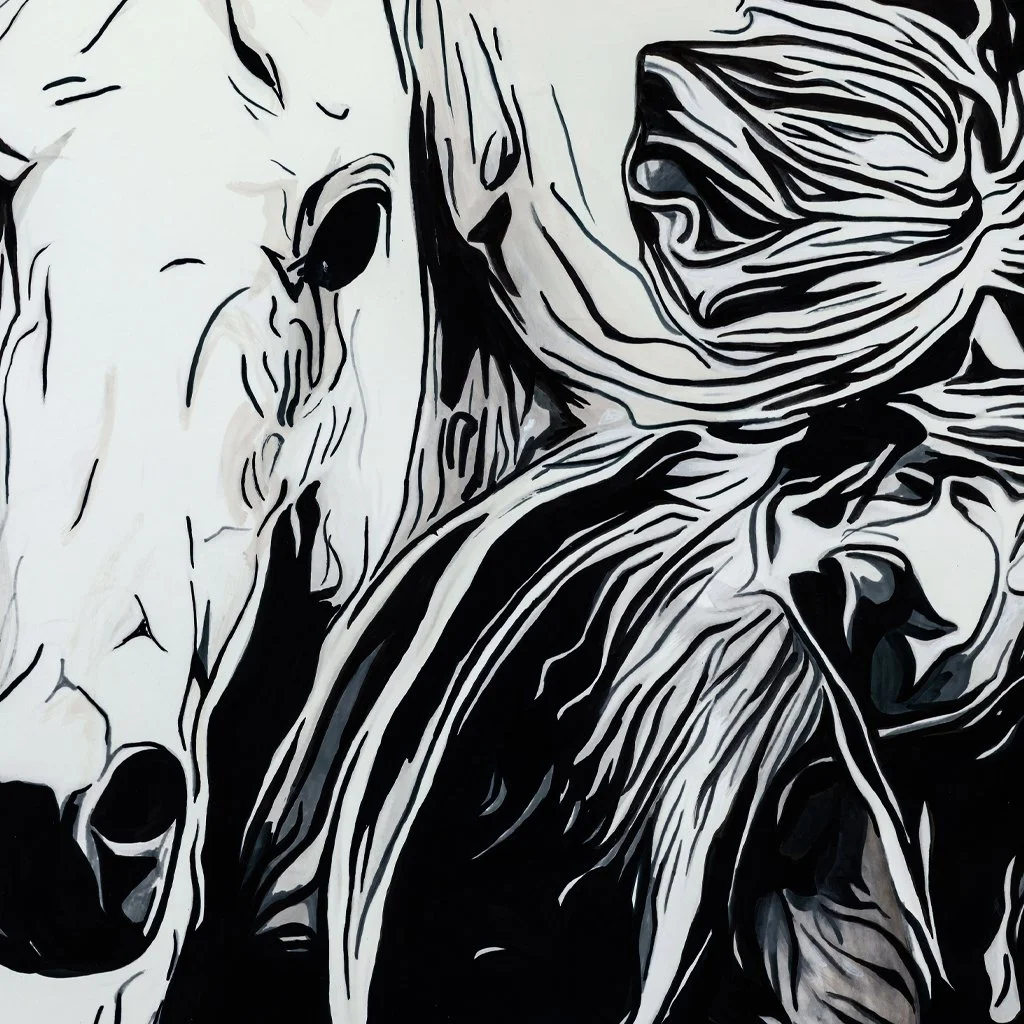
This piece works through form constancy - your brain's ability to recognize subjects from visual information. The forms aren't geometric abstractions here, but they're still giving your visual system exactly what it needs to construct "herd of wild horses in motion." Your brain scans the information, extracts spatial relationships, recognizes individual animals and their collective movement.
When your brain achieves that recognition - when it successfully constructs the scene from the visual information - that's when your neurophysiology changes. Professor Semir Zeki's research on neuroaesthetics documents this precisely: the moment your visual system resolves forms and understands what it's looking at, measurable changes occur in your neural activity.
The energy you feel isn't coming from the style or the forms themselves. It's coming from what you recognized - wild horses running, that specific kind of freedom and power that comes with a herd in full rush. Your brain constructed that scene from the visual information, and you're responding to the recognized subject.
The forms give your brain the information it needs: multiple bodies, directional movement, the spatial relationships of animals running together. Your visual cortex processes this data and builds understanding - not just "horses" but specifically "wild horses in motion," the kind of movement that speaks to something primal about freedom and untamed energy.
The Artist's Vision
The inspiration came from wild horses in Montana - witnessing that moment when a herd moves together, that collective rush of bodies and energy across open land. There's something about wild horses that captures a specific kind of freedom, a reminder of what exists outside human control and domestication.
"RUSH" gives your brain the visual information it needs to recognize that scene. The forms aren't causing you to feel anything - they're letting your brain construct "wild horses running," and once you recognize that, once your brain assembles the complete picture, that's when you respond. The quickening, the sense of movement and freedom - all of that comes from what you understood, not from how it was presented.
This is form constancy working across different styles. Whether geometric or whimsical, the neuroscience is the same: forms provide information, your brain achieves recognition, recognition triggers physiological response. You respond to wild horses running because that's what your brain recognized, not because the forms made you feel a certain way.