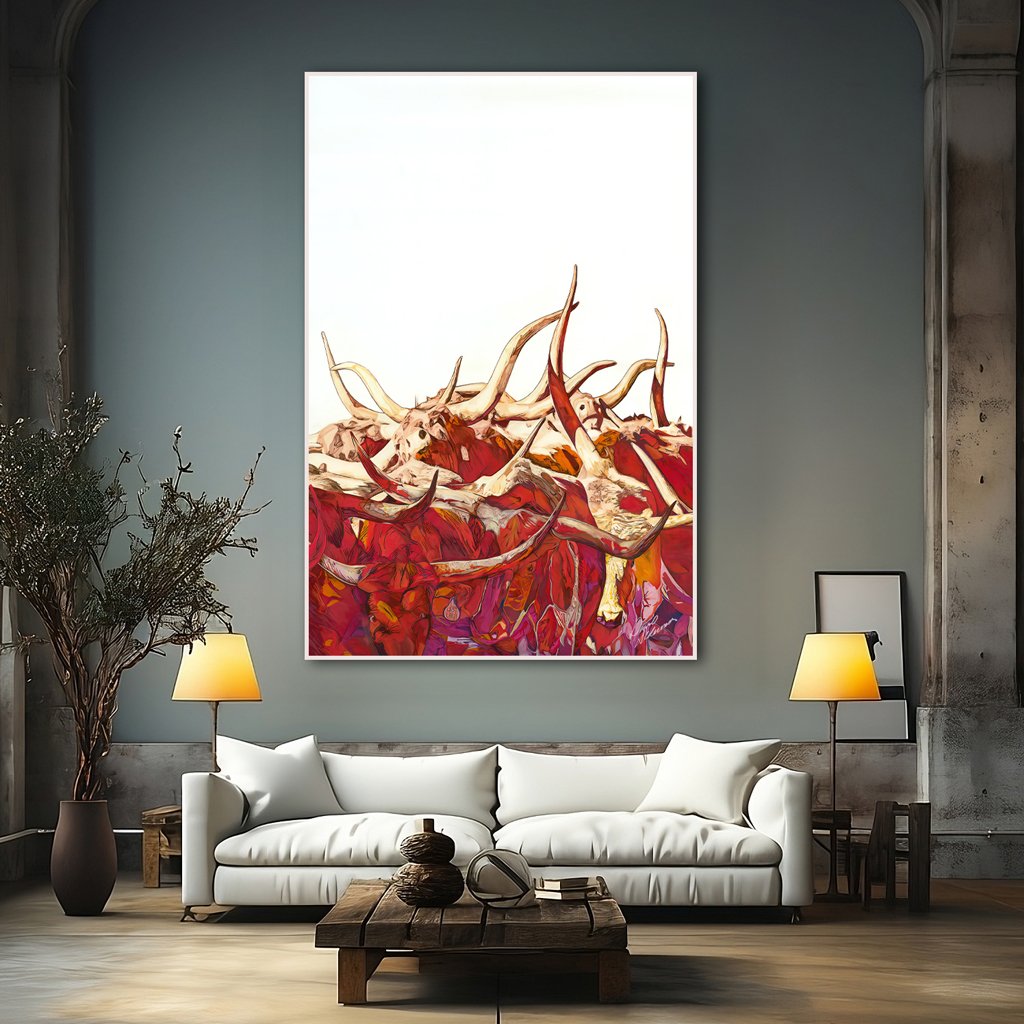
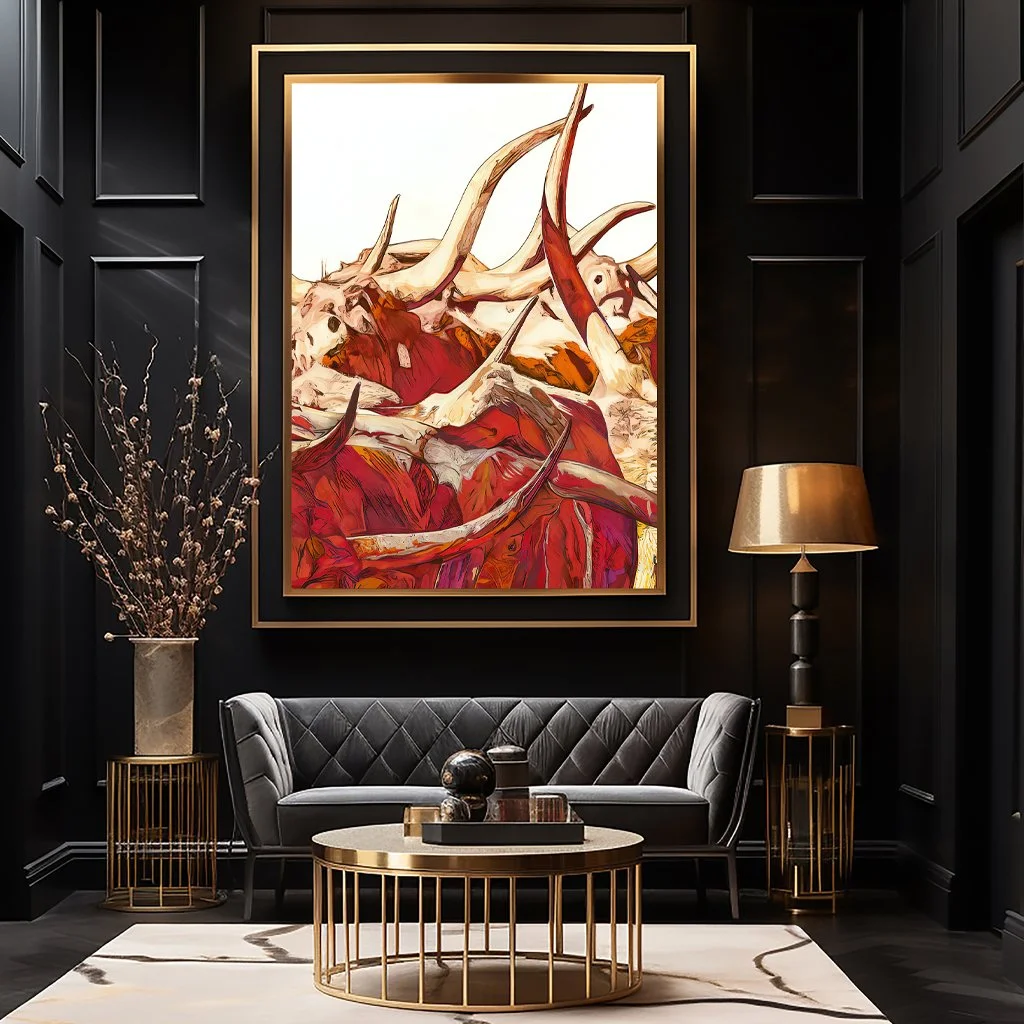
TRAFFIC JAM

from $1,200.00

Traffic Jam

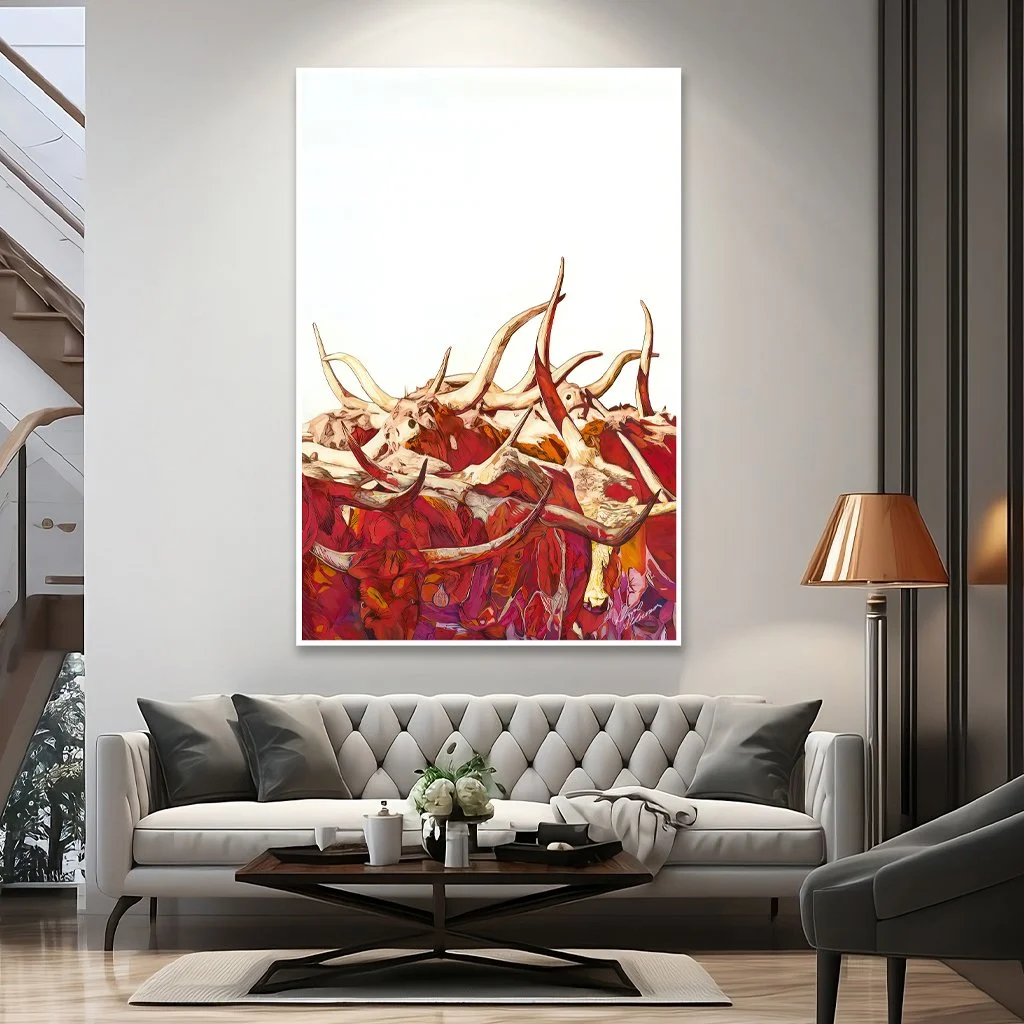
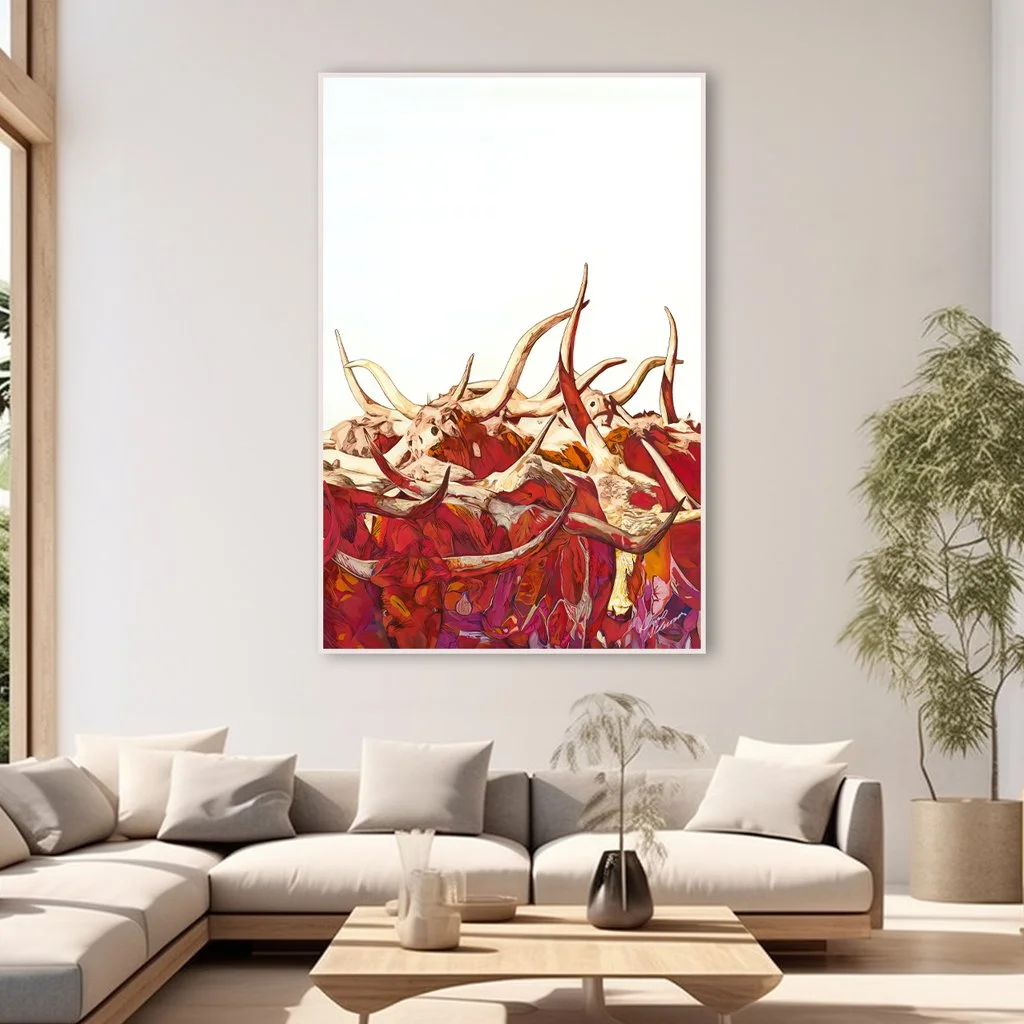
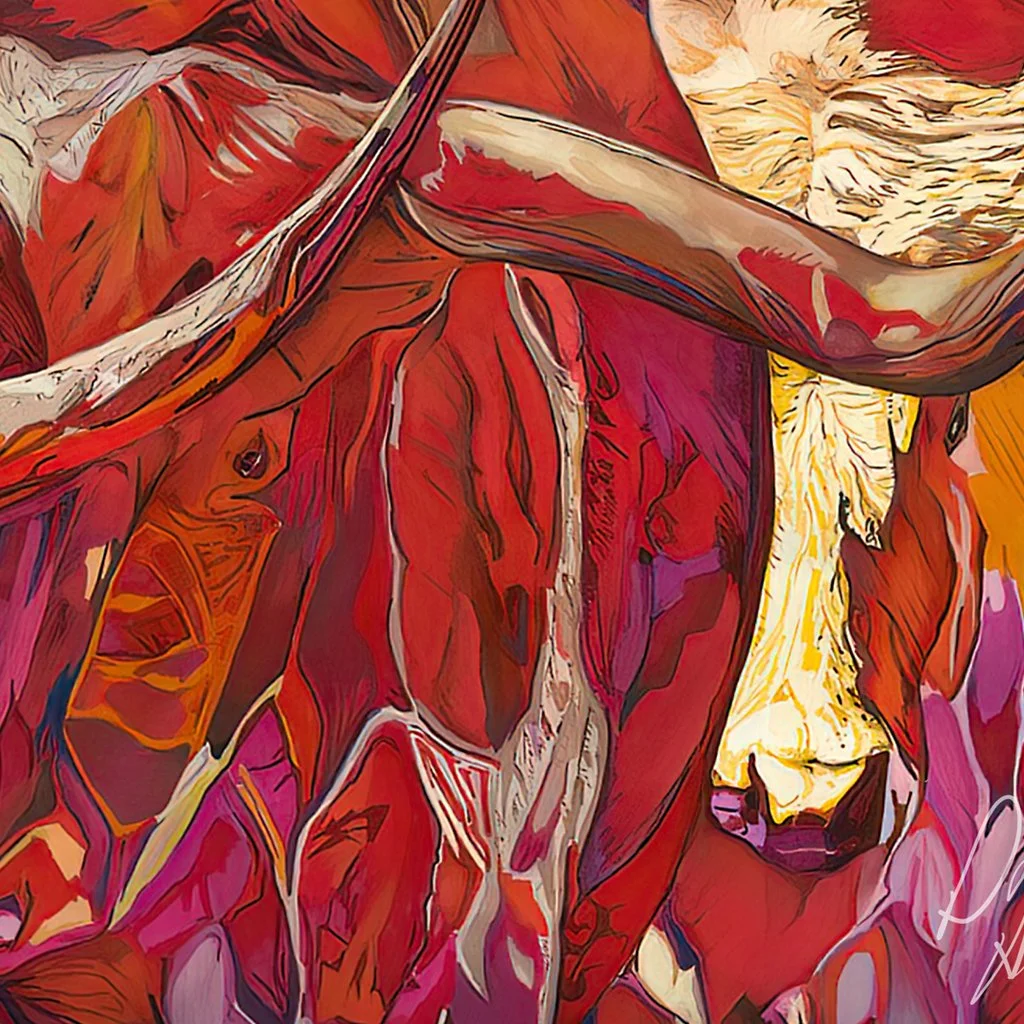
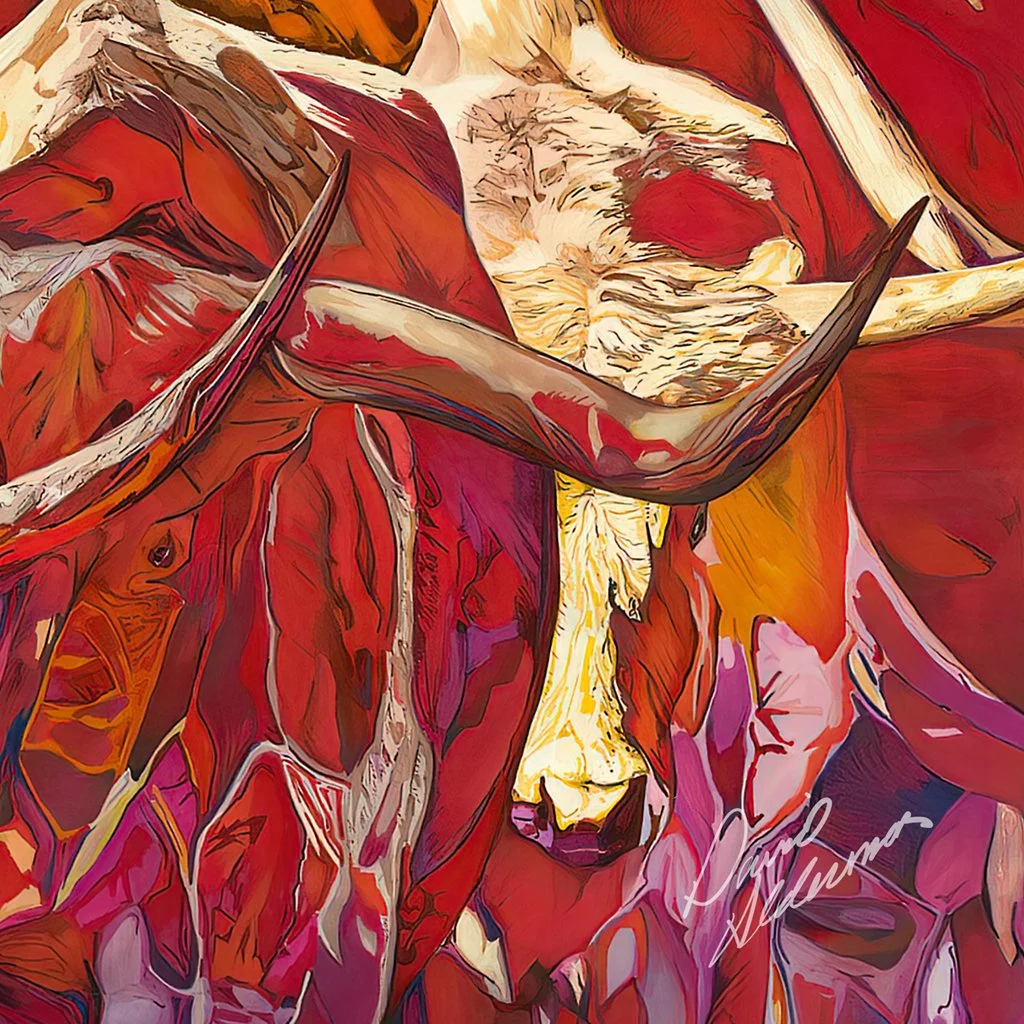
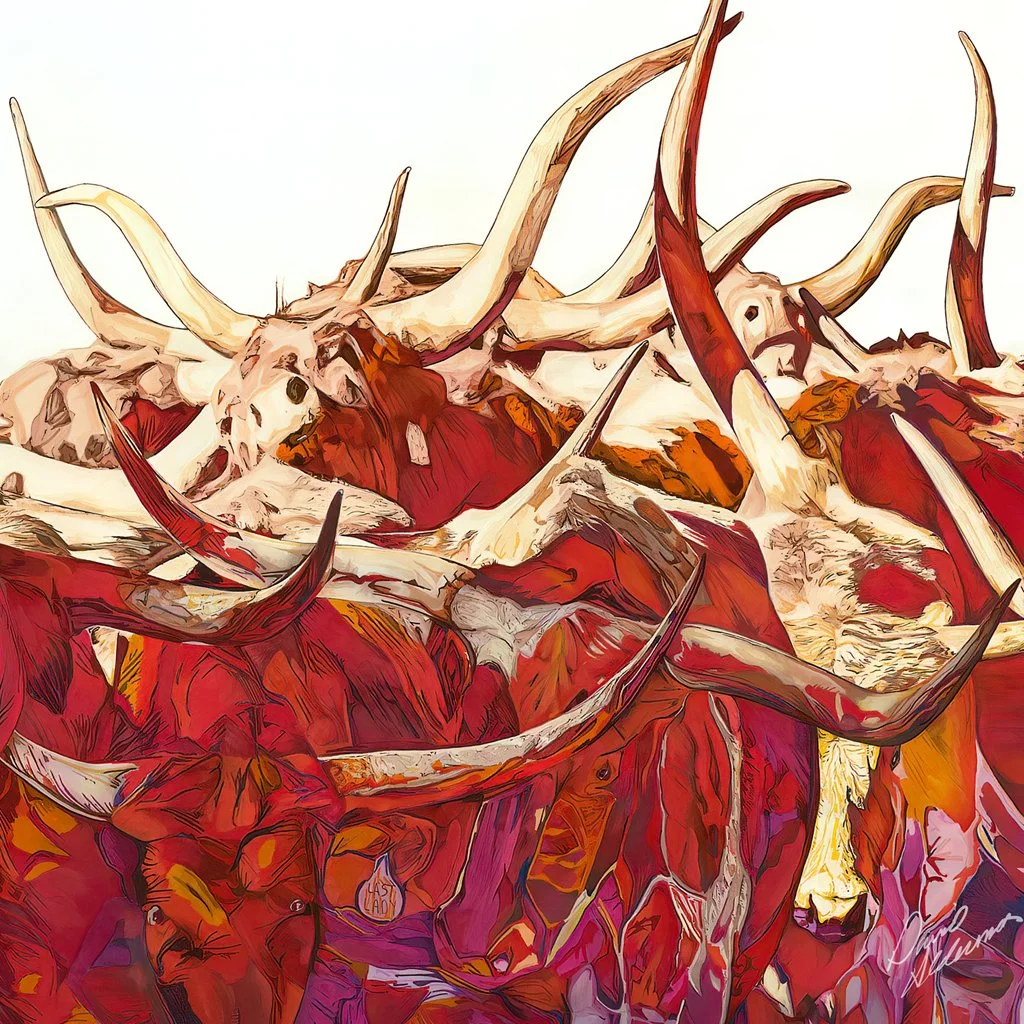
You look at it and your brain starts working, scanning the forms, piecing together what it's seeing. Cattle. Vehicles. A street scene. Then it all clicks into place - this is a stampede running down a city street, animals where cars should be. When that recognition happens, delight hits. You might smile, maybe laugh. Your physiology shifts because your brain just recognized something unexpected and joyful. You're not reacting to the style - you're reacting to what you recognized.

What's Actually Happening

This piece works through form constancy, just like the cubist work. Your visual system scans the forms, extracts information, and builds recognition. The whimsical style isn't causing you to feel playful - it's giving your brain the information it needs to recognize the subject: cattle stampeding down 17th Street.

When your brain successfully recognizes what it's seeing - when it constructs "stampede in downtown Denver" from the visual information - that's when your neurophysiology changes. Professor Semir Zeki's research on neuroaesthetics documents this: the moment of recognition, when your brain understands what it's looking at, creates measurable shifts in neural activity.

The delight you feel isn't coming from the whimsical forms themselves. It's coming from what you recognized - the absurd, joyful reality of cattle taking over a city street. Your brain constructed that scene from the visual information, and you're responding to the recognized subject, not to the style of presentation.

This is the same neuroscience at work in the cubist pieces, just with different forms giving your brain different information to recognize. Whether it's triangular geometry or whimsical shapes, the mechanism is identical: forms provide information, your brain achieves recognition, recognition triggers physiological response.

The Artist's Vision

The inspiration came from the Denver Stock Show, where they actually let cattle run down 17th Street like a stampede. That moment when Western heritage collides with urban landscape, when animals reclaim city streets - that's what the piece captures.

The forms give your brain what it needs to recognize that scene. Once you recognize it - once your brain constructs "cattle stampede on city street" from the visual information - that's when you respond. The joy, the surprise, the delight - all of that comes from what you recognized, not from how it was presented.

This is form constancy and neuroaesthetics working exactly the same way across different styles. The forms are information. Recognition is the event. The response follows what you understood, not what you saw.


Type:

Traffic Jam

You look at it and your brain starts working, scanning the forms, piecing together what it's seeing. Cattle. Vehicles. A street scene. Then it all clicks into place - this is a stampede running down a city street, animals where cars should be. When that recognition happens, delight hits. You might smile, maybe laugh. Your physiology shifts because your brain just recognized something unexpected and joyful. You're not reacting to the style - you're reacting to what you recognized.

What's Actually Happening

This piece works through form constancy, just like the cubist work. Your visual system scans the forms, extracts information, and builds recognition. The whimsical style isn't causing you to feel playful - it's giving your brain the information it needs to recognize the subject: cattle stampeding down 17th Street.

When your brain successfully recognizes what it's seeing - when it constructs "stampede in downtown Denver" from the visual information - that's when your neurophysiology changes. Professor Semir Zeki's research on neuroaesthetics documents this: the moment of recognition, when your brain understands what it's looking at, creates measurable shifts in neural activity.

The delight you feel isn't coming from the whimsical forms themselves. It's coming from what you recognized - the absurd, joyful reality of cattle taking over a city street. Your brain constructed that scene from the visual information, and you're responding to the recognized subject, not to the style of presentation.

This is the same neuroscience at work in the cubist pieces, just with different forms giving your brain different information to recognize. Whether it's triangular geometry or whimsical shapes, the mechanism is identical: forms provide information, your brain achieves recognition, recognition triggers physiological response.

The Artist's Vision

The inspiration came from the Denver Stock Show, where they actually let cattle run down 17th Street like a stampede. That moment when Western heritage collides with urban landscape, when animals reclaim city streets - that's what the piece captures.

The forms give your brain what it needs to recognize that scene. Once you recognize it - once your brain constructs "cattle stampede on city street" from the visual information - that's when you respond. The joy, the surprise, the delight - all of that comes from what you recognized, not from how it was presented.

This is form constancy and neuroaesthetics working exactly the same way across different styles. The forms are information. Recognition is the event. The response follows what you understood, not what you saw.


ORIGINALS: 40” x 60” SOLD

This is a uniquely inceptive piece of art hand-painted and finished by David.  The completed work is a combination of gouache, watercolor, and ink on 300gm watercolor paper.  The painting is glued, then coated with environmentally friendly and archival food-safe resin. Each original and limited edition is produced by hand at David’s studio in Denver, CO. Once the finish is cured, the painting comes to life and has a spectacular polish that is not only durable but repairable for free (sans shipping) if scratched. Each finished work of art has an exclusively individual feel, just like the artist. Original art is signed with a certificate of authenticity.

LIMITED EDITIONS: 40” x 60” $2800

Limited editions are the exact size as the original, except David uses a giclee “print” instead of creating the work by hand painting.  David uses the same artisan skills of gluing, pouring resin and fine finishing to create a work of art indistinguishable from the “original.” Limited Editions are signed and numbered with a certificate.

REPRODUCTIONS: 24” x 36” $1000

Mini Editions are a smaller size than the original art with the same methods used for the Limited Editions.  These pieces of art are created by David with those people in mind who have limited wall space, yet still, have an appreciation for fine art.